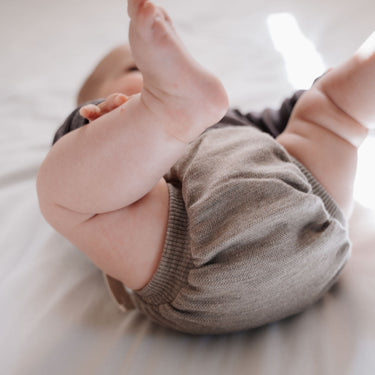
When your baby feels cool at night, it immediately makes many parents feel insecure. This is completely understandable. At the same time, it's important to know: cold hands or feet don't automatically mean your baby is too cold. What's more important is how their neck, back, and overall body feel.
In this article, you'll learn how to tell if your baby is cold at night and what really helps.
How do I know if my baby is cold at night?
Many parents first check hands or feet. However, these can often be cooler in babies without them actually being cold.
These signs are more important:
Rather unproblematic:
- Cool hands or feet
- Quiet sleep
- Relaxed breathing
- Warm core body temperature
Signs that your baby might be too cold:
- Neck or back feels cool
- Your baby seems restless
- Frequent waking without a clear reason
- Tense body
- Overall pale, cool skin
The neck is usually the best place to check.
Why do babies get cold more easily at night?
Babies don't regulate their body temperature as maturely as adults yet. In addition:
- They kick less actively at night
- Blankets are kicked off
- Moisture cools them down
- Wrong clothing poorly retains warmth
Especially at night, the right clothing often makes the biggest difference.
7 things that really help if your baby is cold at night
1. Several thin layers instead of one thick layer
Often, multiple layers help better than one very thick all-in-one.
For example:
- Bodysuit
- Sleepwear
- Warming outer layer
2. Use natural materials like wool
3. Keep tummy and back warm
If the core body stays warm, many babies sleep more peacefully.
4. Change damp clothing
Even slight dampness can cause cooling at night. Dry clothing often makes a big difference.
5. Check room temperature
Not just clothing matters. A bedroom that is too cold can also play a role.
6. Choose practical nightwear
7. Don't just check hands
Cold hands are often normal. Rely on the neck and back instead.
Why many parents rely on wool at night
Wool is popular with babies because it:
- Warms without overheating
- Can regulate moisture
- Remains comfortable even with temperature fluctuations
- Is soft and flexible
This is often helpful, especially for restless nights.
If your baby often gets cold and sweats at night
Then it's usually not more warmth that's needed, but better temperature regulation.
Too synthetic or less breathable clothing can contribute to babies first sweating and then cooling down.
What you should avoid
- Wrapping them too thickly
- Overheating is also uncomfortable.
- Only checking hands
- They are not a reliable indicator.
- Frequently changing clothes frantically at night
- It's better to improve the overall system.
What clothing is often particularly practical at night
Many families look for clothing at night that:
- Can be opened quickly
- Keeps the tummy and back warm
- Is breathable
- Fits comfortably
- Allows for easy nappy changes or elimination communication
Many rely on well-designed wool clothing for exactly this purpose.
Conclusion
If your baby is cold at night, it's often not due to too few blankets, but rather the wrong combination of clothing, material, and sleeping environment.
The best solution is usually:
- Breathable
- Warm
- Flexible
- Uncomplicated
This often leads to significantly calmer nights.
Frequent Questions
Are cold hands normal at night?
Yes, often. The neck is more crucial.
What is a good bedroom temperature?
That depends on clothing and the baby. More important than a rigid number is the overall feeling.
Isn't wool too warm at night?
High-quality wool can balance temperature and is therefore often particularly appreciated at night.
If you want to have it easier at night
Many families look for clothing that keeps warm at night and remains practical at the same time, especially when changing nappies or doing elimination communication.
That's exactly what Mata Origin develops well-designed solutions from natural materials for.