Why many families consciously choose mulesing-free wool
Anyone who delves deeper into wool clothing will sooner or later come across a term that initially sounds unfamiliar:
mulesing-free
Many families today consciously pay attention to this, especially when it comes to baby clothing made from wool. And this topic also plays an important role for us at Mata Origin.
Because wool is something very special for many parents. It warms pleasantly, feels soft, and often accompanies babies directly on their skin for many hours. This makes the question all the more important for many families:
Where does the wool actually come from?
And this is exactly where the topic of mulesing-free begins.
What does Mulesing mean?
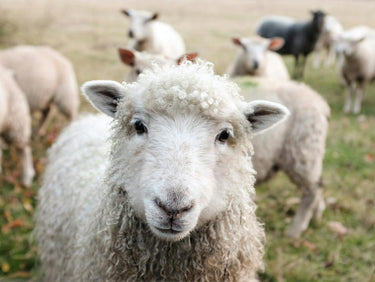
Mulesing is a procedure that was, or in some cases still is, used primarily on Merino sheep in certain countries.
This involves removing skin around the tail area to protect the animals from flystrike. This intervention is often performed without adequate pain relief and has therefore been critically discussed for many years. Bayerischer Rundfunk reported on it. Wikipedia also explains the topic of mulesing in more detail.
Many people immediately understand why this topic is so emotional when they look into it more closely: it's not just about wool. It's about how animals are treated and what forms of production we want to support in the long term.
Families, in particular those who shop more consciously, want materials that not only feel good but are also consistent with their values.
That's why the Merino wool used at Mata Origin is mulesing-free wool.
What does mulesing-free mean?
When wool is described as mulesing-free, it means that the wool used does not come from sheep on which this procedure was performed.
For us, this is an important aspect when selecting wool clothing.
Not because perfection is possible. But because conscious decisions can make a difference.
Why this is important to us at Mata Origin
At Mata Origin, we develop clothing for families who want to make conscious choices.
Many parents today are more deeply engaged with materials, origin, and quality. Especially for products that babies wear directly on their skin, many desire a good feeling about their decision.
That's why we consciously prioritize high-quality materials and mulesing-free wool for our wool products.
For us, this includes not only the function of a product but also the question of how materials are created and what values they represent.
Why wool is so special for babies
Wool has accompanied families for generations.
It can warm without overheating. It feels soft and often provides a comfortable skin sensation. Especially in everyday life with babies, many families appreciate the special properties of wool.
Especially for:
• elimination communication diapers
• EC pants
• wool jackets
• baby clothing made of wool
• clothing for EC families
the quality of the material plays a major role.
Many parents tell us that high-quality wool feels calmer, softer, and more natural than many other fabrics.
Why more and more families are consciously looking for mulesing-free wool
Many parents today want to understand more precisely what they are buying.
They ask themselves:
How was the wool obtained?
Where does the material come from?
What values underpin a product?
And which products do we want to support in the long term?
This often isn't about perfection or renunciation. Rather, it's about making more conscious decisions.
Mulesing-free wool has become important for many families precisely for this reason.
Does mulesing-free automatically mean perfect?
No. Here too, the following applies: no term or seal automatically makes a product perfect.
But many families want more transparency, better standards, and materials that have been selected with greater awareness.
In addition to mulesing-free wool, many people today also pay attention to standards that generally deal with more responsible wool production. This includes, for example, the Responsible Wool Standard (RWS), which places a stronger focus on animal welfare and better production standards.
And that's why more and more people are consciously paying attention to where their wool comes from and what values underpin a product.
If you would like to delve deeper into the topic of mulesing and wool production, you will find a balanced introduction to animal welfare in Merino wool and the challenges within wool production in this article from Deutschlandfunk Nova.
Why we pay attention to this at Mata Origin
We believe in clothing that can accompany families for a long time.
In materials that feel good.
In products that are selected with care.
And in an everyday life that doesn't have to be perfect to be beautiful.
That's why at Mata Origin, we consciously focus on high-quality and mulesing-free wool materials.
Not because one term solves everything. But because trust, transparency, and conscious decisions are important to us.
Especially for the smallest of people.
Frequently asked questions about mulesing-free wool
Is mulesing-free wool still high-quality Merino wool?
Yes. Many high-quality wool products today are made from mulesing-free Merino wool.
Why do families with babies pay particular attention to this?
Because baby clothing is worn directly on the skin, and many parents want to make more conscious choices about materials.
Is mulesing-free wool automatically GOTS certified?
No. These are different topics. The Merino wool we use at Mata Origin is both: mulesing-free and GOTS certified.
Why is Mata Origin talking about this?
Because we select our raw materials very consciously and believe that families should understand what materials they are buying and what values underpin them.
Our perspective at Mata Origin
For us, quality doesn't just begin with the finished product.
But already with the selection of materials.
Especially with wool, many families today want more transparency, trust, and a good feeling about their decision.
That's why we consciously choose high-quality and mulesing-free wool materials for our products.


