Diaper rash in babies: Causes, tips, and how to prevent it
For many parents, a diaper rash simply seems to be a part of life.
The skin becomes red.
The baby is sensitive.
Crying during diaper changes.
Then creams, more frequent diaper changes, or airing out the bottom help.
But the real question is:
Why does the skin get sore in the first place?
Why babies get diaper rash
A baby's skin is significantly more sensitive than an adult's skin.
In the diaper area, several stressors come together:
- Moisture
- Warmth
- Friction
- Urine
- Stool
It becomes particularly problematic when the skin remains in contact with excretions for an extended period.
Then the skin's natural protective barrier is weakened.
The result:
Redness, irritated skin, and sometimes even open sores.
Not every diaper is the problem
Many parents first look for the right diaper.
Sometimes that helps.
Often, however, the cause is not the brand at all.
But rather, how long moisture and excretions remain on the skin.
The shorter this contact, the less stress there usually is on the skin.
Why fresh air often helps so much
Perhaps you have already heard the advice:
Just let the bottom air out more often.
And there is actually a lot of truth in that.
The skin can dry.
Heat and moisture accumulate less.
The skin barrier can recover.
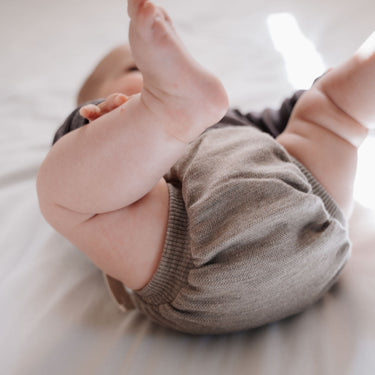
That's exactly why a sore bottom often gets better when babies are allowed to kick around without a diaper for a while.
The often overlooked connection
There is another aspect.
Many babies don't actually want to lie or sit in their excretions - they even show that they need to go before the excretion even happens.
They become restless.
Push.
Communicate their needs.
And this is where it gets interesting.
Because if excretions don't come into contact with the skin, or only briefly, the stress on the skin often decreases.
Why some EC families struggle less with diaper rash
Many parents report that their baby has significantly fewer diaper rashes since elimination communication.
The reason is simple:
Some of the excretions no longer end up in the diaper.
The skin stays drier.
And it has less contact with urine and stool.
This doesn't mean that EC is a miracle cure.
But it explains why many families notice a difference here.
Even small steps can help
You don't have to live completely diaper-free.
Many families use individual moments.
For example:
- after waking up
- after breastfeeding
- before sleeping
Even this often means the skin spends less time in wet diapers.
You can find out which everyday situations are particularly suitable here: The best moments for elimination communication
What role wool can play
The choice of materials also makes a difference.
Wool can absorb moisture without immediately feeling wet.
It is also breathable and temperature-regulating.
That's why many families consciously opt for this natural material for wool diapers or wool diaper covers.
More on this here: Why wool is so skin-friendly for babies
Conclusion
A diaper rash usually doesn't happen by chance.
Moisture, warmth, and prolonged contact with excretions play an important role.
The drier and airier the skin remains, the better it can protect itself.
That's why many babies benefit from frequent diaper changes, air on the skin, and sometimes even elimination communication.
Not as a perfection project.
But as a simple way to relieve the skin.