
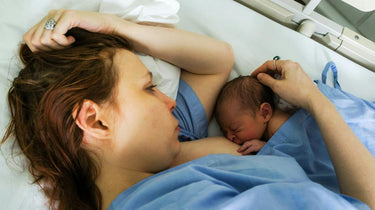
Having visitors during the postpartum period is a sensitive topic. On one hand, family and friends are excited about the baby. Grandparents want to see the baby. Siblings, aunts, uncles, friends, and neighbors want to offer congratulations. On the other hand, you have just given birth, your baby is new to the world, and your daily routine is not yet established.
Many parents underestimate before the birth how exhausting visitors can be in the first days and weeks. Not because people mean harm, but because visitors consume energy: talking, explaining, offering coffee, breastfeeding or feeding under observation, passing the baby around, evaluating advice, setting boundaries, smiling when you actually just want to lie down.
The most important guideline is: visitors during the postpartum period are not an external right. Visitors are an invitation from you.
In this article, you will find calm, practical, and non-dogmatic guidance: When are visitors after birth useful? How many visitors are good? What rules help? How can you set boundaries without constantly justifying yourself? And how can visitors truly be supportive—for the mother, baby, and new family?
The postpartum period is a time for protection, not visits
The postpartum period is a special time. Your body is healing. Your baby is settling in. Breastfeeding or feeding is finding its rhythm. Sleep is irregular. Emotions can be intense. Household routines are different. Everything is new.
During this phase, you don't need as many people as possible. Above all, you need protection, rest, care, and reliable support.
The focus during the postpartum period is on:
- The mother's recovery
- The baby settling in
- Bonding and closeness
- Breastfeeding or feeding
- Sleep and rest
- Physical healing
- Emotional stability
- Practical support
Visitors should support these things. If they disrupt them, then it's too much—even if well-intentioned.
You can find more on preparing for this initial period here: Preparing for the Postpartum Period: What You Can Organize Before Birth.
If you've just arrived home, you can find a relevant deeper dive here: The First Days at Home with Baby.
Why visitors after birth can be so exhausting
Before birth, many think: "A quick visit will be fine." After birth, that same visit often feels much bigger because you are not at your normal strength.
Perhaps you are still bleeding. Perhaps you are in pain. Perhaps you can only sit carefully. Perhaps you are constantly breastfeeding. Perhaps you haven't slept much in nights. Perhaps you don't want to hand over your baby. Perhaps you don't want to explain why you're crying.
Visitors then don't just mean: someone is coming over. Visitors mean: your protected space is opening up.
Visitors can be exhausting because:
- you have to talk, even though you need rest
- you feel observed
- breastfeeding or feeding is still uncertain
- people give unsolicited advice
- the baby wants to be passed around
- you feel responsible for being a host
- your baby is more unsettled afterwards
- you haven't yet clearly felt your own boundaries
This does not mean that visitors are inherently bad. It just means that visitors during the postpartum period need different rules than a normal coffee visit.
Visitors can wait
You are allowed to postpone visits. Even close visitors. Even grandparents. Even people who are very excited. Even people who say: "We'll only be brief."
A baby does not need to be seen by everyone in the first 24 hours, three days, or two weeks. Bonding with family is not created by as many people as possible holding the baby as early as possible.
Visitors can wait if:
- you are physically exhausted
- you are in pain
- breastfeeding or feeding requires a lot of attention right now
- your baby is very unsettled
- you feel emotionally sensitive
- you simply don't want to see people yet
- you as a family want to settle in first
A clear no during the postpartum period is not impoliteness. It is self-care.
If you are just starting out, this article may also be helpful: The first 24 hours with baby: What is really important.
Visitors can also be beneficial
Not every visit is exhausting. Some people bring calm with them. They leave food at the door, do dishes, take older children to the playground, emotionally support the mother, listen, and expect nothing.
Such visits can be valuable. They don't feel like visits, but like support.
Good postpartum visitors:
- come only by arrangement
- stay briefly
- bring food
- ask what is needed
- make their own coffee
- tidy something up without making a big deal out of it
- only hold the baby if offered
- don't give unsolicited advice
- respect breastfeeding, feeding, sleeping, and withdrawal
So the question is not: visitors or no visitors? The better question is: which people nourish you right now—and which ones drain your energy?
The most important visiting rule: Nobody comes unannounced
Unannounced visits are not appropriate for the postpartum period. Not even for a short time. Not even "just to see the baby." Not even with food in hand.
You are allowed to clearly state that visits are only possible by prior arrangement. And that you can cancel spontaneously if the night was difficult or the day is not going as planned.
A clear rule can be:
"Please only come by arrangement. We will let you know when a visit is convenient for us."
This is friendly and clear. It leaves no room for pressure of expectation.
Keep visits short
In the postpartum period, short visits are often better than long ones. Even beloved people can be too much after 30 minutes.
You are allowed to state a duration beforehand. This takes pressure out of the situation and helps everyone to prepare for it.
Possible phrasings:
- "We would be happy if you could drop by for 30 minutes."
- "Today, only a short visit works."
- "We are finding that longer visits are still too much for us."
- "Please don't plan to stay longer than half an hour."
If visitors don't leave on their own, the second parent can kindly end it: "We're going to have quiet time again now."
No one comes sick
This rule is especially important in the postpartum period. Anyone who is sick, has cold symptoms, has had a fever, has stomach flu, or does not feel well, should not visit.
This also applies to people who say: "It's probably just a little cold." For a newborn and a new mother, caution is sensible.
A simple rule:
"Please only come when healthy. If you don't feel entirely well, we will postpone the visit."
This is not an exaggeration. It is protection.
Wash hands before anyone touches the baby
If visitors touch or hold your baby, their hands should be washed beforehand. This is simple, clear, and non-negotiable.
Kissing is also a topic that you can decide on in advance. Many parents do not want their newborn to be kissed by visitors. That is perfectly fine.
Possible rules:
- Wash hands before contact with the baby
- Do not kiss the baby
- Do not touch the face
- Do not pass the baby around
- Return the baby as soon as the parents wish
You do not have to apologize for this. You are protecting your baby.
The baby doesn't have to be passed around
Many people want to hold a newborn. This is understandable. But your baby is not an object for visitors.
A newborn primarily needs secure caregivers, warmth, scent, voice, and calm. If you don't want to hand over your baby, you don't have to.
You can say:
- "Today the baby is staying with me."
- "We're not passing it around right now."
- "It's sleeping so well right now, we'll let it lie."
- "I want to keep it with me right now."
- "Please give it back to me."
Asking for a baby back is not impolite. It is parenthood.
Visitors and breastfeeding
Breastfeeding can be very prominent in the first days and weeks. Perhaps you breastfeed frequently, for a long time, or are still unsure. Perhaps you need help with latching. Perhaps you don't want to be observed while doing so.
Visitors should not make breastfeeding more difficult. If you need peace and quiet, visitors may leave, leave the room, or not come at all.
When breastfeeding, you are allowed to:
- withdraw
- ask visitors to leave briefly
- not explain why you need peace and quiet
- accept breastfeeding advice or midwife help
- not let the baby be passed around beforehand
The same applies to bottle-feeding: feeding is about closeness. It doesn't automatically have to be taken over by visitors. If you or the second parent want to feed, it stays with you.
If you want to create a protected space for breastfeeding or feeding in the postpartum period, you can find suitable guidance here: Setting up a nursing station: What you really need in the postpartum period.
Visitors and sleep
Newborns sleep irregularly. And parents often don't get enough sleep. If your baby is sleeping, that's not a reason to invite visitors. It's a reason to rest yourself.
Many parents lose valuable moments of rest in the postpartum period because they receive visitors, answer messages, or do housework while the baby sleeps.
A helpful rule:
When the baby sleeps, the mother may also rest.
Visitors should not disturb sleep. Do not wake the baby. Do not go into the bedroom. Do not "just take a quick look." Rest is not a luxury, but part of care.
You can find more about the first time at home here: The first days at home with baby: What really helps you.
Visitors and elimination communication or holding out
If you want to try elimination communication or holding out, visitors can cause uncertainty. Perhaps you don't want to explain why you're holding your baby over a potty. Perhaps there will be comments. Perhaps you are still unsure yourself.
You don't have to justify elimination communication to visitors. You can explain it if you want. But you can also simply integrate it quietly into your daily routine.
Helpful phrases:
- "We're currently trying elimination communication."
- "The diaper is our backup here."
- "We're seeing what works for us."
- "This isn't dogma, but an option."
- "We don't need to discuss this now."
Especially in the postpartum period, elimination communication can remain simple. If visitors are there and it stresses you, just use a backup. Elimination communication doesn't have to work in front of an audience.
If you want to learn about elimination communication, you can find an introduction here: What does elimination communication from birth actually mean?.
Suitable backups and inserts can be found here: elimination communication diapers, diaper inserts and elimination communication pants.
Visitors should help, not be served
A postpartum visitor should not expect to be entertained. Anyone who comes may bring something, do dishes, warm up food, or take on a specific task.
This may sound unusual. But it is an important shift in perspective: in the postpartum period, the new family is not a host. They are in transition.
Good help from visitors:
- Bringing food
- Grocery shopping
- Unloading the dishwasher
- Hanging up laundry
- Taking out the trash
- Occupying older children
- Walking the dog
- Staying briefly
- Leaving without expectation
Less helpful is a visitor who holds the baby while the mother makes coffee. More helpful is a visitor who makes coffee while the mother can stay with the baby.
You can find more about practical support here: Organizing help in the postpartum period: What really relieves you after birth.
Communicate visiting rules before birth
It's often easier to communicate visiting rules before birth. Then you don't have to argue in the postpartum period when you're tired, sore, or emotional.
You can prepare a short message for family and close friends. Friendly, clear, and without lengthy justification.
Example of a message before birth:
"We are very happy that you are looking forward to the baby with us. For the postpartum period, we want to keep things calm and settle in as a family first. Please do not come unannounced. We will let you know when a visit is convenient for us. If you would like to support us, we would appreciate food left at the door or practical help. Thank you for protecting our peace."
This message takes pressure off. It makes it clear: joy is welcome. Expectations are not.
If family is disappointed
Some people react with disappointment if they are not allowed to come immediately. This can be painful. Especially when you want closeness with your family, but also need peace and quiet.
Nevertheless, the disappointment of others is not your task in the postpartum period.
You can remain friendly and still be clear.
Possible answers:
- "I understand you're excited. We still need some quiet time though."
- "It's not against you. It's for us."
- "We'll let you know when we're ready."
- "Right now, the most helpful thing is if you respect our boundary."
- "We want to keep this initial period intentionally small."
Boundaries don't have to sound harsh. But they should be clear.
The second parent as a protective space
The second parent plays an important role in the postpartum period: he or she can protect the space.
This does not mean making decisions over the mother's head. It means representing jointly agreed upon boundaries to the outside world so that the mother does not have to explain herself at every moment.
Tasks of the second parent may include:
- Coordinating visits
- Answering messages
- Limiting visits
- Canceling for sick individuals
- Organizing food and help
- Kindly seeing visitors off
- Asking the mother what she truly wants
A good phrase is: "We're having quiet time again now." Not as a discussion. As a conclusion.
You can find more about this here: Partner in the postpartum period: What really helps after birth.
Grandparent visits
Grandparents are often particularly emotionally invested. For them, a new role also begins. Many want to help, hold, see, be present. This can be wonderful—and at the same time, too much.
Especially with grandparents, clarity is important. Not because they should be excluded, but because their closeness is often more strongly associated with expectations.
It can be helpful to:
- suggest a specific visiting time
- limit the duration beforehand
- clearly state tasks
- not automatically expect to hold the baby
- avoid discussions about parenting or breastfeeding
- discuss photos and sharing beforehand
Grandparents can be important. But the new family sets the pace.
Visits from friends
Friends can be very comforting during the postpartum period if they are sensitive. Often there is less pressure of expectation here than with family. At the same time, friendship also needs clear boundaries.
Good visits from friends can mean:
- bring a soup
- listen without judgment
- keep it short
- talk about the birth, if you wish
- don't just ask about the baby
- ask: "How are you really doing?"
Sometimes a voice message or a meal dropped off at the door is more helpful than a visit on the sofa.
Visits with older siblings
If there's already an older child, visits change again. Perhaps the sibling needs attention, normalcy, and loving support. Visitors can relieve pressure here — or cause additional disruption.
Helpful visits are those that:
- play with the older sibling
- take them to the playground
- don't just marvel at the baby
- involve the older child
- don't pressure for closeness to the baby
- relieve everyday burdens
An older sibling doesn't have to be immediately proud, loving, or enthusiastic. The same applies here: everyone needs time to adjust.
You can find more on this here: Postpartum with a sibling: What really helps you.
Photos and Social Media
An important point often forgotten before birth: Who is allowed to take photos? Who is allowed to send them? Who is allowed to post them?
You are allowed to have clear rules for pictures of your baby. No one should share photos without your consent.
Possible rules:
- no photos without consent
- no pictures on social media
- no forwarding in groups
- no photos during breastfeeding or in vulnerable moments
- ask first, then photograph
This is not mistrust. It is protecting the privacy of your child and your family.
If you want visitors, but don't want to be a host
Some mothers want to see people. They want to tell, show, share, be held. At the same time, they don't want to be a host.
This is an important distinction.
You are allowed to receive visitors and still stay in bed. You are allowed to be in your pajamas. You are allowed not to clean up. You are allowed to say: "I'm happy to see you, but I can't take care of anything."
A good invitation might sound like this:
"You're welcome to come over briefly. But please be prepared that I'm in my postpartum period: no cleaning, no entertaining, no long stays. If you bring food, we'd appreciate it."
Anyone who loves you will understand. Or will learn.
How many visits per week are advisable?
There's no universal answer to this. Some families can handle several short visits in the second week. Others need almost no one for four weeks. Both are normal.
As a rough guide: fewer appointments are better, with real rest in between.
Before each visit, ask yourself:
- Am I really looking forward to it?
- Will I have enough rest afterwards?
- Is this person helping us?
- Can I be honest if it's too much for me?
- Would I feel relieved if the visit were canceled?
If you feel relieved when a visit is canceled, it was probably too much.
Visits after a C-section or difficult birth
After a C-section, a very long birth, birth injuries, or traumatic experiences, visits can be particularly exhausting.
Perhaps you are physically restricted. Perhaps you need help getting up. Perhaps you don't want to talk about the birth. Perhaps you feel vulnerable or overwhelmed.
In that case, the following may apply:
- even fewer visitors
- even shorter visits
- no birth story upon request
- practical help instead of baby visits
- more protection from the co-parent
- no need for justification
After a difficult birth, you are allowed to protect yourself particularly. Not because others are unimportant. But because healing needs space.
You can find more about recovery after a C-section here: Postpartum after a C-section: What really helps you.
When visitors give unsolicited advice
Advice during the postpartum period can be very hurtful, especially when you're tired or still figuring things out. Breastfeeding, sleeping, carrying, changing diapers, elimination communication, clothing — there are opinions on everything.
You don't have to engage in every discussion.
Helpful responses:
- "Thanks, we're just finding our way."
- "We'll discuss that with our midwife."
- "That works for us right now."
- "I don't want to discuss that now."
- "Please no tips unless we ask for them."
These sentences are short. That's precisely why they work.
What visitors can say better
Sometimes people simply don't know what's helpful. You can guide them.
Helpful phrases from visitors would be:
- "What can I bring you?"
- "Shall I leave food at the door?"
- "Do you want to talk or prefer quiet?"
- "Shall I unload the dishwasher?"
- "I'll only stay a short while."
- "You don't have to entertain me."
- "How are you – not just the baby?"
If you like, you can also send this article to people who genuinely want to understand how they can best support you in the postpartum period.
A simple postpartum visitor checklist
Clarify before birth
- Who can come early?
- Who can only come later?
- How do you communicate visitor rules?
- Who responds to messages?
- What are the rules regarding photos?
- What do you wish for instead of gifts?
Set rules for visitors
- only by appointment
- short duration
- only if healthy
- wash hands
- do not kiss the baby
- do not hold the baby without asking
- no unsolicited advice
- practical help welcome
During the visit
- Mother stays lying down if she wishes
- Baby stays with parents if they wish
- Breastfeeding or feeding takes priority
- Visit ends when enough is enough
- no tidying up for visitors
After the visit
- Plan for quiet time
- check if it was beneficial
- adjust next visits accordingly
- do not make further appointments immediately out of obligation
Frequently Asked Questions: Postpartum Visits
When should one receive visitors after birth?
When it truly benefits you. Some families prefer short visits early on, while others need several weeks of quiet. There's no mandatory time.
Are grandparents allowed to visit the baby immediately?
Only if you wish. Grandparents may be important, but the newly formed family decides on the timing, duration, and rules.
How long should postpartum visits last?
Short visits are often best. 20 to 45 minutes can be perfectly sufficient to start with. You are allowed to state the duration clearly beforehand.
How do I politely decline a visit?
For example: "It's too much for us today. We'll get in touch when a visit works." You don't have to justify yourself at length.
What are good rules for postpartum visits?
Only come by appointment, be healthy, wash hands, don't kiss the baby, keep it short, don't give unsolicited advice, and bring practical help.
Do I have to let visitors hold my baby?
No. Your baby doesn't have to be passed around. You are allowed to keep it with you and take it back at any time.
What can visitors truly do to help in the postpartum period?
Bring food, do groceries, care for an older sibling, do laundry, unload the dishwasher, take out the trash, or simply be present briefly and quietly.
How do I deal with unsolicited advice?
Short phrases help: "Thanks, we're just finding our way." Or: "I don't want to discuss that now." You don't have to adopt every opinion.
How do I explain to visitors that we are trying elimination communication?
You can simply say, "We're trying EC, the diaper is our backup." But you don't have to discuss it. Especially in the postpartum period, EC can remain light and private.
A calm thought to conclude
Postpartum visits can be lovely. But they should never become more important than the people who have just been born: the baby — and the mother in her new role.
This time is sensitive. Open. Physical. Emotional. It needs protection.
You are allowed to invite people. You are allowed to make people wait. You are allowed to enjoy visits. You are allowed to cancel visits. You are allowed to show your baby. You are allowed to keep it with you. You are allowed to explain. You are allowed to be silent.
Good visitors understand: it's not about quickly becoming part of this new closeness. It's about protecting it.
If visits nourish you, they are welcome. If they cost you strength, they can wait.
This also aligns perfectly with Mata Origin's philosophy: closeness is valuable, but it must feel good. Support should be loving, but not intrusive. And a natural start to the baby year doesn't begin with perfection, but with protection, connection, and a daily routine that suits you.
If you want to support your baby with natural materials, practical designs, and an undogmatic view of diapering, elimination communication, and closeness, Mata Origin offers thoughtful companions for this initial period.
Discover suitable products for postpartum, diapering, and elimination communication: EC diapers, diaper inserts, EC pants, and the on-the-go changing mat.
Disclaimer: This article does not replace medical advice. It is intended to provide guidance. For symptoms of illness in your environment, premature birth, low birth weight, infection concerns, fever, poor feeding, psychological crisis, severe pain, uncertainty, or specific health questions, please consult your midwife, doctor, pediatrician, or general practitioner. In case of acute severe symptoms or thoughts of harming yourself or your baby, seek immediate medical help.