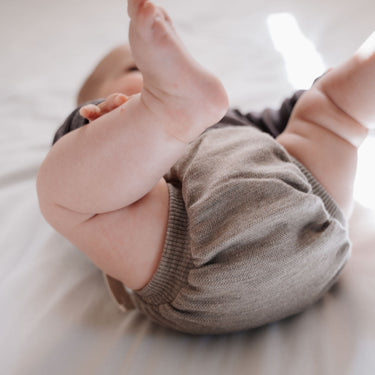
A diaper rash can quickly become a source of insecurity for new parents during the postpartum period. One moment the skin was soft and unremarkable, and suddenly it's red, irritated, sensitive, or sore. Your baby might cry during diaper changes, pull their legs up, or become restless as soon as you touch the diaper area.
Especially with newborns, this often feels terrible for parents. This delicate, fragile skin. This new responsibility. And then the question: Did I change the diaper too late? Is my baby not tolerating the diaper? Is it due to wet wipes, bowel movements, breastfeeding, bottle feeding, cloth diapers, or elimination communication? What really helps – and when do I need to see a doctor?
The most important guideline is: Diaper rash is common in babies. It requires gentle, consistent care, plenty of dryness, as little friction as possible – and close attention if it doesn't improve.
In this article, you will find calm, practical, and non-dogmatic guidance: why babies can get diaper rash in the postpartum period, what helps with reddened skin, what care is useful, how diaper changes and elimination communication can provide relief, what role inserts, clothing, and moisture play – and when you should ask a midwife, pediatrician, or doctor.
What does "diaper rash" mean in babies?
"Diaper rash" usually refers to reddened, irritated, or inflamed skin in the diaper area. Clinically, it is often called diaper dermatitis when the skin in the buttocks and genital area is inflamed due to moisture, friction, urine, or stool.
It can start subtly: a little redness, a sensitive area, a spot that feels uncomfortable during cleaning. But it can also develop more severely, with weeping areas, open skin, pustules, or a fungal infection.
Diaper rash can manifest as:
- Redness in the diaper area
- Irritated skin
- Sensitive spots
- Baby crying during diaper changes
- Skin feeling warm or rough
- Small open sores
- Weeping
- Pustules or scaly patches
gesund.bund.de describes diaper dermatitis as skin inflammation in the buttocks and genital area that can result from a moist environment in the diaper and prolonged contact with urine or stool. You can find more information at gesund.bund.de: Diaper Dermatitis.
Why do babies get diaper rash?
The skin in the diaper area is exposed to special stresses. It is kept warm, often moist, comes into contact with urine and stool, and is cleaned several times a day. Especially in the postpartum period, when bowel movements can be frequent and liquid, the skin can react quickly.
A diaper rash usually does not result from a single mistake. Often, several factors come together.
Possible triggers include:
- Moisture in the diaper, backup, or insert
- Prolonged contact with stool
- Frequent bowel movements
- Friction from the diaper, insert, or clothing
- Infrequent changes
- Overly aggressive cleaning
- Scented wet wipes
- Skin folds that do not dry
- Diarrhea
- Infections, such as fungal infections
The goal is therefore not to assign blame. The goal is to improve the skin conditions.
Newborn skin is particularly sensitive
A newborn's skin is still very delicate. After birth, it must adapt to air, clothing, water, care products, temperature, bodily excretions, and touch. In the diaper area, a moist, warm microclimate is an additional factor.
Therefore, a baby's skin can react more quickly than adult skin. What seems harmless to you can cause a burning sensation for your baby: rubbing with wipes, fragrances, too many products, wet inserts, or a tight waistband.
Therefore, in the postpartum period:
- Clean gently
- Do not rub
- Keep as dry as possible
- Change wet items promptly
- Use few products
- Observe the skin
- If it worsens, seek professional advice
Fewer care products do not mean less care. Often, it means the exact opposite: You allow the baby's skin to heal undisturbed.
You can find more about gentle baby care here: Baby Care in the Postpartum Period: What Your Newborn Really Needs.
First step: Change more frequently
At the first signs of a diaper rash, more frequent changes are particularly important. The less time urine and stool remain on the skin, the better the skin can calm down.
Stool, in particular, should be removed as soon as possible. This applies equally to disposable diapers, cloth diapers, inserts, and elimination communication pants.
Helpful tips:
- Change as soon as possible after a bowel movement
- Do not leave wet inserts on the body for long
- At night, if there is a diaper rash, carefully consider if a change is necessary
- Do not fasten the backup too tightly
- Keep changing supplies close at hand
- Briefly check the skin at each change
kindergesundheit-info.de recommends frequent changes at the first signs of diaper rash, especially immediately after a bowel movement, thorough drying, and allowing the skin to air out as often as possible. You can find more information at kindergesundheit-info.de: Skin Problems in Babies.
Gentle cleaning: Water is often enough
If the bottom is sore, cleaning should be as mild as possible. Many parents automatically reach for wet wipes. They are practical, but on irritated skin, fragrances, preservatives, or friction can cause additional irritation.
Often, warm water and a soft washcloth are sufficient. It is important not to rub.
Gentle cleaning means:
- Use warm water
- Use a soft washcloth or muslin cloth
- Gently remove stool residue
- Do not rub vigorously
- Gently clean skin folds
- Afterward, carefully pat dry
- If irritation is severe, ask your midwife about suitable care
If you use wet wipes on the go, unscented, sensitive varieties can be useful. At home, water is often the simplest solution.
Pat dry: Small action, big effect
After cleaning, the diaper area should be dry before a new diaper, insert, or elimination communication pant is put on. Moisture in skin folds can worsen irritation.
Important: pat instead of rub.
Pay particular attention to:
- Skin folds in the groin
- Buttock crease
- Area under the belly
- Areas where inserts rest
- Edges of the diaper or backup
If your baby cries during drying, work slowly, warmly, and calmly. Sometimes it helps to let the area air dry briefly.
Let the skin breathe
Air is often very helpful for diaper rash. Without a diaper, without a wet insert, without friction, the skin can dry and calm down.
In the postpartum period, this doesn't have to be complicated. A few minutes on a changing pad, a towel, or a waterproof mat are often enough.
Air time can look like this:
- Leave without a diaper briefly after cleaning
- Keep the baby warm
- Use a mat
- Do not leave directly on a cold surface
- For boys, expect spontaneous peeing
- Short periods instead of a big production
If you are trying elimination communication or diaper-free, this air time is often easier to integrate into daily life anyway.
Diaper rash cream: When cream can be useful
For reddened skin, a suitable diaper rash cream can help protect the skin from further contact with moisture and stool. Products containing zinc or dexpanthenol are often used. What is right for your baby should be discussed with your midwife or pediatrician if you are unsure.
Important when using cream:
- Apply only thinly
- Do not constantly smear thick layers on top of each other
- Gently clean and dry the skin beforehand
- If it worsens, do not continue to experiment
- For open, weeping, or unusual spots, seek professional advice
Cream does not replace frequent changes and keeping the area dry. It is one component, not the entire solution.
Oil for diaper rash?
Oils are often recommended in baby care, for example, for gently removing dirt. However, caution is advised with sore skin.
kindergesundheit-info.de points out that oil should not be used for cleaning sore bottoms, as it can sting on sore skin and promote fungal growth.
Therefore, for sore skin, it's better to:
- Use water instead of oil for cleaning
- Pat gently instead of rubbing
- Seek professional advice for care products
- Do not use scented oils on irritated skin
If you use oil in other care situations, it is not necessarily wrong. However, with sore, irritated skin, you should be particularly reserved.
Wet wipes: Practical, but not always ideal
Wet wipes are practical on the go. However, with a sore bottom, they can cause additional irritation, especially if they are perfumed or if you have to rub vigorously.
If the bottom is sore, it can help to:
- Use water and a washcloth at home
- Choose mild, unscented wipes when out and about
- Do not rub
- Let it dry afterward
- Do not view wet wipes as a permanent solution if the skin reacts
A small bottle of water and a soft washcloth in the diaper bag can be a good alternative when you're out.
Diaper rash and elimination communication: Can EC help?
Elimination communication or EC can provide real relief for diaper rash – not as a promise of a cure, but because less waste ends up in the diaper and the skin gets more air exposure.
If your baby is allowed to pee or poop outside the diaper, the skin sometimes remains in contact with moisture or stool for a shorter period. Additionally, EC offers natural moments when the baby is without a diaper.
EC can be particularly useful:
- After waking up
- During diaper changes
- After breastfeeding or bottle-feeding
- When your baby is straining
- When you notice a bowel movement is coming
- During air time after cleaning
Important: If the bottom is very sore and your baby cries when touched, EC should be gentle, brief, and without pressure. If it's not suitable at the moment, use a backup or insert.
If you want to learn more about elimination communication, you can start here: What does "Elimination Communication from Birth" actually mean?.
If you want to know what you really need to get started, read on here: Elimination Communication Starter Kit: What you really need.
Elimination communication pants for diaper rash
Elimination communication pants can help in everyday life because they provide security and at the same time allow easier access. Especially with a sore bottom, every action that means less friction, less lengthy undressing, and less stress counts.
For diaper rash, pay attention to:
- Soft materials
- Good fit without digging in
- Regularly change inserts
- Do not leave wet inserts on the bottom for long
- Check edges that could rub
- Do not fasten the backup too tightly
- Allow the skin to air out periodically
Suitable areas can be found here: Elimination Communication Diapers, Diaper Inserts, Elimination Communication Pants, and the Portable Changing Pad.
Inserts: Absorbency and changing rhythm
Inserts are practical, but they should be suitable for the situation. With a sore bottom, it's not just about how much an insert absorbs, but also how long it stays moist on the body and how it lies against the skin.
Helpful for diaper rash:
- Change inserts more frequently
- Do not let wet inserts be worn for long
- Ensure a smooth fit
- No misplaced edges on sore spots
- If necessary, combine a highly absorbent insert with frequent changes
- At night, observe carefully what the skin tolerates
A highly absorbent insert only helps if it is changed in good time. Dryness is more important than a very bulky diaper.
Cloth diapers, disposable diapers, or elimination communication pants for diaper rash?
When the bottom is sore, many parents immediately ask if they need to change their diapering system. Sometimes this can be useful. Often, however, it is enough to improve care, changing rhythm, fit, and moisture management.
Important for any system:
- Change frequently
- Remove stool quickly
- Clean skin gently
- Dry thoroughly
- Allow air time
- Avoid friction
- If it worsens, seek professional advice
If you are weighing different options, you can find a non-dogmatic overview here: Disposable Diapers, Cloth Diapers, or Elimination Communication: What are the options?.
Clothing for diaper rash
Clothing can also affect diaper rash. A tight bodysuit can press the diaper or backup against the skin. Tight pants can increase friction. Too many layers can trap moisture and heat.
Practical options include:
- Soft bodysuits
- Appropriate size, not too small
- Loose pants
- Soft cuffs
- No constricting seams in the diaper area
- Clothing that allows for quick diaper changes and elimination communication
- Natural materials that feel comfortable on the skin
If your baby frequently gets diaper rash, it's worth taking a look at the entire clothing layer, not just the diaper.
You can find more information here: What Clothing Does a Newborn Really Need? and here: Wrap Bodysuit or Lap-Shoulder Bodysuit: Which is better?.
You can find more about material selection here: Natural Baby Clothes: Wool, Wool/Tencel, and Cotton Compared.
Diaper rash caused by stool
Stool irritates the skin more than urine. Especially with frequent, loose stools or diarrhea, the bottom can become sore very quickly. Also, in the first few weeks, when digestion is settling in, the skin can react sensitively.
Then it is particularly important to:
- Remove stool as quickly as possible
- Clean gently with water
- Pat dry thoroughly
- Use skin protection as professionally recommended
- Allow air time
- If diarrhea or a sick-looking baby, seek professional medical advice
If your baby has diarrhea, is drinking poorly, has a fever, seems lethargic, or has few wet diapers, you should not only think about skin care but seek medical advice.
Diaper rash and tummy ache
Sometimes diaper rash, frequent straining, tummy aches, and bowel movements occur together. Your baby is restless, is changed frequently, may have looser stools, and reacts more sensitively to every cleaning.
A calm routine is especially helpful then.
You can check:
- Does your baby need to have a bowel movement or pee?
- Does your baby calm down after elimination communication?
- Is the frequent stool irritating the skin?
- Is the diaper pressing on the stomach?
- Does your baby need more air time after cleaning?
You can find more about tummy pressure here: Baby has a tummy ache in the postpartum period: What really helps.
Diaper rash at night
At night, the situation is more difficult. You don't want to wake your baby unnecessarily, but a sore bottom needs more frequent changes and less prolonged contact with moisture or stool.
Helpful at night:
- Keep changing station prepared
- Use dim lighting
- Keep inserts ready to hand
- change when stooling
- change wet inserts more often if skin is severely chafed
- clean gently, do not rub for a long time
- then gently help them back to sleep
If your baby drinks a lot, excretes frequently, or spits up a lot at night, a small changing and care area near the sleeping place can be very helpful.
More about nighttime care can be found here: Dressing baby at night: What does a newborn need for sleep?.
Diaper rash and bathing baby
Many parents wonder if bathing helps or harms with diaper rash. A short bath in clear water can be pleasant, but is not essential. It's important to pat the skin dry thoroughly afterwards, especially in the folds.
You don't need bubble bath or scented additives. If the skin is open, severely irritated, or weeping, you should consult your midwife or pediatrician before experimenting with additives.
Important when bathing or washing:
- short and calm
- clear water is often enough
- no scented bath additives
- do not rub
- dry skin folds thoroughly
- allow air time afterwards
More information can be found here: Bathing baby for the first time: What's really important in the postpartum period.
Diaper rash and umbilical cord care
In the postpartum period, umbilical cord care and diaper care often occur close together. Nevertheless, you should consider both areas separately: What makes sense for the bottom does not automatically belong on the navel. Creams, moisture, or stool residue should not get into the navel area.
Practical tips:
- first check the navel, then clean the diaper area
- if soiled, clean from front to back
- keep the navel dry
- close diaper or elimination communication wrap below the navel
- do not apply diaper cream to the navel
More information can be found here: Umbilical cord care for newborns in the postpartum period.
Diaper Thrush: When a fungus is involved
Sometimes a diaper rash is not just irritated, but also has a fungal infection. In this case, the skin often appears more inflamed, sometimes with small pustules, scaly edges, or redness that does not improve despite care.
Ultimately, only a professional can assess whether a fungus, bacteria, or another cause is involved.
Please ask if:
- the bottom does not improve despite good care
- small pustules appear
- the skin is weeping
- redness spreads
- your baby seems to be in severe pain
- you notice white coating in the mouth
- fever or signs of illness appear
Pediatricians online describe that diaper rash or fungal infections can be recognized by redness, soreness, flaky skin, or small pustules, and that only a pediatrician can reliably determine whether bacteria or fungi are involved. You can find more information at Kinderärzte im Netz: Diaper Dermatitis and Diaper Thrush.
When to seek professional help
Mild diaper rash can often improve quickly with consistent care. But there are situations where you should not wait long.
Please ask your midwife, pediatrician, or doctor if:
- the redness is severe
- open or weeping areas appear
- small pustules or blisters occur
- the skin is bleeding
- your baby cries severely during diaper changes
- the rash spreads
- no improvement occurs after two to three days
- fever develops
- diarrhea or vomiting develops
- your baby is drinking poorly or seems sluggish
- you are unsure what to use
gesund.bund.de describes that diaper dermatitis usually improves after two to three days with consistent care measures. If symptoms persist, worsen, or signs of infection appear, professional advice should be sought. Further information can be found at gesund.bund.de: Diaper Dermatitis.
What you should not do with diaper rash
When the bottom is sore, activism quickly sets in. But baby's skin doesn't need as many measures as possible. It needs the right ones.
Please avoid:
- vigorous rubbing
- scented wet wipes on irritated skin
- constantly changing care products
- oil on sore skin for cleaning
- thick cream layers without cleaning
- tight diaper packages
- wet inserts staying on the body for a long time
- powder
- home remedies on open wounds without professional recommendation
Powder, in particular, can be problematic because it can be inhaled and clump in skin folds. Always use care products sparingly for newborns and, when in doubt, after consultation.
Diaper rash on the go
Diaper rash is particularly inconvenient when on the go, as diaper changes are often less calm. With a little preparation, it becomes easier.
In the diaper bag you can put:
- changing mat
- soft washcloths
- small water bottle for cleaning
- mild wet wipes for emergencies
- fresh inserts
- elimination communication wrap or backup
- change of bodysuit
- wet bag or laundry bag
- suitable diaper rash cream, if you use it
More information can be found here: Packing a diaper bag: What you really need on the go.
The partner and diaper rash
Diaper rash is not just a "mom's issue." It's a shared care situation. The partner or second caregiver can provide very specific help.
The partner can:
- change diapers more frequently
- remove stool immediately
- prepare washcloths
- refill inserts
- allow for air time
- offer elimination communication
- take over laundry
- contact midwife or pediatrician's office
- relieve the mother if baby cries during diaper changes
More information can be found here: Partner in the postpartum period: What really helps after birth.
With a sibling: Keep diaper changes calm
If there is an older child, a baby's diaper rash can make diaper changing moments more stressful. The baby cries, the sibling watches, asks questions, or wants to help.
Helpful tips:
- Make diaper changes as calm as possible
- Sibling can hand over a muslin cloth
- Avoid hectic situations at the changing station
- Never leave baby unattended
- Do not blame the older child for the baby's crying
- Partner takes care of one of the children
More information can be found here: Postpartum with a sibling: What really helps you.
Diaper rash and the first days at home
Especially in the first days at home, diaper rash can further unsettle parents. Everything is new: breastfeeding or bottle feeding, excretions, umbilical cord care, spitting up, sleep, and your own recovery. An irritated diaper area is then not just a skin issue, but also a stress issue.
Relief comes from:
- well-prepared changing station
- keeping changing supplies within reach
- not agonizing alone, but asking the midwife
- involving the partner in diaper changing and care routines
- reducing visitors if care requires a lot of time
More about settling in at home can be found here: The first days at home with baby.
A simple immediate routine for diaper rash
With each change
- remove diaper, backup, or insert
- gently clean with water when stooling
- do not rub
- pat dry
- briefly expose skin to air
- apply a thin layer of suitable protective cream if needed
- apply fresh insert or backup
Several times a day
- allow for air time
- offer elimination communication in standard situations
- check clothing and cuffs
- observe skin development
- replenish laundry and inserts
After two to three days
- check: Is it getting better?
- if no improvement, seek professional advice
- if it worsens, do not wait
- if pustules, weeping, or fever, seek advice immediately
A simple checklist: Diaper rash in babies
What usually helps
- frequent changes
- remove stool quickly
- clean with water
- pat dry
- expose skin to air
- avoid friction
- do not close backup or diaper too tightly
- use suitable protective cream thinly if needed
For elimination communication and potty training
- offer during diaper changes
- offer after waking up
- offer after drinking, if it fits calmly
- react quickly to stooling signals
- use an elimination communication wrap as a backup
- no pressure if your baby is sore and sensitive
Please avoid
- rubbing
- fragrant care products on irritated skin
- oil for cleaning sore skin
- constantly trying new products
- leaving wet inserts on for a long time
- tight clothing
- home remedies on open wounds without consultation
Please seek help if
- severe redness
- open sores
- weeping
- pustules or blisters
- bleeding
- fever
- baby appears ill or sluggish
- no improvement after a few days
- you are unsure
Frequently Asked Questions: Diaper Rash in Babies
What quickly helps with diaper rash in babies?
Frequent changes, quick removal of stool, gentle cleaning with water, careful patting dry, exposing the skin to air, and avoiding friction are the most important first steps. If needed, a suitable protective cream can help.
Should I use wet wipes for diaper rash?
For irritated skin, warm water with a soft washcloth is often gentler. If you use wet wipes, choose the mildest, unscented varieties possible and do not rub.
Can my baby lie without a diaper when they have diaper rash?
Yes, short periods of air exposure can be very helpful. Make sure your baby is warm and you use a suitable changing pad.
Can elimination communication help with diaper rash?
Yes, elimination communication can bring relief because urine and stool don't always end up in a diaper or insert, and the skin gets more air. However, it's not a must and should remain gentle, especially if your baby is sensitive.
Which diaper is best for diaper rash?
The key is less about ideology and more about the conditions: frequent changes, keeping dry, avoiding friction, good fit, quick removal of stool, and observing the skin. Elimination communication wraps can be practical if they fit well and are changed regularly.
When should I see a doctor for diaper rash?
If the skin is severely red, open, weeping, or bleeding, if pustules or blisters appear, if your baby has a fever, seems ill, or if there is no improvement after a few days, you should consult your midwife, pediatrician, or doctor.
Can diaper rash be a fungal infection?
Yes, sometimes a fungal infection can occur. Indications may include pustules, scaly edges, severe redness, or a lack of improvement despite care. This should be clarified by a pediatrician.
Should I put oil on a baby's sore bottom?
For sore skin, oil for cleaning is not ideal. kindergesundheit-info.de points out that oil on sore skin can sting and promote fungal growth. For irritated skin, it's better to use water and seek professional advice regarding care products.
Can clothing worsen diaper rash?
Yes, tight bodysuits, constricting cuffs, displaced inserts, or too many warm layers can increase friction and moisture. Soft, well-fitting clothing can relieve the diaper area.
A calm thought to conclude
Diaper rash in a baby often feels worse to parents than the words suggest. You see your baby is sensitive. You want to help immediately. And at the same time, there are so many opinions: cream, no cream, changing diapers, changing diapers at night, wet wipes, water, cloth diapers, disposable diapers, elimination communication.
You don't have to turn it into an ideology.
Start simply: change more frequently. Remove stool quickly. Water instead of rubbing. Pat dry. Let air get to the skin. Loosen clothing and backup. Offer elimination communication if it fits. Use elimination communication wraps and inserts as support, not as pressure.
And if it doesn't get better, if the skin is weeping, bleeding, pustules appear, your baby seems ill, or you are unsure: ask a professional.
Baby care in the postpartum period doesn't have to be perfect. It can be attentive.
Gentle. Clear. And without guilt.
This also aligns with Mata Origin's philosophy: Starting your baby's first year naturally doesn't mean controlling every care situation perfectly. It means accompanying your baby attentively, with minimal irritants, and practically—with soft materials, thoughtful designs, and routines that truly relieve your daily life.
If you want to accompany your baby with soft materials, practical cuts, and a relaxed approach to diapering, elimination communication, and care, you'll find thoughtful companions for this initial period at Mata Origin.
Discover suitable products for the postpartum period, diapering, and elimination communication: Elimination communication wraps, diaper inserts, elimination communication pants, and the portable changing mat.
Note: This article does not replace medical, midwifery, or pediatric advice. It is intended to provide guidance. For severe redness, open, weeping, or bleeding areas, pustules, blisters, unpleasant odor, fever, diarrhea, poor drinking, unusual drowsiness, poor general condition, or if there is no improvement after a few days, please contact your midwife, pediatrician, or doctor. In case of acute severe symptoms, seek immediate medical help.