
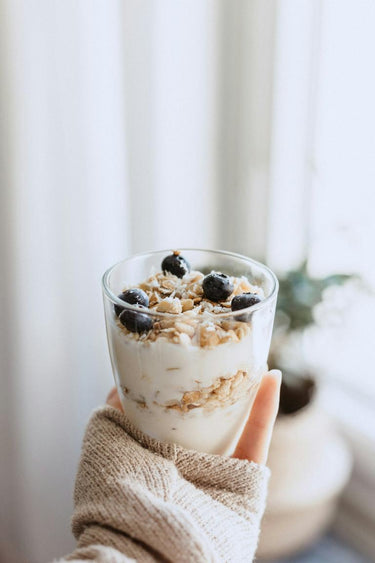
Postpartum food might sound like a minor detail at first. In reality, it can be one of the most important building blocks for the first days and weeks after birth.
Because after birth, you don't just need baby clothes, diapers, a changing station, and a packed hospital bag. You need nourishment. Warmth. Fluids. Something that provides for you without you having to think long, shop, cook, or clean up.
Many expectant parents plan very precisely what the baby needs. But they plan too little for what the mother needs after birth. Yet, food in the postpartum period is not a secondary matter. It is care.
The most important guideline is: postpartum food doesn't have to be perfect, especially healthy, or elaborately cooked. It should be easily accessible, nourishing, warm, well-tolerated, and realistic.
In this article, you will find practical, natural, and undogmatic guidance: What can you prepare before birth? Which meals are suitable for the postpartum period? Which snacks really help? How do you organize food with visitors, partners, or family? And why is a well-filled water bottle sometimes just as important as a perfectly set up changing station?
Why postpartum food is so important
After birth, a lot happens at once. Your body recovers. Your uterus retracts. Perhaps you have birth injuries, a C-section scar, afterpains, bleeding, sleep deprivation, or an intense breastfeeding start. At the same time, your baby needs closeness, nourishment, diaper changes, warmth, and guidance.
Eating regularly during this phase is often more difficult than one might think beforehand. Not because there is no food. But because no one remembers to prepare it on time. Or because you're sitting with the baby in your arms and only realize much too late that you haven't eaten for hours.
Good postpartum food helps because it:
- gives you energy
- structures your day
- can make breastfeeding or bottle-feeding more relaxed
- relieves the burden on the second parent
- meaningfully involves visitors
- prevents you from living solely on cookies and coffee
- gives you the feeling of being cared for
It's not about creating a perfect postpartum diet. It's about taking the mother's care as seriously as the baby's care.
More on preparing for this initial period can be found here: Preparing for the postpartum period: What you can organize before birth.
Postpartum is not a time for perfection
Many dietary ideas surrounding birth and postpartum quickly sound strict: especially nutrient-rich, especially pure, especially warm, especially traditional, especially conscious. This can be inspiring. But it can also create pressure.
You don't have to eat perfectly during postpartum. You don't have to cook fresh every day. You don't have to fulfill all recommendations. You also don't suddenly have to eat completely differently than before.
A good postpartum diet is one that actually works for you.
It can be:
- simple
- warm
- prepared
- repeatable
- well-tolerated
- not too complicated
- adapted to your everyday life
- sometimes very pragmatic
If you eat a soup from the freezer, that's good. If visitors bring a stew, that's good. If you eat bread at night because it's the only thing accessible, that's also better than nothing.
What does the mother need after birth?
After birth, the mother needs rest, fluids, energy, support, and regular meals. Especially if you are breastfeeding, it makes sense to drink and eat regularly throughout the day. But even if you are not breastfeeding, your body needs nourishment and recovery.
Helpful for the first few weeks:
- regular meals
- warm food, if it feels good to you
- nourishing snacks within reach
- water or unsweetened tea at every nursing or resting spot
- food that can be eaten with one hand
- dishes that can be quickly reheated
- support from partners, family, or visitors
The general dietary guidelines for regular, balanced eating and sufficient drinking during breastfeeding are based on Gesund ins Leben: Eating and drinking during breastfeeding and kindergesundheit-info.de on maternal nutrition during breastfeeding.
If you have special dietary questions, follow a vegan diet, have illnesses, take medications, or wish to use nutritional supplements, please discuss this with your midwife, doctor, or physician.
The best postpartum kitchen: warm, simple, ready to hand
In the postpartum period, dishes that don't require much attention work best. You probably won't be calmly monitoring three pots, finely chopping vegetables, and casually cleaning up at the same time.
Good dishes are those that you can prepare, reheat, portion, and, if necessary, eat with the baby in your arms.
Especially practical are:
- soups
- stews
- curries
- oven dishes
- casseroles
- pre-cooked grains like rice, millet, or quinoa
- pasta sauces
- vegetable sauces
- savory muffins or patties
- breakfast that can be prepared in advance
It's not important that every dish is particularly refined. It's important that it gets eaten.
What you can pre-cook before birth
Pre-cooking before birth can be very relieving. Especially if you don't want to rely on delivery services, spontaneous shopping, or daily cooking.
You don't have to meal prep for days. Just a few prepared portions can make the start easier.
Good for pre-cooking are:
- lentil soup
- vegetable soup
- potato soup
- pumpkin soup
- chicken soup, if you eat meat
- vegetable curry
- lentil curry
- tomato sauce
- bolognese or vegetarian bolognese
- lasagna
- casserole
- stew with beans or lentils
- patties
- cooked rice or grains as a side dish
Most practical are portion sizes for one or two meals. Large freezer containers seem efficient, but are often impractical in the postpartum period because you then have to thaw everything at once.
The freezer as postpartum help
A well-stocked freezer is often more valuable in the postpartum period than a perfectly equipped nursery. Because hunger reliably comes. Time to cook does not.
Helpful when freezing:
- choose small portions
- label dishes
- write down the date
- note thawing instructions
- use flat containers if space is limited
- prepare some quick single portions
- also freeze snacks or breakfast ideas
If you have limited freezer space, prioritize dishes that truly replace meals: soup, stew, sauce, curry, casserole. Small snacks can also be kept fresh or in the pantry.
Breakfast in the postpartum period
Breakfast is often underestimated in the postpartum period. The night may have been short. The baby may have fed frequently. You are exhausted. And suddenly it's lunchtime without you having eaten properly.
That's why it's worth preparing simple breakfasts.
Practical breakfast ideas:
- Overnight Oats
- Porridge
- Bread with spread, cheese, or nut butter
- Yogurt with muesli and fruit
- Boiled eggs, if you like them
- Smoothie, if it suits you
- Pre-baked breakfast muffins
- Oatmeal cookies or energy balls
Especially helpful is a breakfast that someone else can quickly bring. Or that you prepare and only need to take out of the fridge in the morning.
Snacks for the nursing or resting spot
Many mothers get hungry, especially during breastfeeding or at night. But even if you're not breastfeeding, you're probably sitting a lot with the baby, have few free hands, and need quick energy.
A small snack basket can therefore be very helpful.
In the snack basket can be:
- nuts or trail mix
- dried fruits
- granola bars
- oatmeal cookies
- crackers
- rice cakes
- fruit that doesn't spoil immediately
- nut butter in a jar
- a small chocolate, if it makes you feel good
The snack basket is not a perfect dietary solution. It is an emergency bridge. It prevents you from not eating for hours.
If you want to consciously prepare your nursing or resting spot, you will find suitable guidance here: Setting up a nursing station: What you really need in the postpartum period.
Drinking in the postpartum period
Drinking is a big topic in the postpartum period. Especially if you are breastfeeding, thirst can be very present. But even without breastfeeding, you need sufficient fluids after birth, blood loss, sleep deprivation, and physical recovery.
Place water where you actually are: next to the bed, at the nursing station, on the sofa, at the changing station, or in the kitchen.
Practical are:
- large water bottle with lid
- water at every resting spot
- unsweetened tea
- diluted juice, if you like it
- thermos with warm tea
- a glass of water during each nursing or feeding session
If you forget to drink, no abstract rule will help. Then visibility helps. Water must be where you are sitting.
Postpartum food if you are breastfeeding
If you are breastfeeding, you don't have to eat perfectly for your breast milk to be "good enough." Your body is designed to nourish your baby. Nevertheless, your body also needs replenishment: energy, fluids, and nutrients.
For everyday life, it is more important to eat regularly and balanced than to follow complicated breastfeeding recipes.
Helpful during breastfeeding:
- regular meals
- snacks within reach
- water or tea at the nursing station
- don't go too long without eating
- seek help if breastfeeding is very painful or your baby is not feeding well
- no strict diets in the early postpartum period without professional guidance
If you feel that your baby is not getting enough, your baby seems very sleepy, has few wet diapers, or you are unsure, please contact your midwife, lactation consultant, pediatrician, or doctor.
If your baby wants to feed very frequently, this article may be helpful: Clusterfeeding in the postpartum period: When your baby constantly wants to feed.
More about milk coming in can be found here: Milk coming in after birth: What really helps you in the postpartum period.
Postpartum food if you are not breastfeeding
Even if you are not breastfeeding, you still need care. Sometimes nutrition after birth is thought of almost exclusively in connection with breastfeeding. This is too narrow.
Your body has still given birth. You have still lost blood, are healing, sleeping little, carrying, holding, changing diapers, feeding, and emotionally arriving in a new phase of life.
Even without breastfeeding, you need:
- regular meals
- fluids
- warm, simple foods
- snacks for nights or in between
- support with cooking and shopping
- rest instead of pressure
Postpartum food is not just breastfeeding food. It is mother food.
What should visitors bring?
Visitors in the postpartum period are helpful if they not only want to see the baby but also care for the family. Food is one of the best ways to do this.
Many people ask: "What can we do?" A clear answer can be: "Please bring food."
Good takeaways in the postpartum period:
- soup in a pot
- stew
- casserole
- pre-cut fruit
- bread and spreads
- freshly cooked lunch
- healthy snacks
- grocery shopping
- mother's favorite food
Important: Visitors should bring food that doesn't create extra work. No complicated ingredients, no open questions, no "I brought everything, you just have to finish it quickly."
More on visiting rules can be found here: Visitors in the postpartum period: How much external closeness really helps?.
Prepare a message for visitors
It can be very relieving to prepare a small message before birth. This way, you don't have to explain what you need in the postpartum period.
Example:
"We would be very happy if you would like to support us in the postpartum period. Food helps us most right now: a soup, a casserole, groceries, or something we just need to warm up. Please only come by arrangement and do not expect to be entertained. Thank you for making this first time easier for us."
This message is friendly and clear. It shifts the focus: away from baby visits, towards genuine support.
The role of the second parent in postpartum eating
The second parent can play a central role in postpartum eating. Not as occasional help, but as active provision.
Especially if the mother is breastfeeding, healing, or physically limited, she should not also have to be the food manager.
Specific tasks:
- refilling water bottles
- bringing breakfast
- replenishing snacks
- thawing pre-cooked food
- organizing groceries
- asking visitors for food
- labeling and storing leftovers
- ensuring the mother doesn't go hours without eating
The question "Have you eaten today?" can be a true act of love in the postpartum period.
More about the role of the second parent can be found here: Partners in the postpartum period: What really helps after birth.
Organize help so that food really arrives
Many people want to help but don't know how. Especially with food, you can be very specific: a grocery run on Tuesday, soup on Friday, snacks for the nursing box, breakfast for the first few days, or a warm dinner delivered to the door.
The more specific you are, the less you have to coordinate in the postpartum period.
Helpful can be:
- a small food list for family and friends
- clear information about intolerances
- naming favorite dishes
- agreeing on a time and handover
- having food left at the door if visitors are too much
- not expecting the return of complicated containers
More about practical support can be found here: Organizing help in the postpartum period: What really relieves you after birth.
Postpartum food and diaper changing routine
It may sound strange to think of food and diaper changing together. But in the postpartum period, everything is connected. If you are hungry, thirsty, and exhausted, changing diapers, changing clothes, elimination communication, or breastfeeding also feels harder.
If you are cared for, you have more peace for your baby.
Especially if you want to try elimination communication or diaper-free, your own care is important. Elimination communication thrives on perception, calm, and small standard situations. It becomes more difficult if you are completely depleted yourself.
Helpful connection:
- first drink, then change diaper
- keep a snack ready at the changing station or nursing station
- drink water after breastfeeding
- elimination communication only when it is easy
- use backup if you need to eat or rest
Elimination communication should adapt to your postpartum period, not the other way around.
If you want to learn more about elimination communication, you can start here: What does elimination communication from birth actually mean?.
If you want to know what you really need to start with elimination communication, read on here: Elimination Communication Starter Kit: What you really need.
Simple Supplies for the Postpartum Kitchen
Not everything has to be freshly prepared. A well-stocked pantry can save a lot during the postpartum period.
Useful supplies:
- oatmeal
- rice
- pasta
- lentils
- beans or chickpeas
- canned or jarred tomatoes
- vegetable broth
- nuts
- nut butter
- muesli
- crispbread or crackers
- tea
- shelf-stable spreads
Even if there's little in the fridge, pasta, tomato sauce, and lentils can still make a real meal.
Postpartum Shopping List
Before the birth, you can prepare a simple shopping list. It helps the other parent, family, or friends to shop without lengthy questions.
Fresh items:
- fruit
- vegetables
- yogurt or plant-based alternative
- cheese or spreads according to your preferences
- eggs, if you eat them
- bread
- salad or raw vegetables, if they suit you
For quick meals:
- pasta
- rice
- oatmeal
- lentils
- frozen vegetables
- tomato sauce
- broth
- pre-cooked meals
For snacks:
- nuts
- dried fruit
- bars
- crackers
- fruit
- oatmeal cookies
- chocolate or favorite snack
This list needs to suit you. If there are certain things you don't like, can't tolerate, or don't want to eat, they don't belong on your postpartum list.
What you don't need during postpartum
There are many demands surrounding nutrition after birth. Some are helpful, others create pressure.
Not necessary are:
- complicated recipes
- strict dietary rules without medical reason
- diets immediately after birth
- the goal of quickly looking "like before"
- daily fresh cooking by the mother
- visitors who want to be cooked for
- perfect meal prep lists
The postpartum period is not the time for self-optimization. It is the time for care.
Postpartum Food after C-section or Birth Injuries
After a C-section or with birth injuries, food can be planned even more practically. Perhaps you cannot stand for long. Perhaps bending, lifting, or cooking is uncomfortable. Perhaps you need more help.
Especially helpful then:
- having meals brought directly to bed or sofa
- water bottle with a good seal
- small portions instead of large plates
- easily accessible snacks
- no cooking while standing
- explicitly asking visitors for food
- observing medical or midwifery advice
If you have digestive problems, severe pain, fever, nausea, unusual bleeding, or concerns after birth, please ask your midwife, doctor, or physician.
You can find more information here: Postpartum after C-section: What really helps you.
Postpartum Food and Siblings
If there is already an older child, food becomes even more important. Not just for the mother, but for the whole family. A hungry sibling and a hungry postpartum mother are not a good combination.
Helpful are:
- simple family meals
- snack box for the older child
- pre-cooked favorite dishes
- visitors who bring food for everyone
- breakfast that is quickly ready
- no experiments immediately after birth
If possible, plan not just for "baby and mother," but for the entire household. The postpartum period affects everyone.
You can find more information here: Postpartum with a sibling: What really helps you.
Postpartum Food for the Night
Hunger at night is particularly unpleasant. You are tired, the baby is awake, perhaps you are breastfeeding or feeding, and the way to the kitchen feels far too long.
A small night snack can help.
Practical at night:
- water bottle by the bed
- small muesli bar
- crackers
- nuts
- banana
- oatmeal cookie
- thermos with tea
Choose things that don't crumble, don't smell strong, and don't require much preparation. Everything should remain simple at night.
If you want to prepare for nights with your baby, you can find a suitable addition here: Dressing baby at night: What does a newborn need to sleep?.
Postpartum Food and Visitor Boundaries
An important phrase for the postpartum period is: Whoever comes, brings something or helps.
This doesn't have to be meant harshly. It's simply realistic. A freshly formed family shouldn't have to entertain visitors.
You can say:
- "Please bring some food."
- "We can't have visitors right now, but food at the door would be wonderful."
- "If you'd like to help, you could do some grocery shopping."
- "Please don't expect us to prepare coffee and cake."
- "A short visit is possible, but without any catering."
People who genuinely want to help are often grateful for clear tasks.
Preparing Postpartum Food: When to Start?
You don't have to fill the freezer in the 20th week of pregnancy. It's usually more sensible in late pregnancy, as you slowly transition into postpartum mode.
A possible sequence:
- Around 30th week: Collect favorite recipes and write a list.
- Around 32nd week: Check pantry.
- Around 34th week: Pre-cook and freeze first dishes.
- Around 36th week: Prepare snack basket, drink bottles, and shopping list.
- Shortly before birth: Buy fresh basics or organize shopping help.
If you plan less, that's okay too. Even a shopping list and three frozen meals can make a big difference.
You can find more on general preparation here: Preparing for Postpartum: What you can organize before birth.
What to pack in your hospital bag?
Even in your hospital bag, some food can be useful. Not as a substitute for meals, but as a small help. Birth, breastfeeding initiation, and hospital routines don't always perfectly align with your hunger.
Practical for the hospital bag:
- bars
- nuts
- dried fruit
- crackers
- dextrose, if you want it
- favorite snack
- large water bottle
For special medical situations or requirements, discuss with your hospital, midwife, or doctor what is advisable regarding birth and stay.
You can find more on packing your hospital bag here: Packing your hospital bag: Natural, practical, and without too much clutter.
Postpartum Food and the First Days at Home
Especially in the first days at home, it becomes clear whether food was truly considered. The hospital bag may not have been unpacked yet. The baby is new. Nights are short. Breastfeeding or feeding requires attention. And yet, the mother's body needs real nourishment.
Therefore, postpartum food is not an extra, but part of your basic organization.
Helpful for the first days at home:
- one warm meal per day that doesn't need to be freshly cooked
- breakfast that is quickly accessible
- snacks by the bed or sofa
- water at every resting place
- visitors who bring food instead of expectations
- the other parent actively offering meals
You can find more on the first time at home here: The first days at home with baby.
A Simple Postpartum Food Checklist
Prepare before birth
- Select 5 to 10 simple dishes
- Pre-cook several portions
- Organize freezer
- Stock pantry
- Prepare snack basket
- Provide water bottles
- Write shopping list
- Ask visitors for food
For the breastfeeding or resting place
- Water
- Tea
- Nuts
- Bars
- Fruit
- Muslin cloth
- Small plate or bowl
For the refrigerator
- Yogurt or alternative
- Spreads
- Fruit and vegetables
- Cooked side dishes
- Ready-made soup or stew
- Bread toppings according to preference
For the freezer
- Soup
- Stew
- Curry
- Tomato sauce
- Casserole
- Patties
- Breakfast muffins or snacks
For visitors
- Prepare a clear message
- State food preferences
- Communicate intolerances
- Do not offer hospitality
- Accept help specifically
Frequently Asked Questions: Preparing Postpartum Food
What should you pre-cook for postpartum?
Soups, stews, curries, casseroles, tomato sauces, lentil or bean dishes, and simple side dishes are well-suited. It is important that the dishes can be easily reheated and frozen in portions.
How many meals should you prepare before birth?
There is no fixed number. Even 5 to 10 prepared portions can help. If you have space and energy, you can prepare more. If not, a shopping list and support from visitors are just as valuable.
What do you need to eat at the breastfeeding station?
Practical snacks that are quickly available include: nuts, bars, dried fruit, crackers, fruit, oatmeal cookies, or small prepared portions. Plus water or tea.
Does postpartum food always have to be warm?
No. Warm food is good for many women, but it is not mandatory. It is important that you eat regularly and feel well nourished. Sometimes a cold sandwich is more realistic than a perfect soup.
What should visitors bring during postpartum?
The most helpful items are ready-made meals, soup, stew, casserole, groceries, fruit, bread, or snacks. Visitors should bring food that doesn't create extra work.
What should you eat while breastfeeding?
A varied, balanced, and regular diet is advisable. You don't have to follow a complicated special diet. For specific dietary questions or uncertainties, please speak with your midwife, doctor, lactation consultant, or pediatrician.
Do I need postpartum food even if I'm not breastfeeding?
Yes. Even if you are not breastfeeding, your body needs energy, fluids, rest, and support after birth. Postpartum food is about nourishing the mother, not just breastfeeding nutrition.
What if I don't have an appetite during postpartum?
This can happen. Try small portions, warm drinks, or light meals. If lack of appetite persists, you feel very weak, don't drink enough, or other symptoms appear, ask your midwife or medical professional.
When should I prepare postpartum food?
Many families start in late pregnancy. From about the 30th week, you can collect favorite dishes, from about the 34th week, freeze initial portions, and shortly before birth, prepare snacks, drinks, and a shopping list.
A calm thought to conclude
Postpartum food is more than just food. It's a sign that the mother is not forgotten.
While everyone looks at the baby, she also needs water, warmth, soup, bread, snacks, rest, and people who don't ask if they can help, but actually provide concrete help.
You don't have to pre-cook everything perfectly before birth. You don't have to create an ideal postpartum kitchen. But you can prepare a few meals, write a shopping list, ask visitors for food, and place water where you will be sitting.
That sounds small. In the postpartum period, it is huge.
Because a nourished body copes more easily. Breastfeeds more easily. Heals more easily. Rests more easily. And finds the strength more readily to not only care for this new baby but also to look at it and slowly get to know it.
Postpartum doesn't begin with performance. It begins with care.
This perfectly aligns with Mata Origin's philosophy: starting the baby year naturally doesn't mean doing everything perfectly. It means protecting the fundamentals: closeness, warmth, nourishment, rest, simple routines, and things that truly relieve your daily life.
If you want to accompany your baby with natural materials, practical cuts, and an undogmatic view of diapering, elimination communication, and closeness, Mata Origin offers well-thought-out companions for this first period.
Discover suitable products for postpartum, diapering, and elimination communication: elimination communication diapers, diaper liners, elimination communication pants, and the changing pad for on the go.
Note: This article does not replace medical or nutritional advice. It is intended to provide guidance. For breastfeeding problems, severe exhaustion, unusual weight loss, loss of appetite, nausea, digestive problems, fever, severe pain, special diets, illnesses, medication intake, or uncertainty, please contact your midwife, doctor, lactation consultant, or pediatrician. For acute severe symptoms, seek immediate medical help.