
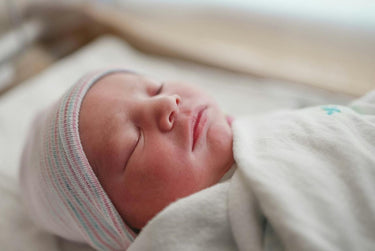
The first few days at home with a baby are special. The birth is behind you. Perhaps you're coming home from the hospital. Perhaps from the birth center. Perhaps your baby was born at home. And suddenly, a daily routine begins that isn't really a routine at all.
Everything is new: sleeping, feeding, changing diapers, holding, dressing, comforting, eating yourself, showering yourself, fending off or receiving visitors, replying to messages, categorizing pain, sorting emotions. Many parents only realize once they're home how significant this transition truly is.
The most important guideline is: The first few days at home are not about functioning quickly. They are about settling in.
In this article, you'll find calm, practical, and undogmatic guidance: What really helps in the first few days at home? What does your baby need? What does the mother need? How do you organize sleep, food, diaper changes, elimination communication, visitors, and support in a way that eases your burden instead of adding more pressure?
The First Days at Home Are Still the Postpartum Period
Many underestimate how soon you are back home after birth. Home feels familiar, but you are not the same person you were before the birth. Your body is recovering. Your baby has just entered the world. You are a newly formed family.
The postpartum period doesn't mean "taking it a little slower." The postpartum period means: recovery, healing, settling in, care, and protection.
In the first days at home, what matters most is:
- Rest
- Closeness
- Warmth
- Regular eating and drinking
- Household support
- Breastfeeding or feeding with support
- Observing diaper changes and elimination
- Medical and midwifery care
- Visitors only if they are genuinely helpful
You don't have to prove anything during these days. Not that you're resilient. Not that your baby is "easy to care for." Not that your home is tidy. Not that breastfeeding, sleeping, or diaper changes are going smoothly right away.
You can find more on preparing for this time here: Preparing for the Postpartum Period: What You Can Organize Before Birth.
If you want to understand the immediate transition after birth in more detail, you'll find the appropriate foundation here: The First 24 Hours with Baby: What Really Matters.
Coming Home: The Transition is Huge
The moment you arrive home with your baby can be overwhelming. Perhaps your apartment suddenly looks different. Perhaps everything is prepared, and yet nothing feels familiar. Perhaps you don't know where to put your baby down first. Perhaps you are simply exhausted.
That is normal.
It helps to keep the first day at home very simple. No visitors. No tidying up. No long phone calls. No "We have to organize everything now." Just settle in first.
Helpful for the first few hours at home:
- Calmly undress or change the baby
- Facilitate breastfeeding or feeding
- Show the changing station and have initial items ready
- Provide water and a snack for the mother
- Consciously put away your phone
- Briefly clarify with the midwife or accompanying person what is important next
- Don't feel obliged to unpack suitcases and bags immediately
If you're coming from the hospital, the bag can even wait a day. Laundry and tidiness are not the priority. The priority is mother, baby, and rest.
What Your Baby Needs in the First Days at Home
A newborn doesn't need entertainment, routines, or perfect equipment in the first few days. It needs closeness, nourishment, warmth, sleep, protection, and loving care.
Your baby primarily needs:
- Skin-to-skin contact
- Breastfeeding or feeding on demand and with support
- An appropriate temperature
- Quiet sleeping arrangements
- A fresh diaper, backup, or elimination communication offering
- Soft clothing
- Gentle cleaning
- People who observe and respond
Your baby is not manipulative, not spoiled, and not "too clingy." They are new to the world. Closeness is not an extra. Closeness is guidance.
What the Mother Needs in the First Days at Home
The mother needs at least as much protection as the baby. After birth, there's often a lot of focus on the newborn. This is understandable, but not sufficient. The mother's body is healing. Bleeding, afterpains, birth injuries, a C-section scar, milk coming in, circulation, hormones, sleep deprivation, and emotions can all be present simultaneously.
The mother needs:
- Rest
- Food without effort
- Plenty to drink
- Protection from visitor pressure
- Help getting up, if necessary
- Support with breastfeeding or feeding
- Serious consideration of pain and uncertainty
- No expectation to immediately resume household chores
If pain is severe, bleeding seems unusual, fever occurs, circulatory problems arise, or you have an uneasy feeling, please seek professional advice.
gesund.bund.de points out that mother and child need a lot of rest, care, and support after birth. Further information can be found at gesund.bund.de on birth preparation and the time after birth.
Midwife Visits: Support Is Part of the Plan
A midwife can be an enormous relief in the first few days at home. She checks on mother and baby, answers questions, supports breastfeeding or feeding, monitors recovery, wound healing, weight development, the umbilical cord, excretions, and many of the uncertainties of the beginning.
Especially with the first baby, it's normal to have many questions. But even with the second or third child, the start can be completely new.
You can discuss with your midwife:
- Breastfeeding or bottle feeding
- Weight and drinking behavior
- Stool and urine
- Umbilical cord care
- Lochia and postpartum recovery
- Pain or birth injuries
- Diapering, clothing, and temperature
- Elimination communication or diaper-free, if she is open to it
- Your emotional state
Information on midwifery care after birth and the right to postpartum care can be found at kindergesundheit-info.de on midwifery care.
If you are still pregnant and don't have a midwife, it is still advisable to ask about support services: gynecologist practices, pediatrician practices, clinics, birth centers, early intervention services, or local family counseling centers can be points of contact.
You can find more on this here: Finding a Midwife: How to Get Support During Pregnancy and the Postpartum Period.
The U2 Examination: An Important Appointment in the First Days
The U2 examination takes place in the first few days of life. It is a thorough medical examination of your baby and often takes place in the clinic. If you go home earlier or had an outpatient birth, you will need to organize the appointment accordingly.
Especially during the postpartum period, it is helpful not to have to remember such appointments alone. The other parent or a supportive person can help by remembering, noting appointment times, and organizing travel.
Practical for the U2:
- Clarify the appointment early
- Have the child's examination booklet ready
- Take health insurance card or necessary documents, if available
- Pack a change of clothes
- Take a changing mat and backup
- Plan enough time
According to kindergesundheit-info.de, the U2 usually takes place between the 3rd and 10th day of life. Further information can be found at kindergesundheit-info.de on the U2 examination.
You can find more on preparing for the first examinations here: Preparing for U2 and U3: What You Should Organize Before Birth.
Breastfeeding or Bottle Feeding at Home
At home, breastfeeding or bottle feeding often feels different than in the clinic. There, there might have been staff, a call bell, fixed routines, or other mothers. At home, you are more on your own. This can be lovely, but also unsettling.
Important: Breastfeeding is natural, but not always easy right away. Bottle feeding is practical, but also comes with questions. Your baby is learning. You are learning. You don't have to be perfect on the third day.
Helpful for breastfeeding or bottle feeding at home:
- A fixed, comfortable spot
- Water for you
- Snack within reach
- Muslin cloth
- Pillow or good arm support
- Dimmed lights at night
- Seek help if pain, uncertainty, or worries arise
If your baby is not feeding well, seems very sleepy, has little output, is losing a lot of weight, or you feel uncertain, please talk to your midwife, pediatrician, or doctor.
If you want to consciously prepare your breastfeeding spot, you'll find appropriate guidance here: Setting Up a Breastfeeding Spot: What You Really Need in the Postpartum Period.
Cluster Feeding and Milk Coming In
In the first few days at home, breastfeeding, feeding, and closeness can become very intense. Many babies want to feed very frequently or be at the breast for a long time. This can be unsettling, but it is not automatically a sign that something is wrong.
The milk coming in can also be physically and emotionally noticeable: engorged breasts, warmth, a feeling of pressure, tears, uncertainty, and a suddenly different body sensation.
Helpful is:
- Having frequent latching supported
- Drinking and eating plenty
- Changing breastfeeding positions
- Seeking support early if pain occurs
- Not having to decide alone if everything is "normal"
- Allowing for rest and retreat
You can find more on this here: Cluster Feeding in the Postpartum Period: When Your Baby Constantly Wants to Feed and here: Milk Coming In After Birth: What Really Helps You in the Postpartum Period.
If breastfeeding becomes painful, this article may be helpful: Sore Nipples in the Postpartum Period: What Really Helps with Breastfeeding.
Sleep in the First Days at Home
Sleep in the first few days is often irregular. Your baby doesn't yet have a fixed day-night rhythm. They sleep, wake up, feed, seek closeness, fall asleep again, are awake at night, or deeply tired during the day.
This is exhausting for parents, but not automatically a problem.
Helpful is:
- Not expecting fixed sleep schedules
- Resting during the day if possible
- Reducing light and stimuli at night
- Having a change of clothes and changing supplies ready
- Observing safe sleep practices
- Accepting help so the mother can sleep
If you are very tired, safety is especially important. Ensure your baby is lying safely if you fall asleep. Exhaustion is not a personal failure, but a real issue in the postpartum period.
You can find more on nightwear here: Dressing Baby at Night: What Does a Newborn Need for Sleep?.
If your baby only sleeps in your arms, you can find a suitable in-depth discussion here: Baby Only Sleeps in Your Arms: What Helps in the Postpartum Period.
Diapering in the First Days at Home
Diapering quickly becomes one of the most frequent actions in the first few days. At first, it can feel clumsy: holding the baby, moving their legs, cleaning, applying a new diaper or backup, closing the onesie, keeping everything warm.
It gets easier with repetition.
For relaxed diapering at home:
- Prepare the changing station
- Place all items within reach
- Never leave the baby alone on an elevated surface
- Use soft washcloths or wipes
- Keep a change of clothes handy
- Only undress as much as necessary
- Speak calmly and act slowly
The changing station doesn't have to be perfect. It just needs to work. A soft mat, water, wipes, backups, inserts, and a change of clothes are often enough for the beginning.
You can find more on this here: Setting Up a Changing Station: What You Really Need.
Elimination Communication or Diaper-Free in the First Days at Home
If you want to try elimination communication (EC) or going diaper-free, the first few days at home are a great opportunity to observe your baby. But they are not a performance test.
You don't have to recognize every signal. You don't have to catch every elimination. You don't have to prove that going diaper-free works.
You can simply use small standard situations.
Good first EC moments at home:
- During diaper changes
- After waking up
- After breastfeeding or feeding
- When your baby becomes restless
- Before sleep, if it feels easy
If your baby doesn't need to go, that's not a problem. If something misses, that's also not a problem. If you're tired, you let it go. Diaper-free can be part-time, especially in the postpartum period.
Helpful for getting started:
- EC diaper as a backup
- Absorbent inserts
- EC pants or easy-to-open clothing
- Changing mat
- Small potty or suitable EC spot
- Calm attitude without pressure of expectation
Suitable sections can be found here: EC Diapers, Diaper Inserts, EC Pants, and the Portable Changing Mat.
If you want to learn more about elimination communication, you'll find an introduction here: What Does Diaper-Free from Birth Actually Mean?.
If you want to know what you really need to start with elimination communication, read on here: Elimination Communication Starter Kit: What You Really Need.
Baby Clothes in the First Days at Home
Your baby doesn't need elaborate outfits at home. Soft, comfortable, temperature-appropriate, and easy to open is more important than cute.
Especially in the first few days, wrap-around bodysuits, soft pants, sleepsuits, one-pieces, and natural materials are particularly comfortable.
Practical items are:
- Wrap-around bodysuits
- Soft pants with a comfortable waistband
- Sleepsuits or one-pieces
- Socks
- Light or warming layers depending on the season
- Clothing that is quickly accessible for diaper changes or EC
If you're not sure if your baby is warm enough, check their neck. Warm and dry is usually a good sign. Damp or very hot suggests they might be too warm. Cool in conjunction with restlessness can mean a layer is missing.
You can find more on initial clothing here: What Clothes Does a Newborn Really Need?.
You can find more on the bodysuit question here: Wrap-Around Bodysuit or Regular Bodysuit: Which Is Better?.
You can find more on material choices here: Natural Baby Clothes: Wool, Wool/Tencel, and Cotton Compared.
Eating and Drinking: The Underestimated Postpartum Anchor
During the first few days at home, everything quickly revolves around the baby. It's easy to forget that the mother needs to eat and drink regularly. Proper nourishment is especially important when breastfeeding starts, after blood loss, with sleep deprivation, and during physical recovery.
Helpful tips:
- Water bottle in every room
- Easy, warm meals
- Snacks next to the nursing or feeding spot
- Soups, stews, or pre-prepared dishes
- Visitors who bring food instead of expecting coffee
- A co-parent or support person who actively provides care
A better question to ask visitors is not: "When do you want to come?" But rather: "Could you drop off some food?"
Find out more here: Preparing Postpartum Meals: What Really Helps After Birth.
Visitors in the first few days at home
Visitors can be lovely. But visitors can also be too much. Especially in the first few days at home, you need protection from expectations.
No one has a right to see your baby immediately. No one needs to sit on your sofa in the first few days while you're still bleeding, breastfeeding, crying, in pain, or simply needing rest.
Good visitor rules:
- Visitors only by invitation
- Short visit durations
- No one comes when sick
- Wash hands before contact with the baby
- Do not pass the baby around if you don't want to
- Visitors bring food or help practically
- No unsolicited advice
- Mother and baby have priority
If you want visitors, that's perfectly fine too. The key is: visitors should nourish you, not exhaust you.
Find out more here: Visitors during Postpartum: How much external closeness is truly beneficial?.
The role of the co-parent
In the first few days at home, the co-parent is not "help." He or she is part of the new family system.
Many tasks are not spectacular but crucial: bringing water, making food, holding the baby, changing diapers, answering messages, organizing appointments, limiting visitors, thinking ahead at night, protecting the mother.
Valuable tasks include:
- Restocking the changing station
- Preparing the diaper bag for appointments
- Keeping an eye on midwife appointments and the U2 check-up
- Organizing food and drinks
- Holding the baby after feeding
- Providing skin-to-skin contact
- Starting laundry without making a fuss
- Filtering visitors and messages
- Asking: "What do you need right now?"
Especially at the beginning, care is often very concrete. Don't talk. Do.
Find out more here: Partner in Postpartum: What truly helps after birth.
Organizing help before it all becomes too much
Many families wait for help until they are truly exhausted. In the postpartum period, it's often better to accept support early. Not because you can't manage, but because you don't have to unnecessarily deplete yourself.
Helpful support can include:
- Bringing food
- Doing groceries
- Looking after older siblings
- Doing laundry
- Walking the dog
- Tidying up briefly
- Driving to appointments
- Simply being there, without making demands
Find out more here: Organizing Help in the Postpartum Period: What truly relieves you after birth.
Housekeeping: What's truly necessary
In the first few days at home, the household doesn't have to run normally. It just needs to function well enough for you to be taken care of.
Important things:
- Clean dishes for eating and drinking
- Fresh laundry for mother and baby
- Taking out the trash
- Restocking changing supplies
- Keeping the toilet and bathroom generally usable
- Organizing food
Not important things:
- Perfect order
- Tidy living room
- Decorated nursery
- Guest-ready standard
- Answering all messages
- Folding laundry immediately
Those who want to help should take on concrete tasks. Not holding the baby while the mother tidies up. But tidying up so the mother can stay with the baby.
The first short walk
Some families want to go out briefly in the first few days. Others don't. Both are fine.
A first walk can be very short: a few minutes outside, once around the block, a brief moment on the balcony or in the garden. It's important that the mother feels well enough and the baby is appropriately protected.
Helpful for the first walk:
- Short distance
- No appointments
- Appropriate clothing
- Baby carrier or stroller as preferred
- Small changing kit
- Permission to turn back at any time
Find out more here: First Walk with Baby: When, how long, and what to bring?.
If you want to prepare your bag for this, you'll find the right packing list here: Packing Your Diaper Bag: What you really need on the go.
If your baby cries a lot in the first few days
If your baby cries a lot, it can be very exhausting. Especially at home, when the hospital structure falls away and everyone is tired, crying can quickly feel overwhelming.
Crying doesn't automatically mean you're doing something wrong. Your baby might be hungry, need closeness, be tired, have a tummy ache, be too warm or too cold, have a full diaper or a wet backup, or simply be overstimulated.
You can calmly check:
- Is your baby hungry?
- Does it need closeness or skin-to-skin contact?
- Is it too warm or too cold?
- Is the diaper or backup wet?
- Is it tired or overstimulated?
- Does it have a tummy ache or discomfort?
- Does it seem unusually lethargic or ill?
If your baby cries unusually shrilly, continuously, or differently than usual, feeds poorly, seems feverish, is very sleepy, or you have a bad feeling, please seek professional help.
Find out more here: Baby Cries in Postpartum: What really helps?.
Tummy aches, spitting up, and small uncertainties
In the first few days, tummy aches, discomfort, spitting up, or unsettled digestion can raise many questions. Often, much of this is part of the adjustment period. Nevertheless, it's important to take your feelings seriously.
Helpful tips:
- Hold and carry calmly
- Allow time after feeding
- Ensure a good feeding position
- Observe diaper changes and excretions
- If unsure, ask your midwife or pediatrician
Find out more here: Baby has a tummy ache postpartum: What really helps? and here: Baby spits up after feeding: What really helps in postpartum?.
When feelings are different than expected
The first few days at home can be emotionally very intense. Perhaps you are happy. Perhaps you cry a lot. Perhaps you feel empty, irritable, overwhelmed, or a stranger in your own life. Perhaps you love your baby and still want to run away. Such feelings can be frightening.
A certain emotional up and down after birth is common. Nevertheless, you shouldn't just endure everything. If you feel persistently very sad, anxious, disconnected, hopeless, or overwhelmed, please talk to your midwife, doctor, or pediatrician.
Talk about it if:
- you cry a lot
- you experience severe anxiety
- you feel unable to bond with your baby
- you can't sleep despite being exhausted
- you feel hopeless
- you have thoughts of harming yourself or your baby
If you have thoughts of self-harm or danger to yourself or your baby, please seek immediate help. This is an emergency and no reason to be ashamed.
What you don't have to decide in the first few days
Many parents believe they have to decide everything immediately: Breastfeed or bottle? Diaper-free or diapers? Co-sleeping or separate bed? Carrier or stroller? Visitor model? Daily rhythm?
You can leave many things open.
You don't have to decide yet:
- what your final sleep rhythm will look like
- whether diaper-free will be all the time or just sometimes
- which diaper system will permanently fit
- how often you will receive visitors
- what routines you will have later
- whether everything will stay as it is in week one
The first few days are for getting to know each other. Not for making fixed plans.
What can truly be prepared before birth
If you are still pregnant, you can prepare a few things that will make the first days at home easier.
Useful things:
- Prepare a postpartum recovery area
- Wash clothes in sizes 50/56 and 56
- Set up the changing station
- Pack the diaper bag for first appointments
- Prepare elimination communication (EC) diapers and inserts if you want to try EC
- Pre-cook meals or organize support
- Communicate visitor rules in advance
- Clarify midwife appointments
- Consider U2 organization if an outpatient birth is planned
You can find more on these topics here: Packing your hospital bag, Washing baby clothes before birth: what truly makes sense, and Packing your diaper bag.
A simple checklist for the first few days at home
For your baby
- Soft clothing
- Fresh diapers, backups, or elimination communication (EC) diapers
- Inserts
- Changing mat
- Muslin cloths
- Safe sleeping place
- Skin-to-skin contact and closeness
- Quiet feeding or nursing spots
For the mother
- Water
- Effortless food
- Comfortable clothing
- Resting place
- Pain relief or care as recommended by doctor or midwife
- Support with getting up and household tasks
- No pressure from visitors
For organization
- Clarify midwife appointments
- Keep an eye on U2 appointment
- Restock changing station
- Prepare diaper bag for appointments
- Empty laundry basket or wet bag
- Organize food
- Reduce messages
For elimination communication (EC) or infant pottying
- EC diaper as a backup
- Inserts
- Potty training pants or easily opened clothing
- Small potty or designated EC spot
- Utilize standard situations
- No pressure for perfection
Frequently asked questions: The first few days at home with baby
What do you need in the first few days at home with a baby?
Above all, peace, nourishment, closeness, soft baby clothes, a simple changing station, household support, midwife care, and as little pressure from visitors as possible. Your baby doesn't need perfect equipment, but loving care.
How often does the midwife visit after birth?
That depends on need and agreement. Information on the right to postpartum care can be found at kindergesundheit-info.de. It's best to clarify with your midwife before birth how you will organize the first few days.
When does the U2 check-up take place?
The U2 check-up usually takes place between the 3rd and 10th day of life. If you go home early from the clinic or had an outpatient birth, you should organize the appointment in good time.
How should visitors be handled in the first few days?
In a way that benefits you. Short visits, no sick people, clear boundaries, and practical help are sensible. You are also allowed to postpone visits completely.
Can I start elimination communication (EC) in the first few days at home?
Yes, if it feels easy. Good moments are during diaper changes, after waking up, or after feeding. However, it's perfectly fine to start later as well.
What if breastfeeding or feeding at home is difficult?
Please ask for help early. A midwife, lactation consultant, pediatrician, or doctor can provide support. You should not endure pain, uncertainty, poor feeding, or intense worry alone.
Do I have to go for a walk in the first few days?
No. A walk can be beneficial, but it's not a necessity. If you don't feel physically stable yet or your baby needs special attention, you can wait.
What is not important in the first few days?
A perfect household, visitors, beautiful photos, fixed routines, quick recovery, and complete control. What's important is rest, nourishment, closeness, and support.
What do I need for elimination communication (EC) in the first few days at home?
Practical items include an EC diaper as a backup, suitable inserts, easily opened clothing, a changing mat, and a calm observation of standard situations. You don't have to catch everything.
A calm thought to conclude
The first few days at home with a baby are not normal everyday life. They are a threshold.
You are no longer pregnant, but you haven't fully arrived either. You are no longer in the place of birth, but not yet in a routine. You are somewhere in between.
That's exactly why this time can be gentle. Messy. Slow. Quiet. Tearful. Beautiful. Exhausting. All at once.
Your baby doesn't need a perfect start at home. It needs closeness, nourishment, warmth, sleep, fresh clothes, loving hands, and people who are ready to get to know it.
And the mother needs the same: nourishment, warmth, rest, protection, and people who don't push her, but support her.
If you don't accomplish much in the first few days, but are well cared for, that's not little. It's exactly right.
If you want to accompany your baby with natural materials, practical cuts, and an undogmatic view of diapering, elimination communication, and closeness, you'll find thoughtful companions for exactly this initial period at Mata Origin.
Discover suitable products for the first few days at home: elimination communication diapers, diaper inserts, potty training pants, and the on-the-go changing mat.
Note: This article is not a substitute for medical advice. It is intended to provide guidance. In case of premature birth, low birth weight, fever, poor feeding, noticeable sleepiness, severe bleeding, severe pain, circulatory problems, breathing problems, signs of overheating or hypothermia, psychological crisis, uncertainty, or specific health concerns, please contact your midwife, doctor, pediatrician, or family doctor. In case of acute severe symptoms or thoughts of harming yourself or your baby, seek immediate medical help.