
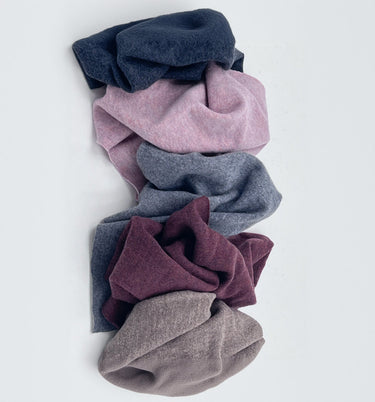
What kind of wool for babies? Mata Origin materials simply explained
Not all wool is created equal.
Many parents realize this at the latest when they first deal with baby clothes, wool diapers, or elimination communication diapers.
Suddenly, terms like Merino wool, boiled wool, wool fleece, wool-silk, wool-Tencel, or Merino interlock appear.
Everything sounds natural.
Everything sounds high-quality.
But what does it actually mean?
And which wool suits which moment in a baby's everyday life?
That's exactly what this article is about.
Why material choice is so important for babies
Baby skin is sensitive.
It reacts more quickly to moisture, friction, heat, cold, and unsuitable materials.
Therefore, it makes a big difference which fabrics are directly against the skin.
Especially in the diaper area, when sleeping, carrying, or in the stroller, materials are not just a question of style: materials influence how comfortable your baby feels.
Wool is so exciting for many families because it combines several properties:
- it is temperature-regulating
- it can absorb moisture
- it often feels pleasantly dry for a long time
- it is breathable
- it can naturally reduce odors
- it fits into a conscious, natural family life
But depending on the processing, wool can have a very different effect.
A thin Merino interlock quality feels different from warm boiled wool.
Wool fleece is different from wool-silk.
And a wool diaper has different tasks than a summer romper.
Our approach to materials
At Mata Origin, we don't just choose materials based on how soft they are.
We are also interested in where they come from, how they are processed, and whether they align with our values.
Depending on the product, we use GOTS-certified materials, mulesing-free wool, and the most natural, plastic-free fibers possible.
We speak of GOTS-certified materials when the fabrics used are certified accordingly. This does not automatically mean that every finished product as a whole is GOTS-certified.
Nevertheless, the underlying principle is important to us:
- Materials should feel good on baby skin.
- They should be durable.
- They should be as natural as possible.
- And they should be produced under responsible conditions.
Merino wool: soft, fine, and particularly popular for babies
Merino wool is a particularly fine wool fiber.
It is often used for baby products because it feels softer than many classic wool qualities.
Many parents associate Merino wool with a pleasant skin feel, good temperature regulation, and natural functionality.
Merino wool can absorb moisture without immediately feeling wet.
It warms without overheating quickly.
And it is therefore suitable for many everyday situations.
At Mata Origin, Merino wool plays a role especially where material comes into direct contact with sensitive baby skin.
For example, in elimination communication diapers, wool diapers, or close-fitting baby clothes.
In short: Merino wool is the basis of many of our wool products because it is soft, functional, and skin-friendly.
Merino Interlock: thin wool for everyday and summer
Merino Interlock describes not only the fiber but above all the way the fabric is knitted.
This is important.
Because Merino wool is the material.
Interlock is the fabric structure.
Merino Interlock often appears smoother, finer, and more stable than many very light wool fabrics.
It is particularly suitable for close-fitting clothing, light rompers, summer clothing, and layering.
Especially for parents who wonder if wool isn't too warm in summer, Merino Interlock is interesting.
Because thin wool can have a temperature-regulating effect and regulate moisture well.
In short: Merino Interlock is ideal when wool should be light, smooth, and suitable for everyday use.
An example from the Mata Origin shop: Elimination Communication Cowboy Pants made of Merino Interlock
More about wool in summer can be found here: Why wool is ideal for babies in summer
Wool-Silk: light, soft, and pleasant on sensitive skin
Wool-silk combines two natural fibers that complement each other very well.
Wool provides temperature regulation and moisture management.
Silk ensures a particularly smooth, light, and pleasant feeling on the skin.
Many parents love wool-silk for babies because the material feels delicate and high-quality.
It is particularly suitable for warm days, transitional seasons, or for babies who are sensitive to coarser materials.
At Mata Origin, we use wool-silk where clothing should be light, airy, and close to the skin.
In short: Wool-silk is a particularly fine material combination for sensitive baby skin.
An example from the Mata Origin shop: Elimination Communication Cowboy Pants made of Wool-Silk
Wool-Tencel: light, smooth, and exciting for warm days
Wool-Tencel is a blend of wool and Tencel.
Important note:
Tencel is not wool.
Tencel is a plant-based fiber known for a smooth, soft, and light feel.
In combination with wool, a material is created that can be particularly interesting for warm days.
The wool contributes its temperature-regulating properties.
Tencel adds lightness and a soft drape.
At Mata Origin, wool-Tencel is particularly suitable for light summer clothing and rompers.
In short: Wool-Tencel is a light material blend for parents looking for natural function and a pleasantly smooth feel on the skin.
An example from the Mata Origin shop: Children's Long-Sleeved Shirt made of Wool-Tencel
Boiled wool: warm, robust, and ideal for outdoors
Boiled wool is a dense, fulled wool fabric.
Through processing, the wool becomes more compact, robust, and warmer.
Therefore, boiled wool is particularly popular for outdoors.
It is suitable for autumn, winter, and transitional seasons.
Boiled wool can store heat well and is simultaneously breathable.
This creates a pleasant climate without babies overheating as quickly as in some synthetic materials.
At Mata Origin, you can find boiled wool, for example, in outdoor products such as overalls, jackets, pants, or dungarees.
In short: Boiled wool is the robust wool for outdoors.
An example from the Mata Origin shop: Boiled Wool Overall made of Merino Wool
Wool fleece: soft, warm, and cozy
Wool fleece is particularly soft and cuddly.
It feels more voluminous than thin Merino wool and is often cozier than a smooth fabric.
Wool fleece is particularly suitable when warmth and comfort are the priority.
For example, at home, when carrying, in the stroller, or in the transitional season.
Unlike boiled wool, wool fleece is usually less designed for robust outdoor use.
Instead, it is particularly pleasant and soft.
In short: Wool fleece is the cozy wool for warmth, closeness, and soft comfort.
Examples from the Mata Origin shop:
Lanolin: why wool grease is so important
Lanolin is the natural wool grease of sheep's wool.
How organic lanolin is obtained and what matters for quality and origin is explained here: How is organic lanolin obtained?
It plays an important role especially in wool diapers, wool covers, and elimination communication diapers.
Because lanolin can make wool more water-repellent.
This is one of the reasons why wool works so particularly well in the diaper area.
It can absorb moisture, but often remains pleasantly dry for longer and supports a good skin climate.
In wool diapers, lanolin is specifically used to maintain or refresh the natural function of the wool.
In short: Lanolin makes wool in the diaper area particularly functional.
More on this can be found here: Organic Lanolin Wool Wax
Greasing wool: How the lanolin bath works
Which wool suits which situation?
If you are still unsure which material is right for you, this simple guide will help:
- For sensitive skin: Merino wool or wool-silk
- For warm days: Merino Interlock, wool-silk, or wool-Tencel
- For outdoors: Boiled wool
- For warmth and coziness: Wool fleece
- For the diaper area: Merino wool with lanolin function
- For layering: thin Merino wool or Merino Interlock
Of course, the choice always depends on how warm your baby is, how you live, how much you are outdoors, and what clothes you already use.
But that's the beauty of wool:
It's versatile.
Not every wool material can do everything.
But for almost every situation, there is a suitable wool quality.
Why we use different types of wool at Mata Origin
We don't just use "wool" because wool has such great properties - we use different types of wool because babies have different needs.
A baby needs a different material outdoors than at night.
A summer romper must function differently from a wool cover.
An elimination communication diaper has different requirements than a jacket.
Therefore, we look closely at each product:
- How close is the material to the skin?
- Does it need to warm or rather regulate?
- Should it absorb moisture?
- Should it be robust?
- Should it be particularly light and soft?
- Does it fit our demands for sustainability and responsibility?
This is how a deliberate material selection is created.
Not a random one.
For baby skin.
For everyday life.
And for families who want to make conscious decisions. If you are new to elimination communication, here is a simple introduction: What does elimination communication mean?
Wool care is part of it
Wool is a special material.
And it remains particularly beautiful when properly cared for.
Many wool products do not need to be washed constantly.
Often, airing out, gentle brushing, or a soft cleaning is sufficient.
Especially with wool diapers, wool covers, and elimination communication diapers, lanolin also plays an important role.
More about proper care can be found here: The correct care of wool clothing
Conclusion: The right wool makes the difference
Wool is one of the most versatile materials for babies.
But only the right type of wool makes it truly suitable for its respective use.
- Merino wool is soft and functional.
- Merino Interlock is light and smooth.
- Wool-silk is particularly fine on the skin.
- Wool-Tencel is perfect for warm days.
- Boiled wool is robust for outdoors.
- Wool fleece is warm and cozy.
And lanolin, also known as wool wax, makes wool in the diaper area particularly valuable. We prefer organic lanolin.
At Mata Origin, we therefore not only pay attention to beautiful materials.
But to materials that suit babies, parents, and a conscious family life.


