
Wool diapers and wool elimination communication (EC) pants are wonderfully natural, breathable, and comfortable in the diaper area. For them to function reliably as a backup, they need a little care from time to time: a lanolin bath.
When wool is lanolized, lanolin, which is natural wool grease, is dissolved in warm water and absorbed by the wool. This makes the wool diaper more water-repellent again and better able to wick away moisture, without being designed for strong containment like a disposable diaper.
In this article, we show you step-by-step how to lanolize wool diapers, how long a lanolin bath takes, how much lanolin you need, and which mistakes you should avoid.
Lanolizing Wool Diapers: Video Tutorial
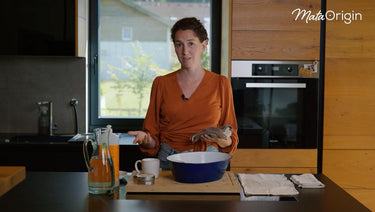
If you prefer to see directly how a lanolin bath works, you can find our video tutorial here. In it, we practically show you how to lanolize wool diapers and what to pay attention to.
Lanolizing Wool: The Short Answer
You lanolize wool diapers by dissolving some lanolin in hot water with a little wool detergent or soap, adding this mixture to lukewarm water, and soaking the wool diaper in it for several hours or overnight. Afterwards, the wool is gently squeezed out and dried flat.
This makes the wool more water-repellent again and allows it to function as a natural backup in the diaper area.
If you want to start right away, you can find the matching wool care set here. It contains the most important care products you need for wool diapers, EC pants, and other wool products.
Why do wool diapers need to be lanolized?
Wool naturally contains wool grease, i.e., lanolin. This wool grease makes the fibers more resistant to moisture. That's why wool is so well suited as a material for wool diapers, wool covers, and EC pants.
Through use, washing, and friction, the wool loses some of this water-repellent property over time. A lanolin bath can then help to refresh the natural protective function.
Important: A wool diaper is not a high-performance absorbent product like a disposable diaper. It works differently. It is a breathable backup and is usually combined with absorbent diaper inserts.
When does a wool diaper need a lanolin bath?
You can often tell quite quickly when your wool diaper needs to be lanolized again.
Typical signs are:
- Moisture comes through more quickly.
- The wool diaper feels less water-repellent.
- The wool absorbs liquid more strongly than before.
- The EC pant or wool cover becomes damp more quickly.
- The last lanolin bath was several weeks ago.
How often you need to lanolize wool depends heavily on its use. A wool diaper that is used daily will need a lanolin bath more often than a wool product that is only used occasionally.
What do you need for a lanolin bath?
For a simple lanolin bath, you only need a few things:
- Organic lanolin or wool wax
- a little mild wool detergent or soap for emulsifying
- hot water to dissolve the lanolin
- lukewarm water for the lanolin bath
- a bowl, sink, or small bucket
- a towel for gently squeezing out
If you don't want to gather everything individually, you can find the matching wool care set with us. It is ideal for wool diapers, EC pants, wool pants, and other wool products.
Lanolizing Wool Diapers: Step-by-Step Guide
1. Prepare the wool diaper
The wool diaper should be clean before you lanolize it. If it has only been worn but is not soiled, airing it out is often enough. If it needs to be washed, wash it gently beforehand with a suitable wool detergent.
Wool should not be washed hot, rubbed vigorously, or wrung out. It prefers gentle treatment.
2. Dissolve lanolin in hot water
Add a small amount of lanolin to a glass or small bowl of hot water. The lanolin must dissolve well so that it can distribute evenly in the water later.
To combine the lanolin with the water, you need an emulsifier. A small drop of mild wool detergent or soap is usually sufficient for this.
The mixture should become milky. If large grease spots are still floating on top, the lanolin is not yet well enough distributed.
3. Prepare the lanolin bath
Fill a bowl or sink with lukewarm water. Add the dissolved lanolin mixture and stir everything gently.
The water should not be hot when you put the wool diaper in. Large temperature differences can stress wool.
4. Insert the wool diaper
Gently place the wool diaper in the lanolin bath. It should be completely submerged. Gently press it underwater, but do not knead or rub it vigorously.
Wool does not need rough treatment. The lanolin should slowly adhere to the fibers.
5. Let it soak
Leave the wool diaper in the lanolin bath for several hours. It is particularly easy to leave it to soak overnight.
This gives the wool enough time to absorb the lanolin.
6. Gently squeeze out
Remove the wool diaper from the lanolin bath and gently squeeze it out. Please do not wring it. Wool can warp or felt if treated too vigorously.
It is best to place the wool diaper in a towel and gently press out excess water.
7. Dry flat
Lay the wool diaper flat on a dry towel and let it air dry. Please do not place it on a heater or put it in the dryer.
Depending on the thickness of the wool, drying may take some time. So it's best to plan enough time.
How much lanolin do you need for a wool diaper?
The exact amount depends on the size, thickness, and condition of the wool. For a single wool diaper or wool cover, a small amount of lanolin is often sufficient.
As a rough guide: it's better to start with a little lanolin and re-lanolize if necessary, rather than using too much. Too much lanolin can lead to greasy spots or yellowish residues.
If your wool diaper feels slightly grippy and more water-repellent after drying, the amount was appropriate. If it appears very sticky or greasy, it was probably a little too much.
How long should a wool diaper stay in the lanolin bath?
A lanolin bath takes time. Several hours are reasonable, and overnight is particularly practical.
If you're in a hurry, a shorter soaking time can also help. However, for thorough care, it's better to give the wool more time.
After the lanolin bath, the wool diaper should dry completely before you use it again.
Common mistakes when lanolizing wool
Too much lanolin
More lanolin does not automatically mean better care. If you use too much, the wool can become greasy, sticky, or stained.
Lanolin not properly dissolved
If lanolin is not properly emulsified, it will float on the water as a greasy film. Then it can spread unevenly on the wool and cause stains.
Water is too hot
Wool does not like drastic temperature changes. Water that is too hot or rough handling can damage the fibers. You can find out why you need to be careful with old washing machines in the video.
Wool is wrung out
Wool diapers should not be wrung out vigorously. It is better to gently squeeze them out in a towel.
The wool diaper is used again too soon
Wool should be completely dry before being used again. Otherwise, it will feel damp more quickly.
What to do if the wool diaper is still leaking after the lanolin bath?
If your wool diaper is still letting moisture through after lanolizing, there could be several reasons.
- The wool has absorbed too little lanolin.
- The lanolin was not well enough distributed in the water.
- The insert absorbs too little liquid.
- The wool diaper does not fit properly.
- The wearing time is too long.
- The wool is not yet completely dry.
Important: Wool is a backup. It does not replace the absorbent insert. If too much liquid comes in a short time, you may need a stronger or more suitable insert.
Here you can find suitable diaper inserts for your everyday life.
How often should wool diapers be lanolized?
That depends on the usage. Some families lanolize their wool diapers every few weeks, others only as needed.
A good time is when the wool no longer holds moisture well or has lost its protective function after washing.
If you use wool products regularly, you will quickly develop a feel for it. Wool usually shows you quite clearly when it needs care again.
Caring for wool does not mean constant washing
A big advantage of wool: it doesn't have to be washed after every use. Often, airing out wool diapers and wool products is enough.
Especially with wool EC pants, this is pleasant in everyday life. If nothing is soiled, you can air out the wool and reuse it.
Wool is washed when it is really dirty or smells unpleasant. After that, a lanolin bath can be useful depending on the need.
Why wool is so well suited for elimination communication
Wool is particularly well suited for elimination communication and part-time diaper-free, because it is not designed to contain as much liquid as possible for as long as possible.
With elimination communication, your baby gets the opportunity to relieve themselves outside the diaper again and again. The wool diaper then serves as a backup: it protects if something goes wrong, but can be opened quickly if you want to hold your baby over a potty.
That's why we at Mata Origin rely on wool EC pants. They combine natural materials with a more conscious approach to bodily fluids.
You can find more about this here:
What does elimination communication mean?
Why wool is ideal for elimination communication
Discover wool elimination communication pants
Which products help with lanolizing wool?
For a good lanolin bath, you mainly need lanolin and a way to dissolve it in water. For the regular care of your wool products, a suitable wool detergent is also useful.
The easiest way to get started is with our wool care set. In it, you will find the most important products for gently washing, caring for, and making wool more water-repellent with lanolin.
Frequently asked questions about lanolizing wool and lanolin baths
Does every wool diaper need to be lanolized?
Wool diapers and wool covers need lanolin from time to time, depending on use, to remain water-repellent. Not every use requires a new lanolin bath. Often, airing out is completely sufficient.
Can I lanolize wool too much?
Yes. Too much lanolin can make the wool greasy, sticky, or stained. It's better to start with a small amount and re-lanolize if necessary.
Why do grease spots appear in the lanolin bath?
Grease spots appear when the lanolin has not been properly combined with the water. A small drop of wool detergent or mild soap helps to emulsify the lanolin. The mixture should be milky before it is added to the lanolin bath.
Do I need to wash the wool diaper before lanolizing?
If the wool diaper is soiled, you should wash it gently beforehand. If it is clean and only needs its water-repellent function refreshed, a lanolin bath can also be useful without prior washing.
Can I lanolize wool diapers in the washing machine?
For beginners, we recommend a hand-applied lanolin bath. This gives you more control over temperature, lanolin amount, and distribution. Wool should always be treated gently.
How long does it take for the wool diaper to dry?
That depends on thickness, room temperature, and air circulation. Wool can take several hours to over a day to dry. It is important to let it dry flat and without direct heat.
Can I use normal detergent for wool diapers?
Normal detergent is usually not ideal for wool. It is better to use a suitable wool detergent or a mild product that is suitable for wool. For Mata Origin wool products, we recommend gentle wool care.
Is lanolin also suitable for wool elimination communication pants?
Yes. Wool elimination communication pants in particular benefit from lanolin because they are used as a backup in the diaper area. When cared for with lanolin, the wool becomes more water-repellent and supports its natural protective function.
Conclusion: Lanolizing wool is easier than many think
Lanolizing wool diapers may sound complicated at first. In practice, however, it is a simple care step: dissolve lanolin, prepare the lanolin bath, soak the wool, let it soak, gently squeeze it out, and dry it flat.
This keeps your wool diaper more water-repellent and allows it to function as a natural backup in the diaper area.
Especially in combination with elimination communication and part-time diaper-free, wool is a strong choice: breathable, temperature-regulating, natural, and conscious.
If you want to get started, you can find everything important for the care of your wool products here:
Wool Wash Concentrate with Lanolin
Discover all wool care products
Read more
Wool in the diaper area: the better choice
Why wool is ideal for elimination communication
What equipment do I need for elimination communication?
Disposable diapers, cloth diapers, or elimination communication: What is gentler on baby's skin?


