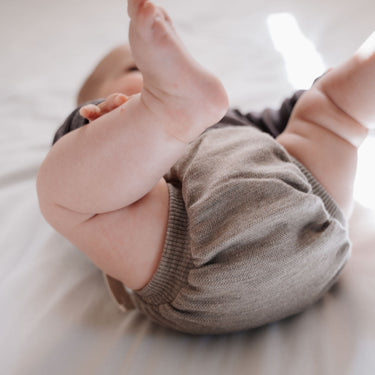
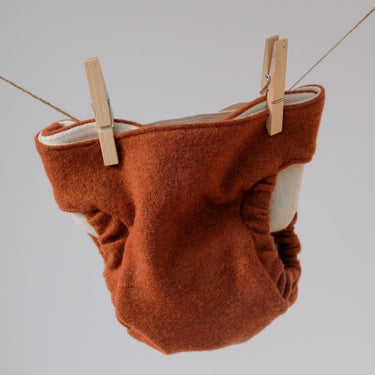
If you use wool diapers, wool covers, or elimination communication diapers, the question will eventually arise:
How often do I actually need to lanolize wool?
The honest answer is:
There's no perfect rule that fits every family.
Because how often a wool diaper needs lanolin depends on how intensively it's used, how frequently it's washed, and how much it's stressed in daily life.
As a general guideline:
Many wool diapers and elimination communication diapers should be re-lanolized approximately every two to four weeks, depending on use.
However, function is more important than the calendar.
Your wool usually shows you quite clearly when it needs lanolin again.
Why do you even need to lanolize wool diapers?
Wool naturally contains lanolin, and lanolin is the natural wool grease from sheep's wool.
It helps the wool remain more water-repellent. This is crucial in the diaper area: because a wool diaper should not function like plastic.
- It should remain breathable.
- It should regulate moisture.
- And it should still help to retain wetness.
Over time, wool loses some of its lanolin through use, friction, and washing.
Then the moisture protection function diminishes.
By lanolizing, you return wool grease to the wool.
If you want to know more precisely what lanolin is and how organic lanolin is obtained, you can find a detailed explanation here:
How is organic lanolin obtained?
How do you know that your wool diaper needs lanolin again?
You don't have to guess by feeling.
There are typical signs that indicate your wool diaper should be re-lanolized.
For example:
- the wool diaper feels damp more quickly
- the clothing over it becomes clammy
- the diaper no longer stays leak-proof for as long as before
- the wool appears less protected
- moisture wicks to the outside more quickly
If you notice one or more of these signs, a lanolin bath is usually advisable.
You can find detailed instructions here: Lanolizing wool: How easy the lanolin bath works
How often is normal?
As a simple guide, you can remember:
- with frequent use: approximately every two weeks
- with normal use: approximately every three to four weeks
- with infrequent use: as needed
- after a thorough wash: often re-lanolize again
These figures are not rigid rules. Some families need to lanolize more frequently. Others significantly less often. The crucial factor is:
- Does the wool still hold reliably?
- Does it feel pleasant?
- Does the clothing over it stay dry?
If so, you don't need to constantly re-lanolize preventatively.
What determines the lanolizing rhythm?
How often you need to lanolize depends on several factors.
1. How often you use the wool diaper
A wool diaper that is in daily use will need lanolin again sooner than a diaper that is only used occasionally.
The more friction, moisture, and use, the faster the protective function diminishes.
2. How frequently you wash
Washing removes dirt. But it can also remove lanolin from the wool. Therefore, a new lanolin bath may be advisable after a thorough wash. Using a suitable wool detergent is important.
You can find a suitable wool detergent here:
3. How much your baby excretes
Some babies pee more frequently or in larger amounts.
Developmental phases, drinking behavior, or nights can also change the need.
If the insert is regularly very wet, the wool diaper will also be more stressed.
Then it may need lanolin again more quickly.
4. Which inserts you use
Wool is not a substitute for absorbency. If the insert absorbs too little, the wool diaper is unnecessarily stressed. Then it sometimes seems as if the wool is no longer leak-proof.
In reality, the insert is simply full. You can find suitable inserts here: Discover diaper inserts
5. How tight the clothing over it fits
Too tight clothing can draw moisture outwards.
This happens particularly with tight bodysuits, leggings, or trousers that press directly on the diaper area.
Then it feels as if the wool diaper is leaking. But sometimes the wool doesn't need more lanolin at all. Rather, it simply needs more space.
You can find suitable clothing for elimination communication and wool diapers here:
Discover wool clothing for elimination communication
Do you have to lanolize after every wash?
Not always. It depends on how thoroughly the wool was washed and what it is used for.
For normal wool clothing, a suitable wool detergent and gentle care are often sufficient.
For wool diapers, wool covers, and elimination communication diapers, the function is more important.
If they serve as moisture protection, a lanolin bath after washing can be useful.
Especially if you notice that the wool gets damp more quickly or no longer protects reliably.
Can you lanolize wool diapers too often?
Yes, that is also possible. Too much lanolin can make the wool feel greasy, sticky, or uneven.
Sometimes small lanolin stains appear. Therefore, more is not automatically better.
The goal is not to impregnate the wool as strongly as possible. The goal is for it to function reliably and feel pleasant.
If your wool diaper holds well, you don't need to re-lanolize it unnecessarily.
What to do if the wool diaper remains leaky despite lanolizing?
Then it's worth taking a look at the entire system. Because a leaky wool diaper is not always just due to lanolin.
Possible reasons include:
- the insert is too weak
- the insert is completely full
- the diaper is not sitting correctly
- the clothing over it is too tight
- the wool was washed incorrectly
- the wearing time is too long
You can find a detailed overview here: Why is my wool diaper no longer leak-proof?
What role does elimination communication play?
Elimination communication can significantly relieve the wool diaper.
If part of the excretions doesn't even end up in the diaper, the insert is less stressed. The wool comes into contact with less moisture.
And the system often remains pleasant for longer. This does not mean that you have to live perfectly diaper-free.
Even individual elimination communication moments can make a difference.
If you are not yet familiar with elimination communication: What does elimination communication mean?
Which lanolin is suitable for re-lanolizing?
Pure lanolin is particularly suitable for wool diapers, wool covers, and elimination communication diapers.
At Mata Origin, you will find organic lanolin wool wax made from 100% pure organic lanolin.
It contains no additives or fragrances. You can use it to refresh the natural moisture protection function of your wool. You can find the right product here: Organic Lanolin Wool Wax
Quick orientation
You probably need a lanolin bath if:
- the wool diaper gets damp more quickly
- the clothing over it gets wet
- the wool seems less dense after a wash
- the diaper no longer lasts as long as before
- you haven't lanolized the wool for a long time
You probably don't need to lanolize yet if:
- the clothing over it remains dry
- the wool functions well
- the insert absorbs sufficiently
- the diaper doesn't get damp
- the wool doesn't feel depleted
Conclusion: The wool decides, not the calendar
How often you need to lanolize wool diapers depends on your daily routine.
As a guide, two to four weeks is reasonable. But more important is how your wool behaves.
If it gets damp more quickly, the clothing gets clammy, or the moisture protection function diminishes, a lanolin bath is advisable.
If everything works well, you don't need to constantly re-lanolize preventatively.
Wool care can be simple. Observe. Re-lanolize as needed. And give the wool exactly what it needs.