If you discover elimination communication (EC) or infant pottying during pregnancy, the next question quickly arises: What do we actually need for it?
Perhaps you're worried that you'll have to buy a completely new set of equipment. Perhaps you're wondering if EC only works with special clothing. Or maybe you just want to be prepared without filling your home with things you'll hardly use in the end.
The good news is: You need less for getting started than many people think. EC doesn't start with perfect equipment. It starts with the knowledge that your baby can communicate about elimination from the very beginning. The right equipment can make your daily life easier, but it doesn't have to be complicated.
In this article, you'll find natural, undogmatic, and practical guidance: What is really useful for EC starter equipment? What can wait? And what things make starting with a baby noticeably easier?
What does EC starter equipment mean?
EC starter equipment refers to all the things that help you comfortably potty your baby or try out EC. These include, for example, a potty, suitable clothing, absorbent inserts, liners, and cloths.
However, it's important to remember: This equipment does not replace your attention. It merely makes certain tasks easier. The true foundation of EC is the relationship with your baby: observing, offering, trying, letting go again.
Good EC starter equipment should not put you under pressure. It should enable you to incorporate EC into your daily life uncomplicatedly — in small moments, in standard situations, and in a way that suits you.
If you want to understand EC fundamentally, read on here first: What does "diaper-free from birth" actually mean?.
Most important first: You don't need a perfect system
Especially before birth, it's easy to get into planning mode. You want to be prepared, do everything right, and not forget anything. With EC, however, it's particularly important not to aim for too much perfection at the start.
You don't have to recognize every signal. You don't have to catch every pee. And you don't have to live completely diaper-free from the first day of life.
For starters, a simple basic set of equipment is sufficient:
- a way to potty
- soft, practical baby clothes
- a backup like an EC diaper, diaper, or insert
- a changing pad for relaxed diapering and pottying moments
- a few cloths or washcloths
- composure for anything that goes wrong
You don't need more than that to start.
If you are still weighing between disposable diapers, cloth diapers, and EC, you will find the right decision-making aid here: Disposable diapers, cloth diapers, or EC: What options are there?.
1. A potty or a simple pottying option
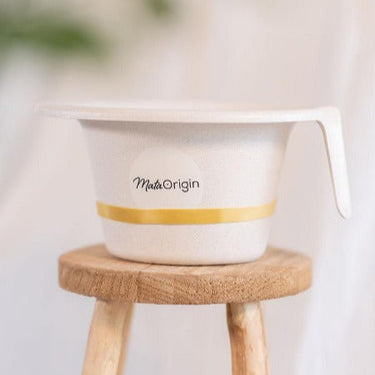
A small potty is very helpful for many families. It's quickly at hand, can stand next to the bed, at the changing station, or in the bathroom, and is especially practical for newborns because you don't have to go to the toilet every time.
Especially during the postpartum period, this can be pleasant. You don't have to walk far, your baby stays close to you, and pottying can become part of the changing routine.
What you can look for in a potty
- it should stand stably
- the size should fit newborns and small babies
- it should be easy to clean
- it should have no sharp edges
- it should be able to stand where you actually use it
- it should also be usable on the go, if that's important to you
However, you can also potty your baby over the sink, toilet, or a small bowl. A potty is practical, but not necessarily the only option.
2. Clothing that makes pottying easier
Clothing is one of the most important aspects of EC starter equipment. Not because EC would only be possible with special clothing. But because clothing determines whether pottying becomes easy or cumbersome in everyday life.
If you have to completely undress your baby every time, the moment quickly becomes long. Your baby can get cold, you lose time, and a small offer turns into a larger process.
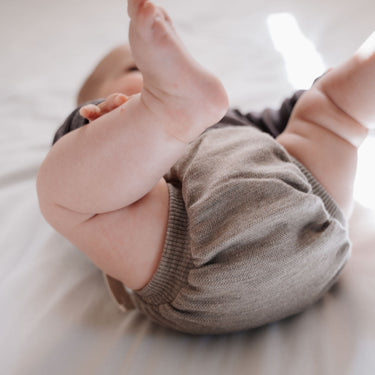
Practical EC clothing helps to quickly open the diaper area without unnecessarily undressing your baby.
Good clothing for pottying should:
- be quick and quiet to open
- keep your baby warm
- allow enough freedom of movement
- not cut into the belly
- provide space for inserts or backup
- be made of soft, natural materials
- also work in real family life
That's exactly what Mata Origin EC clothing is designed for: so that natural baby care doesn't fail due to impractical cuts.
You can find suitable categories here: EC pants and EC diapers.
If you are still generally planning what clothes your baby needs, you will find good guidance here: What clothes does a newborn really need?.
3. EC diapers as a relaxed backup
An EC diaper is particularly useful if you don't want to do EC completely without backup. It can catch excretions but remains more easily accessible than many classic diaper solutions.
This is important because EC doesn't mean that nothing ends up in the diaper anymore. Especially at the beginning, a lot will end up in the backup. That's normal. The diaper is then not a sign that you are doing something wrong. It gives you security.
An EC diaper can help if:
- you want to potty your baby regularly
- you still need protection for clothing and liners
- you are looking for an alternative to classic diapers
- you want to react faster
- you want to remain more flexible on the go or at night
The big advantage is the attitude behind it: The diaper is no longer automatically the only place for elimination. It becomes a backup while you repeatedly offer your baby other options.
You can find suitable backups here: Mata Origin EC diapers.
4. Absorbent inserts
Inserts are among the most practical items in EC starter equipment. They can catch small accidents, supplement EC diapers, and make transitions more relaxed.
Especially if you don't want to immediately change all clothing for every little pee, inserts are helpful. They give you some leeway.
Why inserts are useful
- as backup in EC diapers
- for small amounts of pee
- for on the go
- for part-time EC
- for phases where many signals are missed
- as a supplement to cloth diapers or other systems
It's important that inserts fit comfortably, absorb sufficiently, and match your clothing well. Too thick inserts can make the diaper bulky unnecessarily. Too thin inserts may not provide enough security.
You can find a suitable selection at Mata Origin in the diaper inserts section.
5. A good changing pad
A changing pad takes the pressure out of pottying. Because it makes it clear: It's okay if something goes wrong.
This is especially important at the beginning. You are getting to know your baby. Your baby is getting to know the world. Not every moment will be perfect. Sometimes pee comes earlier, later, or while you're still thinking.
A good changing pad protects the bed, sofa, changing station, or floor and gives you more peace of mind.
A changing pad is practical:
- at the changing station
- on the bed during the postpartum period
- on the sofa
- during naked baby time
- for on the go
- when changing clothes
- when pottying after sleeping
A changing pad that works at home and on the go is particularly versatile. It can help when changing, dressing, pottying, and putting your baby down.
You can find a practical solution here: Changing pad for on the go.
6. Soft cloths and washcloths
You'll need cloths and washcloths in everyday baby life anyway. For EC, they are particularly practical: for cleaning, dabbing, lining, or quickly wiping up.
Many families prefer to use soft washcloths with warm water instead of constantly using wet wipes. This can be gentler on the skin and fits well with reduced, natural baby care.
Helpful are:
- several soft washcloths
- small cloths for on the go
- burp cloths or muslin cloths
- a small laundry basket or wet bag
- a bowl with warm water at the changing station
Again, you don't need a complicated solution. Soft, washable cloths are perfectly sufficient.
More about simple baby care in the first weeks can be found here: Baby care in the postpartum period: What you really need.
7. A wet bag or laundry bag
If you're out and about with inserts, cloth diapers, EC diapers, or wet clothing, a wet bag is very practical. You can transport damp or soiled items in it until you're home.
Even at home, a separate laundry bag can help to store wet clothing or inserts together before they are washed.
A wet bag is particularly helpful for:
- wet inserts
- used cloth diapers
- soiled baby clothes
- small accidents on the go
- washcloths or cloths
If you only plan to potty at home initially, you don't need several wet bags right away. For on the go, one is very useful.
8. Natural baby clothing as a good base
Even outside of special EC clothing, natural baby clothing is worthwhile. Your baby needs clothing that is soft, warm, and allows freedom of movement.
Materials like wool, wool/Tencel, or high-quality cotton can pleasantly accompany the start. Wool warms and regulates temperature. Wool/Tencel feels particularly soft and light. Cotton is easy to care for and familiar.
For EC, it's important: clothing should not only be beautiful but also go along with everyday life. Frequent opening, changing, pottying, carrying, and cuddling should not become complicated every time.
You can find more about the materials here: Natural baby clothing: wool, wool/Tencel, and cotton compared.
What do you not need immediately?
Especially with new topics, the feeling quickly arises that you have to buy everything at once. For EC, that's not necessary.
Many things can be added later when you realize you really need them.
These things can often wait:
- several different potties
- too many inserts in different variants
- large quantities of EC clothing in one size
- special equipment for on the go, before you even potty on the go
- complicated systems that you don't yet understand
- products that only fit a very ideal daily routine
Start with a few good things. After the birth, you will quickly notice which routines suit you and what you really want to buy later.
EC starter equipment for newborns
If you want to start from birth or in the first few weeks, the equipment should be particularly simple. In the postpartum period, you don't need any additional hurdles.
A small starter kit can look like this:
- 1 small potty
- 2 to 4 EC diapers or other backups
- several suitable inserts
- 2 to 3 practical EC pants or easily opened pants
- 1 to 2 changing pads
- soft washcloths
- a wet bag or laundry bag
This list is not a must. It is a realistic starting point. Some families need less. Others want to prepare a little more. The crucial thing is that you don't overload yourselves.
If you are planning the entire initial baby equipment, you will find a suitable overview here: Baby initial equipment: What you really need.
Pottying in the postpartum period: What equipment really helps?
In the postpartum period, everything is closer, slower, and more sensitive. You are physically recovering. Your baby is still very new. Therefore, pottying during this time should be particularly low-threshold.
Helpful is anything that is within reach next to your resting place:
- a small potty nearby
- a changing pad on the bed or sofa
- a few cloths at hand
- fresh inserts
- change of clothes for your baby
- a small bowl with warm water if you clean there
You don't have to get up every time. You don't have to look for every signal. Maybe you only potty during diaper changes. Maybe in the morning after waking up. Maybe not at all in the first few days. That's also okay.
If you are preparing for your postpartum period, you will find further guidance here: Preparing for the postpartum period: What you can organize before birth.
EC starter equipment for on the go
Pottying on the go is possible, but you don't have to start with it right away. Many families practice at home first and simply use a backup when out and about.
If you want to potty on the go, clear, quickly accessible items are particularly helpful.
Practical for on the go:
- changing pad
- change of clothes
- inserts
- EC diaper or backup
- small cloths or washcloths
- wet bag
- if necessary, a small mobile potty
On the go, it's not about being particularly consistent. Sometimes pottying works. Sometimes it doesn't. Good equipment helps you stay flexible.
More about packing your diaper bag for on the go can be found here: Packing a diaper bag: What you really need on the go.
Pottying at night: Do you need extra equipment for that?
Pottying at night is a separate topic. Some families find it very practical because their baby sleeps more peacefully after pottying. Others want as few additional routines as possible at night.
For starters, you don't have to force anything at night. If you want to try it, a small, readily available set of equipment can help.
Helpful for nighttime pottying:
- a potty next to the bed
- dimmed light
- easily opened clothing
- fresh insert or backup
- small cloth
- waterproof pad
It's important that your baby doesn't wake up completely and doesn't get cold. If nighttime pottying stresses you, the diaper can simply remain the backup or main solution at night.
If you are generally planning how your baby should be dressed at night, you will find a suitable in-depth discussion here: Dressing baby at night: What does a newborn need for sleeping?.
How many EC pants and EC diapers do you need?
The quantity depends on how often you want to wash, how frequently you want to potty, and whether you use EC diapers as your main backup.
For a gentle start, a few items are sufficient. You don't have to completely change your wardrobe right away.
As a rough guide:
- 2 to 3 EC pants for testing
- 2 to 4 EC diapers or suitable backups
- several inserts for changing
- additional normal baby clothes for combinations
If you notice that these clothes significantly ease your daily life, you can specifically supplement them later. Especially with fast-growing babies, it makes sense not to buy too much in the smallest size.
If you are unsure about the starting size, you will find guidance here: Which baby size for birth: 50, 56 or 62?.
What about disposable diapers or cloth diapers?
You can combine EC with disposable diapers or cloth diapers. You don't have to choose one camp.
Many families use disposable diapers in the first few days, at night, or on the go. Others use cloth diapers as a backup. Still others combine EC diapers, inserts, and classic diapers depending on the day.
This flexibility is very valuable. Because a baby's daily life is constantly changing.
If you want to compare the different options, you will find a suitable overview here: Disposable diapers, cloth diapers, or EC: What options are there?.
How you can set up your EC corner
A small EC corner doesn't have to be elaborate. It should primarily be where you often change or dress your baby anyway.
An simple EC corner can look like this:
- changing pad or soft pad
- potty within reach
- fresh inserts
- clean EC diaper or backup
- change of clothes
- washcloths and small bowl
- laundry bag for damp items
The place doesn't have to look perfect. It should work. If you spend a lot of time in bed at night or during the postpartum period, a second small station there can be useful.
More about practical setup can be found here: Setting up a changing station: What you really need.
Hospital bag and EC: Does anything need to be included?
For the hospital, you don't need a complete EC setup. The first few hours after birth should primarily be about settling in. However, if you want to start gently, you can consider a few things.
For the hospital bag, the following may be sufficient:
- one or two backups for the journey home
- a few inserts
- soft cloths
- a small pad
- clothing that is easy to open
You usually don't need more. Whether you actually want to potty in the hospital is something you can decide after the birth.
More information can be found here: Packing your hospital bag: Natural, practical, and without too much ballast.
The most common mistakes with EC starter equipment
Some bad purchases can be avoided if you plan realistically.
Mistake 1: Buying too much at once
Before the birth, you don't yet know what your daily life will look like. It's better to buy a small starter kit and supplement later.
Mistake 2: Focusing only on theory
A product might seem sensible in theory, but impractical in everyday life. Ask yourself: Will it work easily in tired moments?
Mistake 3: Choosing clothing without an opening
If clothing is beautiful but hard to access, elimination communication becomes unnecessarily complicated. Function is more important than a perfect look here.
Mistake 4: Not planning a backup
Diaper-free without a backup might suit some families. But for many, a backup is more relaxed, especially at the beginning.
Mistake 5: Expecting perfection
Even the best equipment won't prevent accidents. It just helps you deal with them more calmly.
A simple checklist for your elimination communication starter kit
For home
- small potty for EC
- EC diapers or other backup
- absorbent inserts
- EC pants or easy-to-open pants
- changing pad
- soft washcloths
- change of clothes
- small laundry basket or wet bag
For the postpartum period
- potty within reach
- underlay on bed or sofa
- wipes and water
- fresh inserts
- comfortable baby clothes
- a calm attitude: experimenting instead of performing
For on the go
- changing pad for on the go
- wet bag
- inserts
- change of clothes
- wipes
- backup diaper
- mobile potty if needed
What is the absolute minimum for an EC starter kit?
If you really want to start small, a very reduced setup is enough for the beginning:
- a potty or another EC option
- an underlay
- a few wipes
- a backup
- clothing that opens easily
With this, you can already try out whether EC feels right for you. Everything else can grow.
Frequently asked questions about elimination communication starter kits
Do I need special clothing for diaper-free?
Special clothing is not a must, but it can make everyday life much easier. Especially practical is clothing that can be quickly opened in the diaper area and still keeps your baby warm.
How many EC diapers do I need at the beginning?
For a trial start, a few EC diapers or backups are sufficient. If you use them daily, you can add more later as needed. The exact amount depends on how often you wash and how often you practice EC.
Can I also do EC with regular diapers?
Yes. You can also do EC with disposable diapers or cloth diapers. The diaper then serves as a backup. EC clothing often makes the process easier, but it's not a prerequisite.
Do I need an EC potty?
An EC potty is very practical, especially at the changing station or in the postpartum period. However, you can also hold your baby over the sink, toilet, or a small bowl.
What is most important for the beginning?
The most important thing is not a product, but serenity. Start with a few standard situations, use a backup, and allow yourself to get to know your baby step by step.
Can I buy the EC starter kit before birth?
Yes, a small basic kit before birth can be useful. But don't buy too much in one size or of a system you haven't tried yet.
A calm thought to conclude
A good EC starter kit isn't meant to prove that you're doing diaper-free perfectly. It's meant to allow you to try it easily.
Maybe you'll hold your baby over the potty after waking up. Maybe only during diaper changes. Maybe you'll use EC diapers as a backup and be happy about every moment you understand your baby better. Maybe you'll take breaks in between.
All of this is part of a real family's everyday life.
You don't need everything. You need a start that feels manageable. A few good things. Soft clothing. A backup. And permission that not every attempt has to succeed.
Diaper-free doesn't start with equipment. But the right equipment can ensure that a beautiful idea becomes a relaxed everyday step.
If you want to try diaper-free and EC in a non-dogmatic way, you'll find well-thought-out companions for exactly this everyday life at Mata Origin: soft, practical, and designed to help you potty train, change, and accompany your baby more easily.
Discover suitable products for your start: EC diapers, EC pants, diaper inserts, and the changing pad for on the go.