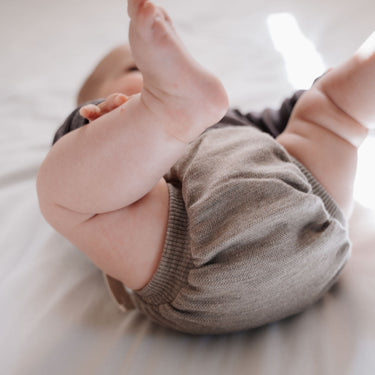
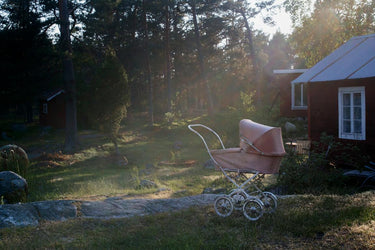
Dressing a baby in a stroller initially sounds simpler than babywearing: dress the baby, place them in the stroller, add a blanket, and off you go. However, questions quickly arise in everyday life: Is my baby warm enough? Do they need a hat? Is one blanket enough? Is a footmuff too much? What about sun and heat in the summer? And how do I dress my baby in winter without overheating them?
The stroller is its own little environment. Your baby lies quietly in it, barely moving, and doesn't receive your direct body heat as they would in a carrier. At the same time, blankets, footmuffs, hoods, or sun protection can retain heat. That's why dressing in a stroller is always about balance: warm enough, protected enough, but not too bundled up.
The most important guideline is: your baby should be at a comfortable temperature. Not maximally warm. Not unprotected. But appropriate for the season, weather, and situation.
In this article, you'll find a natural, practical, and non-dogmatic guide: how to dress your baby in a stroller in summer, winter, and transitional periods, which materials are useful, what to look for in blankets, footmuffs, hats, and sun hats, and how stroller clothing can also work with cloth diapering or elimination communication.
Why stroller clothing works differently than carrier clothing
In the stroller, your baby is not directly against your body. So, they don't get extra warmth from you. At the same time, they lie still and barely move. This means: In the stroller, your baby often needs more external protection than in the carrier.
But: It can also get too warm in the stroller. Especially if a footmuff, a thick blanket, a closed hood, or rain/wind protection is used. Even the sun can quickly heat up the stroller.
Several factors interact in the stroller:
- your baby's clothing
- the padding in the stroller
- blanket or footmuff
- hood, sun, or rain protection
- wind, sun, shade, and outside temperature
- the duration of the walk
- the transition between outdoors and warm indoor spaces
Therefore, stroller clothing is not simply "one more layer." It should fit the entire situation.
When you carry your baby, a different logic applies because your body heat counts. You can find more about this here: Dressing your baby in the carrier: What does your baby really need?.
First things first: Protection from sun, heat, and overheating
Before we talk about bodysuits, pants, and blankets, one point is crucial: babies in strollers should be well protected from direct sun and overheating.
Direct sunlight is not suitable for sensitive baby skin. Even if your baby is not directly in the sun, the stroller should ideally be placed in the shade on sunny days. At the same time, air circulation is important. A completely covered stroller can quickly heat up.
Important in the stroller:
- avoid direct sun whenever possible
- park the stroller in the shade on sunny days
- use the hood as sun protection without blocking air circulation
- only use rain or wind protection if absolutely necessary
- choose particularly light, breathable clothing in hot weather
- regularly check if your baby is sweating or appears too warm
The safety information in this article is based on information from kindergesundheit-info.de on safe strollers and kindergesundheit-info.de on heat protection for children.
How do you know if your baby is dressed correctly in the stroller?
Many parents first feel the hands or feet. These can be cool in babies, even though the body is comfortably warm. The neck or upper back is a better indicator.
How to check:
- If the neck feels warm and dry, your baby is usually dressed appropriately.
- If the neck is damp, hot, or sweaty, your baby is probably too warm.
- If the neck feels cool and your baby seems restless, an additional layer might be useful.
Especially in the stroller, it's worth checking occasionally. Your baby lies quietly and doesn't always show signs of overheating immediately. If they are sweating, appear flushed, are unusually sleepy, or become very restless, you should react and seek professional advice if unsure.
The basic rule: Layers plus a flexible outer layer
For the stroller, the onion principle is particularly practical. You combine several layers and add a blanket, footmuff, or outer layer depending on the weather.
This way, you can react quickly when you move from outdoors to a café, shop, or warm home. Instead of completely changing your baby, you open a blanket, take off a hat, or remove a layer.
A simple setup can look like this:
- First layer: bodysuit made of wool, wool/Tencel, or cotton
- Second layer: soft pants and top or a one-piece suit
- Warming layer: wool jacket, wool pants, or light wool suit
- Outer layer: blanket, footmuff, boiled wool overall, or weather solution
- Extras: hat, sun hat, wool socks, or leg warmers depending on the season
This structure is not mandatory. It just helps you plan calmly and not make everything dependent on a single piece of clothing.
Which materials are useful in the stroller?
In the stroller, clothing should be soft, comfortable, and appropriate for the season. Your baby will be lying in it for a longer period, so no hard seams, stiff fabrics, or pressing details should disturb them.
Wool
Wool is particularly valuable when your baby needs to stay warm outdoors. It warms, can absorb moisture, and balances temperature. In the stroller, wool is very practical in winter and transitional periods.
Wool/Tencel
Wool/Tencel feels soft, light, and smooth. It is well suited as a close-to-body layer if you want to combine natural materials with a comfortable feel.
Cotton
Cotton is easy to care for and familiar. In summer or warm indoor spaces, it can be very practical. However, when cotton gets damp, it feels cooler faster than wool.
Boiled wool
Boiled wool is very useful as an outer layer for the stroller, especially on cool, windy days. A boiled wool overall can warm and protect your baby, but it should be appropriate for the temperature and any additional blanket or footmuff.
You can find more about material selection here: Natural baby clothing: Wool, wool/Tencel, and cotton compared.
Dressing baby in the stroller in winter
In winter, your baby needs more protection in the stroller than in a carrier, because they are not directly warmed by your body and move little.
At the same time, you shouldn't just combine as many thick layers as possible. If your baby is in a warm footmuff and also wearing a thick overall, they can quickly get too warm.
In winter in the stroller, this might work:
- Long-sleeved bodysuit made of wool, wool/Tencel, or cotton
- Soft pants and top or warm one-piece suit
- Warming wool layer
- Hat
- Warm wool socks or booties
- Boiled wool overall or warm outer layer
- Footmuff or wool blanket depending on temperature
If the footmuff is very warm, your baby often needs less thick clothing underneath. If you only use a blanket, a warmer clothing layer might be sensible.
You can find more about winter clothing here: Dressing baby in winter: Warm without overheating.
If you are expecting a winter baby, you will also find a complete guide here: Winter Baby Layette: What you really need.
Dressing baby in the stroller in summer
In summer, the stroller presents a unique situation. On the one hand, your baby is protected. On the other hand, heat can build up, especially in the sun, with a closed hood, or with insufficient air circulation.
Babies should avoid direct sun whenever possible. Therefore, shade, airy sun protection, and light clothing are more important than thick coverings.
In summer in the stroller, this might work:
- Light bodysuit
- Thin pants or leg covering if sun protection is needed
- Sun hat if the head is not completely in the shade
- Light padding
- No thick blanket
- No complete covering of the stroller with a cloth
- Regular breaks in the shade
If it is very hot, very light clothing might suffice at home or in safe shade. However, in the stroller, you should always check that your baby is not sweating or overheating.
You can find more about summer clothing here: Dressing baby in summer: light and breathable.
If you are expecting a summer baby, you will also find a suitable overview here: Summer Baby Layette: What you really need.
Dressing baby in the stroller during transitional seasons
Spring and autumn are particularly changeable in the stroller. Fresh in the morning, mild at midday, cool in the wind, and quickly warm in the sun. Therefore, flexible layers are especially important here.
In spring and autumn, this might work:
- Long-sleeved bodysuit or light bodysuit depending on the temperature
- Soft pants
- Light wool jacket or thin sweater
- Socks or wool socks
- Hat in windy or cool air
- Light blanket
- In cool autumn weather, a footmuff or boiled wool overall
The transitional season is no reason for a huge wardrobe. It mainly requires well-combinable pieces that you can adjust on the go.
You can find more about this here: Dressing your baby in transitional periods: Planning spring and autumn correctly.
Blanket or footmuff: What's better in the stroller?
Whether a blanket or footmuff is better depends on the season, temperature, and your daily routine.
A blanket is more flexible. You can quickly remove it, loosen it, or add it. A footmuff is particularly practical in winter because it warms more evenly and stays securely in the stroller.
A blanket is practical:
- during transitional periods
- for short trips
- in spring or autumn
- as an additional layer in winter
- for awake, supervised situations
- if you want to remain flexible
A footmuff is practical:
- for regular winter walks
- in cold wind
- if your baby stays in the stroller longer
- if you want a permanent winter solution
Important: Both a blanket and a footmuff are additional layers of warmth. If you combine both, the clothing underneath should be adjusted accordingly.
Does your baby need an overall in the stroller?
An overall can be very practical in a stroller, especially in winter or on cool autumn days. It keeps the body evenly warm and slips less than individual garments.
Whether your baby needs an overall depends on how warm the footmuff is, how long you are outside, and how cold it actually is.
An overall is useful if:
- it's cold or windy outside
- you go for regular walks
- your baby is without a very warm footmuff
- you want a simple outer layer
- the overall is soft and flexible
A boiled wool overall can be a great solution because it warms and remains breathable at the same time. However, make sure your baby is not too heavily bundled underneath and over it.
You can find a suitable outer layer for cool days here: Boiled Wool Overall.
Hat, sun hat or no head covering?
The head needs special protection in the stroller depending on the weather. Outdoors in winter, a hat is usually sensible. In summer, a sun hat is important if the head is not completely in the shade. In warm indoor spaces, your baby usually doesn't need head covering.
In winter:
- Soft hat that protects the ears
- Not too tight
- Not slipping into the face
In summer:
- Light sun hat
- Protection for face, ears, and ideally neck
- Shade remains important nonetheless
Indoors:
- Usually remove hat
- Especially if your baby is sweating or in a warm room
Head covering should protect, but not overheat. Therefore, also check your baby's neck here.
Feet and hands in the stroller
In the stroller, hands and feet often lie stiller than in a carrier. They can therefore feel cool more quickly. Nevertheless, cold hands or feet alone do not automatically mean that your baby is cold.
Warm, but not constricted, feet are particularly important. Socks, wool socks, or booties should fit softly and not constrict.
Helpful for feet and hands:
- soft wool socks
- booties in colder weather
- leg warmers if pants ride up
- no tight cuffs
- regularly check during winter walks
If the neck is warm and your baby seems relaxed, cool hands are usually no reason to immediately add several layers.
Baby in the stroller in rain and wind
In rain or strong wind, weather protection can be useful. At the same time, it should not be used permanently if it is not necessary, because air movement is pleasant and important for your baby.
In rain or wind:
- Only use weather protection when needed
- Remove or open after the rain
- Ensure air can circulate
- Do not dress baby too warmly underneath
- Check neck
Weather protection is not a substitute for appropriate clothing. It protects against external conditions, but can also trap heat.
Baby in the stroller when transitioning indoors
A common mistake happens when transitioning from outdoors to indoors: The baby remains in the warm footmuff, with a hat and blanket, while you are in a store, café, or apartment.
Indoors, it quickly gets too warm. Therefore, open layers, take off the hat, and check if your baby is sweating.
When transitioning indoors:
- Remove hat
- Open footmuff
- Remove or loosen blanket
- Open overall if necessary
- Check neck
- Don't wait until your baby is sweating heavily
This applies particularly in winter. The temperature difference between outdoors and indoors can be significant.
Baby in stroller and car: Different situation, different clothing
If you're out and about with a stroller and car, conditions change quickly. In the stroller, your baby might need a warm outer layer outdoors. In the car seat, the same thick clothing might be unfavorable under the harness.
For the car, thinner layers are usually more practical. A blanket can be placed over the straps and removed when it gets warm.
Important when transitioning to the car:
- No very thick outer clothing under the harness
- Securely buckle baby
- Place blanket over the straps first
- Remove hat in a warm car
- Check neck after a short time
You can find more information here: Dressing your baby in the car: safe and warm in the car seat.
Baby in the Stroller and Sleep
Many babies fall asleep well in a stroller. Movement, fresh air, and consistent sounds can be soothing. Nevertheless, the sleeping place should remain safe, and your baby should not overheat.
When your baby is sleeping in the stroller, make sure they can breathe freely, are not overdressed, and the stroller is stable. In the sun, the stroller should be in the shade and well-ventilated.
If your baby sleeps in the stroller for a very long time, it's worth doing an occasional temperature check, especially with blankets, footmuffs, or in summer heat.
For nighttime or longer sleep phases at home, a different clothing situation applies. You can find more about this here: Dressing baby at night: What does a newborn need for sleep?.
Baby in the Stroller and Elimination Communication (EC)
If you're trying elimination communication or "potty-tunity" (Abhalten), the stroller can present its own challenge. Your baby is bundled up, perhaps sleeping, and a good spot for a "potty-tunity" isn't always immediately available on the go.
This doesn't mean that EC doesn't work in a stroller. It just means that having a backup is especially relaxing here.
Practical for Strollers and EC:
- EC diaper as backup
- absorbent inserts
- easy-to-open clothing
- portable changing mat
- wet bag for damp inserts or clothing
- spare bodysuit and spare pants
If your baby becomes restless after a walk, offering a "potty-tunity" upon returning home or during the next diaper change can be a good standard moment.
Suitable products can be found here: EC Diapers, EC Pants, Diaper Inserts, and the Portable Changing Mat.
If you want to learn more about elimination communication, you can find an introduction here: What does elimination communication from birth actually mean?.
If you want to know what you really need to get started with elimination communication, read on here: EC Starter Kit: What you really need.
Changing Diapers on the Go with a Stroller
The stroller offers more storage space on the go than a baby carrier. Nevertheless, it's worth keeping changing items small and practical.
Useful for on the go:
- changing mat
- 2 to 3 diapers, EC diapers, or backups
- inserts
- soft wipes or washcloths
- spare bodysuit
- spare pants
- wet bag or pouch
- small cloth as an underlay or protector
A good changing mat takes a lot of pressure off changing diapers on the go. It protects surfaces and gives you a clear, clean spot.
You can find a practical solution here: Portable Changing Mat.
What Size Clothing is Sensible for Strollers?
Stroller clothing should fit comfortably and allow enough room for layers. Outer layers, wool fleece overalls, or warm one-pieces in particular should not be too small after just a few days.
At the same time, clothing should not be so large that it constantly slips or your baby gets lost in it. A good fit is especially important for hats, overalls, and sleepwear or lying-down clothing.
When choosing a size, pay attention to:
- enough space for a bodysuit and middle layer
- sleeves and legs that are not too short
- no tension in the diaper area
- outerwear with some room to grow
- hats that fit well and don't slip over the face
You can find more on size planning here: What baby size at birth: 50, 56, or 62?.
How Many Layers Does a Baby Need in a Stroller?
There's no fixed number. In a stroller, clothing depends heavily on the weather, blanket, footmuff, age, and duration of stay.
As a rough guide:
- Summer: light clothing, shade, sun hat as needed.
- Transition period: bodysuit, pants, light wool layer, and blanket.
- Winter: warm layers plus footmuff, blanket, or overall.
- Indoors: open or remove outer layers.
The neck check remains more important than any layering rule.
If you are currently planning the basic equipment, you can find good guidance here: What clothing does a newborn really need?.
What Belongs in the Stroller Bag?
You don't need half the initial baby equipment for walks. A small, well-chosen selection is usually enough.
Practical items include:
- changing mat
- backup diaper or EC diaper
- inserts
- soft wipes
- spare bodysuit
- spare pants
- wet bag
- hat or sun hat depending on the weather
- light extra layer
- small blanket
In winter, an additional warm layer can be useful. In summer, a light cloth, sun hat, and plenty of breaks in the shade are more appropriate.
If you want to know how to pack practically when you're out and about, you'll find a suitable in-depth guide here later: Packing your changing bag: What you really need on the go.
Common Mistakes When Dressing a Baby in a Stroller
Many mistakes arise from good intentions. Parents want to protect their baby and sometimes dress them too warmly. Or they pay attention to the sun but forget about air circulation.
Common mistakes include:
- too many thick layers plus a footmuff
- leaving the stroller in direct sunlight
- completely covering the stroller with a cloth
- not removing the hat in warm indoor spaces
- checking only hands or feet instead of the neck
- leaving weather protection permanently closed
- not undressing the baby in a cafe or store
- not having spare clothes with you
Good stroller equipment is not about maximum warmth. It's about being flexible, breathable, and appropriate for the situation.
A Simple Checklist for Stroller Clothing
For Summer
- light bodysuit
- thin pants or leg covering as needed
- sun hat
- shade
- no thick blanket
- good air circulation
For the Transition Period
- bodysuit made of natural material
- soft pants
- light jacket or wool layer
- socks
- hat in windy conditions
- light blanket
For Winter
- long-sleeved bodysuit
- warm pants and top or one-piece suit
- wool layer
- hat
- warm feet
- footmuff, wool blanket, or overall combined appropriately
For Elimination Communication or Diaper Changing on the Go
- EC diaper or backup
- inserts
- changing mat
- wet bag
- spare clothes
- easy-to-open clothing
Frequently Asked Questions: Dressing Baby in a Stroller
What do you dress a baby in for a stroller?
That depends on the season, temperature, and stroller equipment. In winter, your baby needs warm layers and a footmuff or blanket. In summer, light clothing, shade, and sun protection. In the transitional seasons, flexible layers are ideal.
Does a baby in a stroller need more clothes than in a baby carrier?
Often yes. In a stroller, your baby doesn't receive direct body heat from you and moves very little. Therefore, they usually need more outer protection than in a baby carrier.
How do I know if my baby is too warm in the stroller?
Check their neck or upper back. If this area is damp, hot, or sweaty, your baby is probably too warm. You should then open or remove a layer.
Does my baby need a hat in the stroller?
Outdoors in cold or windy weather, a hat is usually sensible. In summer, a sun hat can be important. In warm indoor spaces, your baby usually doesn't need a hat.
Blanket or footmuff: Which is better?
A blanket is more flexible, while a footmuff provides more even warmth and is particularly practical in winter. It's important to adjust the clothing underneath so your baby doesn't overheat.
Can I cover the stroller with a cloth?
Shade is important, but the stroller should not be covered in such a way that heat builds up or air cannot circulate. Use the hood, shady spots, and airy solutions instead.
Is a wool fleece overall suitable for the stroller?
Yes, especially in cool, windy weather or in winter, a wool fleece overall can be very practical in the stroller. It's important to combine it appropriately with a blanket or footmuff so your baby doesn't get too warm.
Can I do elimination communication if my baby is in the stroller?
Yes, but a backup is especially helpful when out and about. EC diapers, inserts, a changing mat, and spare clothes make walks more relaxed. Many families offer a "potty-tunity" after the walk or during the next diaper change.
A Quiet Thought to Conclude
Dressing your baby correctly in a stroller isn't a rigid formula. It's an interplay of clothing, weather, blanket, footmuff, sun, shade, and your baby.
You don't have to perfectly plan every temperature. You are allowed to observe, feel, and adjust. Your baby's neck often tells you more than any general rule.
With natural materials, soft layers, good sun protection, warm feet, and a flexible outer layer, you are well-prepared. The stroller should not make you feel insecure. It can be a protected, practical place: for walks, fresh air, sleep, and small everyday errands.
So the question "Is my baby dressed appropriately?" gradually turns into confidence: I see my baby. I check. I adjust. That's enough.
If you want to accompany your baby with natural materials, practical cuts, and an undogmatic view of diapering, elimination communication, and closeness, Mata Origin offers thoughtful companions for precisely this early period.
Discover suitable products for strollers, walks, and your baby's daily life: Wool Fleece Overall, EC Pants, EC Diapers, Diaper Inserts, and the Portable Changing Mat.
Note: This article does not replace medical advice. It is intended to provide guidance. In case of premature birth, illness, fever, noticeable temperature, overheating, poor feeding, sunburn, uncertainty, or specific health concerns, please consult your midwife, pediatrician, or doctor. In case of acute severe symptoms, seek immediate medical help.