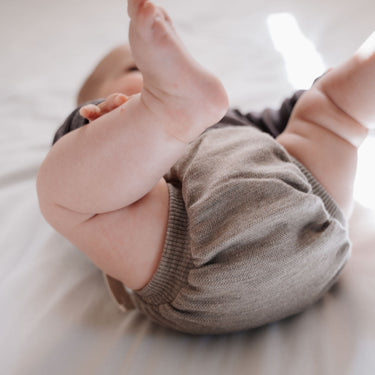
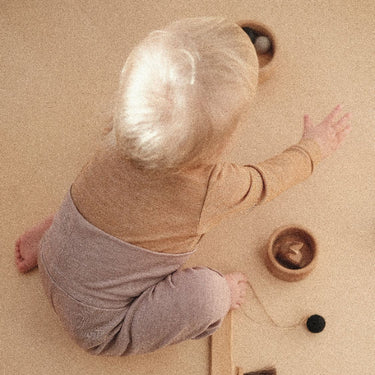
Dressing a baby in summer sounds simple at first. Less clothing, more air, done. But as soon as your baby arrives, questions quickly arise: Is a bodysuit enough? Does my baby need a hat? Can they just lie in a diaper? How do I protect them from the sun? And how do I know if they are dressed too warmly?
Newborns and young babies, in particular, need special attention in summer. They cannot regulate their body temperature as reliably as adults yet. At the same time, their skin is sensitive, and direct sun should be avoided if possible.
Therefore, summer clothing for babies does not simply mean "as little as possible." It means: light, breathable, sun-protected, and appropriate for the situation.
In this article, you will find natural, practical, and non-dogmatic guidance: how to dress your baby in summer, what materials are useful, what to pay attention to at home, outdoors, in a carrier, in a stroller, in the car, and at night — and why less clothing is sometimes good, but protection remains important.
If you are currently planning all the equipment for a summer baby, you will also find a suitable overview here: Summer Baby Layette: What You Really Need.
The most important summer rule: Light, airy, and protected
In summer, your baby needs clothing that allows air to reach the skin, does not restrict movement, and protects against overheating. At the same time, sensitive baby skin should not be exposed to direct sunlight unprotected.
This means: Indoors, your baby can be very lightly dressed when it's hot. Outdoors, they primarily need shade, head protection, and light clothing that covers the skin without being too warm.
Good summer clothing for babies is:
- light and breathable
- not tight-fitting
- soft on the skin
- made of natural or skin-friendly materials
- easy to open and change
- suitable for shade, carrier, stroller, or sleeping situation
- practical for changing diapers or elimination communication
There is no rigid rule. Your baby, the temperature, humidity, and your surroundings all play a role.
How do you know if your baby is too warm?
Cold or warm hands are not always a reliable sign in babies. It's better to check the neck or upper back.
You can assess your baby like this:
- If the neck is pleasantly warm and dry, your baby is usually dressed appropriately.
- If the neck is damp, hot, or sweaty, your baby is probably too warm.
- If your baby seems unusually listless, very restless, hot, or drinks noticeably poorly, you should pay attention and seek help if you are unsure.
Especially in great heat, it is important not to wait until there is heavy sweating. Babies sweat differently than adults and cannot cool themselves down as well yet.
What materials are suitable for summer?
In summer, the material plays a big role. Clothing should be light, absorb or wick away moisture well, and feel comfortable on the skin.
For Mata Origin, natural, high-quality, and everyday-suitable materials are central. In summer, light cotton, wool/Tencel, and, depending on the temperature, very fine wool qualities are particularly interesting.
Cotton
Cotton is very popular in summer because it is familiar, easy to care for, and comfortable. It is well suited for light bodysuits, cloths, and everyday clothing. Make sure that cotton clothing is not too thick and fits loosely.
Wool/Tencel
Wool/Tencel can be exciting in summer because the material is soft, light, and balancing. It often feels particularly supple and can be pleasant for first layers if it is not too thickly processed.
Fine Wool
For many, wool sounds like winter. However, fine wool qualities can also be pleasant during transitional periods or on cooler summer days, because wool can balance temperature. The thickness of the fabric and the specific temperature are decisive.
Synthetic materials
Synthetic fabrics can dry quickly but do not always feel comfortable on sensitive baby skin. For direct skin contact, many families prefer natural or skin-friendly materials.
You can find more about material selection here: Natural Baby Clothing: Wool, Wool/Tencel, and Cotton Compared.
Dressing baby at home in summer
At home, summer clothing can be very simple. When it's warm and your baby is not in direct sun, a bodysuit, a thin shirt, or even just a diaper or backup is often enough.
It is important to avoid drafts and direct sun. A baby can still get cold in summer if they are sweaty and then lie in a cold draft. At the same time, it can quickly get too warm in overheated rooms.
Possible clothing at home
- light short-sleeved bodysuit
- thin long-sleeved bodysuit for cooler rooms
- bodysuit plus light pants if necessary
- only a diaper or elimination communication diaper for great heat and a safe environment
- thin cloth or light blanket only if needed and used safely
If your baby is on you a lot, they also receive body heat. Then less clothing is often sufficient than in a stroller or alone on a mat.
If you want to know what clothing a newborn needs in general, you will find a good basis here: What clothing does a newborn really need?.
Dressing baby outdoors in summer
Outdoors in summer, it's not just about temperature, but also about sun protection. Babies should stay in the shade as much as possible and not be exposed to direct sunlight.
Light clothing can protect the skin without overheating your baby. Loose cuts, light colors, and materials that allow air to circulate are particularly useful.
For outdoors, the following may be useful:
- light bodysuit or shirt
- thin, loose pants
- sun hat with neck or ear protection
- light socks if feet need to be protected
- shade provider on the stroller
- light blanket or cloth only as sun protection, not for covering over the stroller
Important: A blanket or cloth should never be placed over the stroller in such a way that heat accumulates underneath. Shade is good. Air circulation is just as important.
Why direct sun is problematic for babies
Baby skin is very sensitive. Especially in the first year of life, direct sun should be avoided as much as possible. This does not mean that you have to stay indoors with your baby all summer. But outdoor stays should be well protected: in the shade, with light clothing, head covering, and avoiding intense midday sun.
If you are out and about, plan for quiet times in the morning or late afternoon. Avoid strong heat and direct sun as much as possible.
For questions about sunscreens, sensitive skin, or special situations, please speak to your midwife, pediatrician, or general practitioner.
Dressing baby in the stroller in summer
In the stroller, it can quickly get warmer than it feels from the outside. Especially if the stroller is in the sun or poorly ventilated, heat can accumulate.
Your baby lies calmly in the stroller and hardly moves. Therefore, you should regularly check if they are at a comfortable temperature.
In the stroller, the following might be suitable:
- light bodysuit
- thin pants or leg covering for sun protection
- sun hat if the head is not securely in the shade
- light underlay
- no thick blankets
- good air circulation
Place the stroller in the shade if possible. Make sure your baby is not directly hit by the sun, but also does not overheat under a covered stroller.
You can find more information here: Dressing baby in the stroller: What does your baby need outdoors?.
Dressing baby in the carrier in summer
In the carrier, your baby is often warmer than in the stroller. They lie directly against your body, receive your warmth, and are additionally surrounded by fabric. Therefore, they usually need less clothing in the carrier in summer.
A light base layer is often sufficient. Free air circulation, protection of the head, arms, and legs from the sun, and checking if your baby is sweating are particularly important.
Practical in the carrier:
- light bodysuit or thin shirt
- possibly thin pants or leg warmers for sun protection
- sun hat if the head is not in the shade
- no unnecessarily thick layers
- regular breaks in the shade
- check neck and back
Also pay attention to yourself. If you are sweating heavily, it may be more comfortable for both of you to walk shorter distances, take more breaks, or switch to cooler times of day.
You can find more information here: Dressing baby in the carrier: What does your baby really need?.
Dressing baby in the car in summer
Cars can heat up very quickly in summer. Your baby should never be left alone in the car, not even for a short time. For car rides, light clothing is usually sensible because it often gets warm in the car.
If the air conditioning is on, your baby should not be directly exposed to cold air. Here too, balance is important: not overheating, but also not getting cold in a cold draft.
For car rides in summer:
- choose light clothing
- avoid direct sun at the window
- use sun protection at the window
- no thick blankets or additional warming layers
- set air conditioning moderately
- take breaks on longer journeys
After buckling up, check that the straps are secure and that your baby is not sweating. If you are moving from an air-conditioned car to heat, a short adjustment may be necessary.
You can find more information here: Dressing baby in the car: safe and warm in the infant car seat.
Dressing baby at night in summer
Summer nights can be very different. Some rooms remain pleasantly cool, others heat up significantly. Therefore, there is no perfect standard combination here either.
A good starting point is a light bodysuit or thin pajamas. Depending on the room temperature, a thin summer sleeping bag may be useful or too much. What matters is how your baby feels.
At night, you can consider:
- Check neck: warm and dry is usually good
- Reduce clothing if sweating
- No thick sleeping bags in hot weather
- No loose, heavy blankets
- Keep room as cool as possible during the day
- Ensure safe, gentle ventilation at night, without direct drafts on the baby
If your baby is sick, has a fever, was born very small, or you are unsure, please seek individual professional guidance.
You can find more information here: Dressing baby at night: What does a newborn need for sleeping?.
Dressing baby at 20 degrees Celsius
20 degrees Celsius often feels pleasant for adults. For a baby, however, the appropriate clothing depends on whether you are indoors or outdoors, whether there is wind, and whether your baby is lying down, being carried, or sleeping.
At approximately 20 degrees Celsius, the following may be suitable:
- Long-sleeved bodysuit or short-sleeved bodysuit with light pants
- Thin jacket for wind or shade
- Socks as needed
- Light blanket in the stroller if your baby seems cool
At 20 degrees Celsius in the shade, your baby usually doesn't need thick clothing. In the wind or after bathing, an additional light layer may be useful.
Dressing baby at 25 degrees Celsius
At 25 degrees Celsius, light clothing is required. Many babies are well dressed with a short-sleeved bodysuit or a thin long-sleeved bodysuit. Outdoors, sun protection is added.
At approximately 25 degrees Celsius, the following may be suitable:
- Short-sleeved bodysuit
- Light pants or airy leg covering outdoors
- Sun hat outdoors
- No thick socks if your baby is warm enough
- Light mat instead of thick blanket
If your baby is in a carrier, even less may be sufficient because they receive your body heat.
Dressing baby at 30 degrees Celsius and above
In extreme heat, clothing can be very minimal. At home, a baby can often just lie in a bodysuit, a diaper, or an elimination communication diaper, as long as they are not in a draft or direct sunlight.
Outdoors, your baby still needs protection from UV radiation despite the heat. This means: shade, airy clothing, and head covering. Avoid prolonged stays in the midday heat and pay particular attention to signs of overheating.
Helpful in extreme heat:
- cool, shady rooms
- very light clothing
- more frequent breastfeeding or drinking depending on age and diet
- no direct sun
- no covered strollers with heat accumulation
- damp cloths for gentle cooling, if appropriate
- calm daily rhythm with breaks
If your baby seems very hot, is listless, drinks poorly, cries unusually, is very sleepy, or you have a bad feeling, please seek medical help.
Summer clothing and elimination communication
Summer can be a very pleasant time to get to know elimination communication or "Windelfrei." Your baby wears fewer layers, the diaper area is more quickly accessible, and small accidents are often easier to manage.
At the same time, even in summer, you should make sure that your baby does not get cold if they are sweaty or in a draft. Light clothing, underlays, and a good backup can help you relax.
Helpful for elimination communication in summer:
- elimination communication diaper as a light backup
- absorbent inserts
- light EC pants or quick-opening clothing
- changing pad for home and on the go
- soft washcloths
- wet bag for damp clothing or inserts
If you are not yet familiar with elimination communication, you will find a gentle introduction here: What does elimination communication from birth actually mean?.
If you want to know what you really need for it, read on here: Elimination Communication Starter Kit: What You Really Need.
Diaper changing and elimination communication in the heat
In warm weather, the skin in the diaper area can become irritated more quickly, especially when moisture and warmth combine. Regular diaper changes, air exposure to the skin, and gentle cleaning can help.
If you want to practice elimination communication, summer can be practical: briefly hold your baby for elimination during diaper changes, then allow some air to reach the skin, and only then put on a backup. This doesn't have to take long and doesn't have to work perfectly.
You can find suitable products at Mata Origin, for example, in the areas of elimination communication diapers, elimination communication pants, diaper inserts, and the changing pad for on the go.
Sun hat, cap, or nothing at all?
Outdoors, a sun hat is usually useful if the head is not completely in the shade. A good summer hat protects the head, face, ears, and, if possible, the neck. It should be light, fit well, and not slip.
Indoors, your baby usually doesn't need a hat in hot weather. Immediately after birth or in special situations, this can be different. Here again, what counts is: temperature, age, your baby's condition, and professional assessment.
A good summer hat should:
- be light and breathable
- not press
- shade face and neck
- not slip over the eyes
- fit well without restricting
Does a baby need socks in summer?
Not always. If it's very warm and your baby is at a comfortable temperature, socks are often not necessary. Outdoors, however, they can protect against sun, friction, or cool wind.
Cold feet alone don't automatically mean your baby is cold. It's better to check their neck. If your baby is warm overall, their feet don't need extra layers.
What about naked baby time?
Naked baby time can be very pleasant in summer. It allows air to reach the skin, relieves the diaper area, and can also be helpful for diaper-free moments.
A safe environment is important:
- no direct sun
- no drafts
- soft surface
- comfortable room temperature
- backup or pad for pee
- do not leave baby unattended
Naked baby time doesn't have to be long. Even short moments can be pleasant, especially during diaper changes or after bathing.
If your baby develops a sore bottom during the postpartum period, you can find helpful guidance here: Sore bottom in babies: What really helps in the postpartum period.
Breastfeeding, drinking, and heat
In warm weather, many babies want to drink more frequently. If you are breastfeeding, more frequent feeding can be normal. Your baby gets not only nutrition but also fluids and closeness.
Whether additional water is sensible or necessary depends, among other things, on your baby's age, nutrition, and complementary feeding situation. For exclusively breastfed babies or very young infants, you should clarify such questions with your midwife or pediatrician.
Important: Pay attention to your baby. In hot weather, regular drinking, wet diapers, alertness, and an overall stable impression are important indicators. If you are unsure, it's better to get support early.
Typical mistakes when dressing your baby in summer
Many mistakes arise from good intentions. Parents want to protect and sometimes choose too many layers. Or they want to avoid overheating and forget about sun protection.
Common summer mistakes are:
- leaving baby in direct sun
- completely covering the stroller with a cloth and creating heat buildup
- too thick clothing in the baby carrier
- not removing hat indoors in warm rooms
- checking only hands or feet instead of the neck
- too few breaks in the shade
- underestimating the heat in the car
- leaving baby bundled up despite sweating
Summer clothing should provide relief. If your baby is sweating, restless, or very warm, you can reduce layers, open clothes, seek shade, and provide cooling.
A simple summer checklist for baby clothes
For the warm season, this reduced guidance can help:
- 5 to 7 light bodysuits
- 2 to 4 thin pants or leggings
- 2 to 3 light tops
- 1 to 2 thin jackets for cooler mornings or evenings
- 1 to 2 sun hats
- light socks as needed
- thin cloths or muslin cloths
- light blanket for the stroller, if appropriate
- changing mat for on the go
- light backups, inserts, or elimination communication diapers if you want to try diaper-free
If you are generally planning what clothes a newborn needs, you can find the appropriate overview here: What clothes does a newborn really need?.
More specifically for summer babies, continue here: Summer baby initial equipment: What you really need.
Frequent questions: Dressing baby in summer
What do you dress a baby in during summer?
That depends on the temperature, location, and sun protection. At home, a light bodysuit or just a backup is often enough in the heat. Outdoors, your baby needs light, airy clothing, shade, and usually a sun hat.
Can my baby lie only in a diaper in summer?
Indoors or in safe shade, this can be pleasant in extreme heat, as long as your baby is not in a draft or direct sun. Check regularly to ensure they are comfortably warm and not sweaty.
How do I know if my baby is dressed too warmly?
Feel their neck or upper back. If this area is damp, hot, or sweaty, your baby is likely too warm. Then you should reduce clothing or provide more cooling.
Does my baby need a hat in summer?
Outdoors, a light sun hat is useful if their head is not safely in the shade. Indoors in warm rooms, your baby usually doesn't need a hat, unless there are special reasons.
What materials are good for babies in summer?
Light cotton, wool/Tencel, and very fine natural materials can be pleasant. It's important that clothing is breathable, soft, and not too tight.
How do I dress my baby in the carrier in summer?
In the carrier, a light layer is usually enough because your baby receives your body heat. Pay particular attention to sun protection for their head, arms, and legs, and take regular breaks in the shade.
Can I start elimination communication in summer?
Yes, summer can be a good time because there are fewer clothes in the way and small accidents are easier to handle. A light backup, inserts, and a pad make the start more relaxed.
A calm thought to conclude
Dressing your baby in summer is a balancing act: light enough for the heat, protected enough from the sun, soft enough for sensitive skin, and practical enough for your everyday life.
You don't have to calculate every temperature perfectly. You can observe, touch, adapt, and become more confident over time. Your baby's neck, mood, skin, and drinking behavior will give you many clues.
Natural materials, airy cuts, shade, and a calm attitude help more than rigid rules. And as often in the baby year: It doesn't have to be perfect. It should serve you.
Summer with a baby can be easy. Protected, mindful, and connected.
If you want to accompany your baby with natural materials, practical cuts, and an undogmatic view of diapering, elimination communication, and closeness, you will find thoughtful companions for this first period at Mata Origin.
Discover suitable products for warm days and your baby's everyday life: elimination communication pants, elimination communication diapers, diaper inserts, and the changing mat for on the go.
Note: This article does not replace medical advice. It is intended to provide guidance. In case of extreme heat, fever, unusual sleepiness, difficulty drinking, overheating, sunburn, uncertainty, or specific health concerns, please contact your midwife or pediatrician. In case of acute severe symptoms, seek immediate medical help.