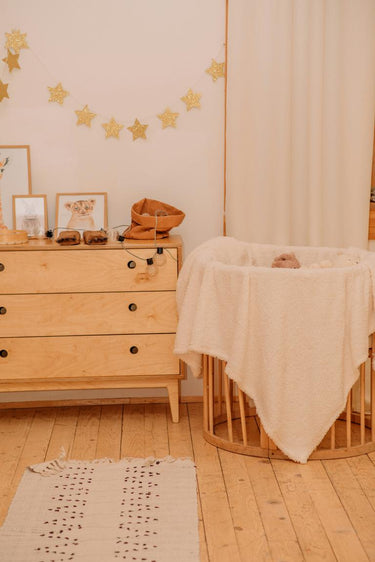
For many expectant parents, a changing station is a natural part of their baby's initial equipment. At the same time, it's often imagined as larger than it needs to be: a changing table, a radiant heater, baskets, creams, wet wipes, a stock of diapers, clothes, care products, an organizer, a trash can, a night light, and ideally, everything perfectly organized.
The good news is: Your changing station doesn't have to look like a baby catalog. It just needs to be safe, practical, and suitable for your daily routine.
A good changing station helps you care for your baby calmly. It puts everything you need for changing, cleaning, dressing, minor care, and perhaps even elimination communication within reach. At the same time, it should remain simple enough that you don't have to search, grab, juggle, or improvise during the postpartum period.
In this article, you'll find natural, practical, and undogmatic guidance: What do you really need at the changing station? What's safety-relevant? What's different for elimination communication? And how do you set up a changing station that doesn't overwhelm you, but rather makes your baby's daily life easier?
What makes a good changing station?
A good changing station isn't a piece of furniture. A good changing station is a safe, warm, and well-organized place where you can care for your baby.
It can be a changing table. But it can also be a changing mat on a stable surface, a prepared spot in the bathroom, a mobile changing box, or a mat on the floor.
What's important is not that the changing station looks particularly beautiful. What's important is that it works.
A good changing station is:
- safe
- stable
- draft-free
- pleasantly warm
- easily accessible
- clearly organized
- easy to keep clean
- physically comfortable for you
- suitable for your changing or elimination communication routine
Especially in the first few weeks, you'll be using this spot frequently. Therefore, it can be simple, but well thought out.
First things first: Safety at the changing station
Safety is paramount at the changing station. Babies can sometimes move earlier and more suddenly than parents expect. Therefore, you should never leave your baby alone on an elevated changing surface.
Not even for a moment. Not even to quickly grab a diaper, a cloth, or fresh clothes. If you've forgotten something, take your baby with you or place them safely on the floor.
Important safety rules at the changing station:
- Never leave your baby alone on the changing table or an elevated surface.
- Always keep one hand on your child while changing.
- Place all changing supplies within reach before changing.
- If you need to get something: take your baby with you or place them on the floor.
- Do not store heavy or dangerous objects within your baby's reach.
- Do not set up the changing station directly next to dangerous edges, cables, or open shelves.
The safety information in this article is based on information from kindergesundheit-info.de regarding safety at the changing station and the general safety rules for babies.
Safety doesn't mean becoming anxious. Safety means preventing the most common risk situations from arising in the first place.
Changing table or changing on the floor?
Many parents wonder if they really need a changing table. The honest answer is: No, not necessarily. A changing table can be very practical, but it's not a must-have.
Some families love the changing table because it offers a comfortable working height and provides plenty of storage space. Others prefer changing on the floor, on the bed with a mat, or at a mobile spot, because they want to remain more flexible.
A changing table is practical if:
- you want a fixed changing spot
- you want to store everything in one place
- you want to change standing up to protect your back
- you have enough space in the room
- you want to use the changing station long-term
Changing on the floor is practical if:
- you have little space
- you want maximum fall safety
- your baby becomes very mobile
- you want to change flexibly in different rooms
- you don't want to buy an additional dresser
Both can work well. The crucial thing is that you feel safe and have all important items within reach.
The changing station in the postpartum period
In the postpartum period, everyday life is often slower yet more intense. You are physically recovering, your baby needs closeness, and many small tasks are new.
Therefore, the changing station should be particularly simple during the postpartum period. You don't need perfect order, but clear access paths.
Helpful during the postpartum period:
- Changing station close to the main living area
- Spare clothes in the current size
- Soft cloths or washcloths
- Small bowl for water
- Diapers, EC diapers, or backups
- Inserts
- Underpad
- Wet bag or laundry bag
- Dimmed light for nighttime
If you don't want to get up every time during the postpartum period, a small mobile changing box can also be useful. It can hold a few cloths, inserts, a spare bodysuit, and a backup. This way, you can calmly care for your baby on the bed or sofa.
You can find more on preparation here: Preparing for the postpartum period: What you can organize before birth.
What really belongs at the changing station?
A changing station doesn't have to be cluttered. On the contrary: the simpler it's set up, the calmer the process will be.
For the first few weeks, a few things are sufficient.
The most important basic equipment:
- Changing pad or changing mat
- Diapers, EC diapers, or backups
- Inserts, if you use them
- Soft washcloths or cloths
- Small bowl with water
- Spare bodysuit
- Spare pants
- Laundry bag or wet bag
- Mild care balm or oil if needed
- Small towel
You often don't need much more to start with. Many care products seem useful before birth but are rarely used later.
What you don't automatically need
There are many products around the changing station that can be helpful but are not absolutely necessary. Especially if you want to start consciously and sustainably, restraint is worthwhile.
Not automatically necessary are:
- many different creams
- large supplies of wet wipes
- several specialized care products
- complicated organizers
- scented trash cans
- disposable changing pads for home
- too much clothing directly at the changing station
- large quantities in size 50
You can add what you really need later. Before birth, it's often wiser to start the changing station lean.
You can also find a reduced basic equipment in the article Baby's First Equipment: What You Really Need.
Water and washcloths instead of wet wipes?
At home, warm water and soft washcloths are often sufficient. This is simple, skin-friendly, inexpensive, and sustainable. Wet wipes can be practical on the go, but they don't have to be the standard solution at the changing station.
Especially in the first few weeks, a baby's skin is sensitive. Fewer products often mean less potential for irritation.
Practical for cleaning at home:
- small bowl with warm water
- soft washcloths
- small towel for drying
- a little mild oil if needed
- fresh insert or diaper
The diaper area doesn't need to smell perfumed. It should be clean, dry, and as unirritated as possible.
How warm should the changing station be?
Many babies don't like to be cold while being changed. Newborns in particular become restless if they lie naked on a cool surface for a long time.
Therefore, the changing station should be pleasantly warm and draft-free. However, this doesn't mean you have to heat your baby extensively every time. Often, a warm room temperature, a soft pad, and a calm, quick process are sufficient.
Helpful for warmth at the changing station:
- draft-free location
- soft pad
- warm hands
- undress only as much as necessary
- prepare spare clothes beforehand
- if needed, a light blanket over the upper body
A radiant heater can be helpful, but it's not always necessary. If you use one, pay careful attention to distance, secure mounting, manufacturer's instructions, and ensure your baby doesn't overheat.
The changing station and baby clothes
You shouldn't store the entire baby wardrobe at the changing station. A small selection in the current size is more sensible.
Directly at the changing station, often just:
- 2 to 3 bodysuits
- 2 pairs of pants
- 1 to 2 sleepsuits
- socks
- small cloth or light blanket
- a cap if needed
If your baby gets wet, spits up, or a backup leaks, you'll have everything at hand. Larger quantities can remain in the dresser.
If you're still planning what clothes you really need, you'll find the appropriate overview here: What Clothes Does a Newborn Really Need?.
You can find more on the question of how many bodysuits are sensible at the beginning here: How Many Bodysuits Does a Newborn Need?.
Preparing the changing station before birth
A good time to set it up is around the 34th week of pregnancy. Then you can wash and sort clothes and calmly test the space.
You don't have to do everything in one day. It's enough to prepare the changing station step by step.
A sensible order:
- Choose a location.
- Place the changing pad or mat.
- Check for safety.
- Prepare washcloths, cloths, and water solution.
- Sort diapers, backups, or elimination communication diapers.
- Lay out inserts.
- Put away spare clothes in the current size.
- Place the laundry bag or wet bag.
- Test the nighttime situation with light and access paths.
You can find more on washing and preparing clothes here: Washing baby clothes before birth: What really makes sense.
Changing station for Elimination Communication and Potty Training
If you want to try elimination communication or potty training, the changing station changes a bit. It becomes not just a place for diaper changes, but also a place where you can observe your baby, offer opportunities, and react quickly.
This doesn't have to be complicated. You primarily need simple routines and appropriate clothing.
Helpful for elimination communication at the changing station:
- EC potty or suitable spot within reach
- EC diaper as a backup
- absorbent inserts
- EC pants or easily openable clothing
- changing mat
- washcloths
- wet bag or laundry bag
- calm attitude without pressure of expectation
Especially at the changing station, natural standard situations for elimination communication arise: after waking up, during diaper changes, after breastfeeding, or if your baby becomes restless.
You can find suitable sections here: EC Diapers, EC Pants, Diaper Inserts, and the Portable Changing Pad.
If you want to learn more about Elimination Communication, you can start here: What Does "Diaper-Free from Birth" Actually Mean?.
If you want to know what you really need to start with elimination communication, read on here: Elimination Communication Starter Kit: What You Really Need.
Changing station with EC diapers
EC diapers can be particularly practical at the changing station if you don't want to live completely without backup for elimination communication. They provide protection but remain more accessible than many traditional diaper systems.
At the changing station, you can prepare them so you don't have to search long at night or in the postpartum period.
Practical is:
- a small stack of EC diapers
- matching inserts next to them
- dry backups separated from used items
- laundry bag for damp inserts
- spare clothes directly next to them
This way, elimination communication remains suitable for everyday life. Not as a perfection project, but as an option that fits your routine.
Changing station with disposable diapers, cloth diapers, or elimination communication
The changing station looks a little different depending on your diapering choice. There isn't one right solution.
For disposable diapers, you need:
- small supply of diapers
- trash can or bags
- soft cloths or washcloths
- spare clothes
For cloth diapers, you also need:
- cloth diapers or covers
- inserts
- wet bag or diaper pail
- more space for sorting
For elimination communication, you need:
- backup solution
- inserts
- easily openable clothing
- pottying spot or potty
- more focus on standard situations
Many families combine. So you can set up a changing station that isn't ideologically pure, but practical. Disposable diapers at night, elimination communication during the day, cloth diapers sometimes, EC diapers as a backup — everything is possible.
You can find comprehensive guidance here: Disposable Diapers, Cloth Diapers, or Elimination Communication: What Are the Options?.
Changing station at night: Less light, fewer stimuli
At night, changing should be as quiet as possible. Bright lights, long searches, and complicated clothing often make babies more awake than necessary.
Therefore, it's worth thinking about the changing station for nighttime as well.
Helpful for nighttime changing:
- dimmed night light
- spare clothes within reach
- inserts or backups prepared
- water and cloths within reach
- no noisy packaging
- calm, quick routines
- easily openable clothing
If you want to do elimination communication at night, a potty within reach and clothes that can be opened quickly will help. If that stresses you out at night, the diaper can simply remain a backup.
You can find more about nightwear here: Dressing baby at night: What does a newborn need to sleep?.
Mobile changing station: Why a small box is often enough
In addition to the fixed changing station, a mobile changing box can be very helpful. Especially in the postpartum period, in the living room, or at night, you might not want to change rooms every time.
A mobile box needs to stay small. It's not a second changing table, but a practical mini-version.
A mobile changing box can contain:
- 2 backups or diapers
- 2 inserts
- 2 washcloths
- small changing pad
- spare bodysuit
- spare pants
- wet bag or small bag
For on the go or flexible changing situations, a good changing mat is particularly valuable. You can find a suitable solution here: Changing mat for on the go.
Changing area in the bathroom or bedroom?
The best place depends on your daily routine. In the bathroom, you have water close by. In the bedroom, you're faster at night. In the nursery, you might have more storage space. In the living room, you're close to life during the day.
Bathroom is practical because:
- water is directly available
- cleaning is easier
- used cloths can be rinsed quickly
Bedroom is practical because:
- night-time changes are shorter
- you have fewer trips during the postpartum period
- clothes are often nearby
Living room is practical because:
- you don't have to constantly change rooms during the day
- a mobile changing box is sufficient
- you can care for your baby close to you
You don't have to commit forever. Many families start with a fixed changing area and a mobile addition.
Changing area and sustainability
A sustainable changing area is not created by perfect products. It is created by good decisions: less disposables, less excess, durable materials, and things that are truly used.
Your changing area becomes sustainable through:
- washable wipes instead of permanent wet wipes
- reusable changing mats
- high-quality inserts
- elimination communication diapers or cloth solutions as a backup
- few, mild care products
- good organization instead of disposable convenience
- conscious repurchasing instead of large supplies
Sustainability doesn't have to be perfect in the postpartum period. It should remain practical for everyday life. If you use wet wipes on the go and washcloths at home, that's already a good, pragmatic solution.
You can find more about conscious preparation here: Sustainable initial equipment: Buy less, choose better.
Changing area for small apartments
If you have little space, you don't need a large changing area. A small, well-organized space is perfectly sufficient.
Practical for small apartments:
- foldable changing mat
- mobile changing box
- small basket with basics
- changing on the floor or bed with a mat
- few clothes within reach
- inserts and backups in small quantities
Especially in small apartments, reduction helps. You don't need a complete changing station if a well-packed box better supports your daily life.
Changing area for twins or multiple children
If you are expecting twins or already have an older child, organization becomes more important. Not because everything has to be perfect, but because you have less time and fewer hands free.
Then these help:
- clear fixed places for everything
- more change of clothes within reach
- larger supply of inserts or backups
- mobile box for quick situations
- particularly consistent safety rules
- no dangerous objects within reach of siblings
Important: Older siblings should also not supervise at the changing table. If you have to move away, take your baby with you or place them safely on the floor.
Changing area and hospital bag: What goes where?
The changing area and the hospital bag have a similar task: they should save you searching in the first few days. Nevertheless, you don't need everything twice.
Put the going-home outfit, a bodysuit, soft trousers, socks and, depending on the season, a hat directly into the hospital bag. The larger supplies for home remain at the changing area.
Prepare for the hospital bag:
- 1 to 2 bodysuits
- 1 soft pair of trousers or a one-piece suit
- socks
- hat depending on the season
- backup or diaper
- small cloth
You can find more information here: Packing your hospital bag: Natural, practical and without too much ballast.
Typical mistakes at the changing area
Most mistakes arise from anticipation or from the desire to prepare everything perfectly. In doing so, the changing area sometimes becomes too full, too complicated or too confusing.
Common mistakes are:
- too many products at the changing area
- important things not within reach
- leaving baby alone on an elevated surface for a short time
- no change of clothes at the spot
- too small or slippery changing pad
- too cold or drafty place
- no laundry bag for wet items
- too bright light at night
- elimination communication equipment not within reach, even though you want to try EC
A good changing area is not full. It is prepared.
Changing area checklist: What you really need
Basic equipment
- changing mat or changing pad
- diapers, elimination communication diapers or backups
- inserts
- washcloths or soft cloths
- small bowl for water
- small towel
- spare bodysuit
- spare trousers
- laundry bag or wet bag
For care
- mild oil or care balm if needed
- fever thermometer in a separate safe place
- nail scissors or file not within baby's reach
- no open creams or small parts directly next to the baby
For elimination communication and potty training
- elimination communication diaper
- inserts
- elimination communication trousers
- small potty or elimination communication spot
- mat
- wet bag
- change of clothes
For night time
- night light
- prepared backups
- change of clothes
- quiet gripping order
- as few stimuli as possible
Frequently asked questions: Setting up a changing area
Do you really need a changing table?
No. A changing table can be practical, but it is not a must. What is important is a safe, stable and well-prepared changing area. You can also change your baby on the floor, in the bathroom or with a mobile changing box.
What belongs at the changing area?
Changing mat, diapers or backups, inserts, washcloths, water, change of clothes, laundry bag and, if necessary, mild care products. If you want to try elimination communication, also elimination communication diapers, elimination communication trousers and a potty or elimination communication spot.
How do I set up the changing area safely?
All important things should be within reach before changing. Your baby should never be left alone on an elevated changing surface. When changing, you should always have one hand on the child.
Where is the best place for the changing area?
The best place is the one that suits your daily routine. Bathroom, bedroom, nursery or living room can work. Safety, warmth, short distances and good accessibility are important.
Do you need a radiant heater at the changing area?
Not necessarily. A warm, draft-free room and quick procedures are often sufficient. If you use a radiant heater, pay attention to safe installation, distance, manufacturer's instructions and ensure that your baby does not overheat.
Are wet wipes necessary at the changing area?
For home, warm water and soft washcloths are often sufficient. Wet wipes can be practical on the go, but do not have to be the daily standard solution.
What does a changing area for elimination communication look like?
An elimination communication-friendly changing area has easily accessible clothing, elimination communication diapers, inserts, a mat, washcloths, change of clothes and, if possible, a potty or an elimination communication spot within reach.
What do I need at the changing area at night?
Dimmed light, change of clothes, backups or diapers, inserts, cloths, water and, if possible, simple procedures. The less you have to search, the easier it is for your baby to get back to sleep.
What do I need at the changing area for elimination communication diapers?
Practical items include elimination communication diapers, suitable inserts, easy-to-open clothing, a wet bag or laundry bag, and a change of clothes. This makes elimination communication suitable for everyday use, even if something goes wrong.
A quiet thought to conclude
A changing area is not a project that has to look perfect. It is a place for many small moments: cleaning, changing, holding, looking, talking, maybe potty training, sometimes comforting.
If this place is safe, warm, and well-prepared, that's enough. You don't need an overflowing dresser and ten care products. You need things that you actually reach for when your baby is in front of you.
A good changing area makes the beginning easier. Not because it controls everything. But because it gives you peace: All important things are there. My baby is safe. I don't have to search. I can concentrate on this little person.
And that's what it's all about.
If you want to accompany your baby with natural materials, practical cuts and an undogmatic view of changing, potty training and closeness, you will find well-thought-out companions for precisely this first time at Mata Origin.
Discover suitable products for the changing area, potty training and on the go: Elimination communication diapers, Elimination communication pants, Diaper inserts and the changing mat for on the go.
Note: This article does not replace medical advice. It is intended to provide guidance. For skin problems, a sore diaper area, fever, pain, falls, injuries, uncertainty or special health questions, please consult your midwife, pediatrician or family doctor. In the event of a fall from the changing table or an elevated surface, you should seek professional advice to determine whether medical help is necessary.