
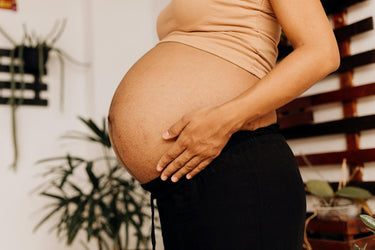
The last weeks before birth often feel special. On the one hand, there's anticipation. Perhaps impatience. Maybe you feel your baby very distinctly. Perhaps your body becomes heavier, slower, more tired. Maybe your head is full: birth, hospital bag, postpartum, baby clothes, breastfeeding or bottle-feeding, diapering, elimination communication, sleeping arrangements, pediatrician's office, visitors, household, older siblings, paperwork.
Many expectant parents try to get everything ready during this time. Buy everything. Wash everything. Read everything. Plan everything. Control everything.
But that's not what the end of pregnancy is about.
The most important guideline is: You don't have to prepare everything perfectly. You should prepare the things that will truly relieve stress after the birth.
The last weeks before birth are not a to-do marathon. They are a transition. Pregnancy becomes the baby's first year. Expectation becomes daily life. Imagination becomes real getting-to-know-you.
In this article, you'll find calm, practical, and undogmatic guidance for the last weeks before birth: What's truly important? What can wait? What helps postpartum? What baby clothes do you need? How can you prepare for diapering and elimination communication? What should be in the hospital bag? What appointments and documents are useful? And how can you find a bit more inner calm before your baby arrives?
The last weeks are not a checklist test
Before birth, the feeling quickly arises: If we are prepared enough, the start will be easy. But a baby is not a project that can be fully planned. Birth and postpartum remain dynamic. There will be things that turn out differently than expected.
Preparation is still valuable. But not as control. Rather as relief.
Good preparation means:
- having the most important things at hand
- not buying too much
- organizing postpartum help
- clarifying visitor expectations
- preparing simple routines
- washing and sorting baby clothes
- setting up changing and EC stations
- packing the hospital bag
- considering initial appointments
- creating inner space
You don't need a perfect start. You need a stable one. A start that supports you, even if not everything goes smoothly.
1. Pack your hospital bag
The hospital bag is one of the most tangible things in the last few weeks. Many parents pack it around 34 to 36 weeks of pregnancy. Not because something is sure to happen then. But because it brings peace of mind to have it ready.
Again, the hospital bag doesn't have to be perfect. It should support you, not burden you.
Items for your hospital bag include:
- important documents
- comfortable clothes for birth
- comfortable clothes for postpartum
- personal care items
- snacks and drinks
- first clothes for the baby
- clothes for the journey home
- muslin cloths
- optionally, your own EC or diapering basics, if you want to use them
You don't need to take half your house with you. Much more important is that you know where everything is – and that your companion knows too.
You can find more information here: Packing your hospital bag: Natural, practical, and without too much unnecessary baggage.
2. Prepare for the postpartum period
The postpartum period is not just the time after birth. It's a protected time. Your body heals. Your baby arrives. You get to know each other. Nutrition, sleep, elimination, closeness, visitors, and daily life all rearrange themselves.
Many families prepare the baby's room more intensely than the postpartum period. Yet the postpartum period is much more important initially than a perfect room.
For the postpartum period, you can prepare:
- pre-cook or organize meals
- arrange for grocery help
- establish visitor rules
- set up a nursing or feeding station
- prepare a changing station
- organize laundry and household help
- discuss the partner's role concretely
- consider support after a C-section
- protect rest periods
A prepared postpartum period does not mean that everything has to be quiet, beautiful, and perfect. It means: You have decided beforehand that this initial time deserves protection.
You can find more information here: Preparing for the postpartum period: What you can organize before birth.
3. Plan meals and provisions
After birth, many mothers eat irregularly, even though they particularly need sustenance at this time. Not because they don't want to eat. But because breastfeeding, feeding, carrying, sleep deprivation, visitors, and healing take over daily life.
Therefore, food is one of the best preparations of all. Not as a perfection project. But as self-care for you.
Helpful things include:
- pre-cooked meals in the freezer
- simple soups and stews
- snack bowls for nursing or feeding station
- water bottles in several locations
- list of people who can bring food
- clear rule: visitors bring food, not work
If you only prepare one thing for the postpartum period, food is very high on the list.
You can find more information here: Preparing postpartum meals: What really helps you after birth.
4. Clarify postpartum visits in advance
Visitors are one of those topics many parents underestimate. Before birth, visitors sound nice. After birth, they can be nice – or a lot to handle.
A newborn needs peace. A mother in postpartum needs protection. A family needs time to find its own rhythm.
Before birth, you can clarify:
- Who can come in the first few days?
- How long can visitors stay?
- Who will bring food?
- Who will genuinely help with the household?
- Who will be invited later?
- How do we communicate boundaries?
- What do we do if a visitor is sick?
A simple sentence can be very relieving:
"We'll get in touch after the birth when a visit works for us. We need peace and quiet at the beginning."
This is not impolite. This is postpartum protection.
You can find more information here: Visitors during postpartum: How much external closeness is truly beneficial?.
5. Consciously choose baby clothes
In the last weeks before birth, baby clothes are a big topic. They are emotional. They make the baby more tangible. They might already be washed and hanging on the line. Small bodysuits, small pants, small socks.
But here too: You don't need much. You need clothes that really work.
Important for the first few weeks:
- soft bodysuits
- wrap-around bodysuits or easy-to-put-on styles
- soft pants
- appropriate size, usually 50/56 or 56
- a few items in size 62 as a reserve
- natural materials
- clothing that facilitates diapering and elimination communication
- no tight waistbands
Good baby clothes are not just cute. They make the first few days easier: less pulling, less stress during changing, less pressure on the belly, faster access for diapering and elimination communication.
You can find more information here: What clothes does a newborn really need? and here: Which baby size for birth: 50, 56 or 62?.
6. Prepare clothing according to the season
A winter baby needs different layers than a summer baby. A baby in spring or autumn needs flexible clothing because temperatures and weather can change significantly.
The important thing is not to bundle your baby up as warmly as possible. The important thing is to care for them well: don't let them get cold, but also don't let them overheat.
Depending on the season, these questions will help you:
- Will my baby be born in winter?
- Do we need a warm outer layer?
- Will my baby be born in summer?
- How do we protect them from sun and heat?
- Is it a transitional period and do we need flexible layers?
- How do we dress the baby in a carrier, stroller, and car?
You can find more information here: Winter baby essentials, Summer baby essentials and Dressing baby in transitional weather.
7. Consider natural materials
A baby's skin is particularly sensitive in the first few weeks. Clothing lies almost continuously on this skin: when sleeping, feeding, carrying, changing, cuddling, and settling in.
Therefore, it's worth paying attention to materials. Not dogmatically. But practically and lovingly.
Natural materials can be helpful because they:
- feel soft on the skin
- can regulate temperature well
- feel less like plastic
- are often more pleasant for closeness and physical contact
- fit a reduced, conscious initial setup
You don't have to buy everything new. But for the items that lie directly on baby's skin, good quality is particularly worthwhile.
You can find more information here: Natural baby clothes: Wool, wool/Tencel, and cotton compared.
8. Wash baby clothes before birth
Baby clothes should be washed before the first wear. This applies to new clothes and also to used items. This way, you remove any residues from production, storage, transport, or previous use.
Practical tips:
- wash the first clothes in size 50/56 and 56
- do not wash all larger sizes immediately
- use mild detergent
- do not use fabric softener
- treat wool according to care instructions
- sort clothes by type and size
You don't need to prepare clothes for the entire first year yet. It's enough if the first few weeks are easily accessible.
You can find more information here: Washing baby clothes before birth: What's truly sensible.
9. Set up a changing station
The changing station will be one of the most frequently used places in the first few weeks. There, you'll change diapers, care for your baby, dress them, check their navel, inspect their bottom, perhaps offer elimination communication, and often comfort them.
It doesn't have to look perfect. It has to be safe and practical.
A good changing station needs:
- a safe changing pad
- everything within reach
- fresh diapers, backups, or elimination communication diapers
- inserts
- soft washcloths
- a bowl for warm water
- muslin cloths
- change of clothes
- wet bag or laundry bag
- good lighting
Important: Your baby should never be left alone on a raised changing surface. Not even for a moment.
You can find more information here: Setting up a changing station: What you really need.
10. Prepare for diapers, cloth diapers, or elimination communication undogmatically
Many parents think about diapers before birth. But few know that they have more options than disposable diapers or cloth diapers.
Elimination communication or EC doesn't mean your baby can't wear a diaper. It means you perceive elimination as part of communication and offer your baby an opportunity at appropriate moments.
A diaper or EC diaper can be a backup.
You can prepare:
- a small diaper or backup system
- EC diapers
- absorbent inserts
- a changing mat
- a wet bag
- easy-to-open clothing
- knowledge of standard situations
- the inner permission to start part-time
The important thing is not that you have "understood everything" before birth. The important thing is just that you know: this option exists. You are allowed to try it out. And you are allowed to adapt it so that it suits you.
You can find more information here: Disposable diapers, cloth diapers, or elimination communication: What are the options? and here: What does elimination communication from birth actually mean?.
11. Keep EC essentials minimal
If you want to try elimination communication, you don't need a huge amount of special equipment. Especially at the beginning, a small, well-functioning start is enough.
Useful items include:
- EC diaper as a backup
- absorbent inserts
- changing pad
- soft cloths
- wet bag
- easy-to-open clothing
- a quiet place for changing and elimination communication
Good starting moments are: after waking up, during diaper changes, before or after breastfeeding or bottle-feeding, when your baby becomes restless, or when they clearly seem to need to go.
Relevant sections can be found here: EC diapers, diaper inserts, EC pants and the changing mat for on the go.
You can find more information on equipment here: Elimination Communication essentials: What you really need.
12. Prepare a nursing or feeding station
Whether you breastfeed, bottle-feed, or combine both: In the first few weeks, you will spend a lot of time feeding. A good spot can greatly relieve you.
This spot doesn't have to be Instagram-worthy. It has to work for you – especially at night, tired, hungry, thirsty, and with a baby in your arms.
The spot should include:
- water bottle
- snack bowl
- muslin cloths
- comfortable pillows
- a small light for nighttime
- a soft blanket for you
- changing and EC basics within reach
- charging cable or book, if you wish
You can find more information here: Setting up a nursing station: What you really need postpartum.
13. Prepare for breastfeeding, bottle-feeding, and nutrition without pressure
Many pregnant women want to breastfeed. Others already know they want to bottle-feed. Still others are open or unsure. The important thing is: You are allowed to inform yourself without putting pressure on yourself.
Helpful preparation:
- gather breastfeeding knowledge, without panic
- know your midwife or lactation consultant
- understand what cluster feeding is
- don't dismiss sore nipples as normal
- safely understand bottle preparation, if relevant
- involve your partner
- don't feel pressured to make every decision final before birth
Nutrition is a sensitive topic in the baby's first year. That makes an attitude free of guilt even more important: well-informed, lovingly supported, and open to help if things are harder than expected.
You can find more information here: Cluster feeding postpartum, Sore nipples postpartum and Bottle-feeding postpartum.
14. Prepare a small baby first-aid kit
You don't need a large first-aid kit for the first few weeks. But a few things should be there so you don't have to search for them at night or on weekends.
Useful items include:
- digital thermometer
- emergency numbers card
- soft washcloths
- muslin cloths
- mild diaper rash cream if needed
- sterile compresses as needed
- no adult medications for the baby
- medications only upon professional recommendation
A baby first-aid kit is not meant to tempt you to treat everything yourself. It is meant to help you stay calm, measure, observe – and get help in time.
You can find more about this here: Baby First-Aid Kit: What You Really Need Before Birth.
15. Consider pediatric practice, U2 and U3 examinations
The first check-ups come faster than many expect. The U2 takes place in the first days of life, the U3 in the 4th to 5th week of life. Therefore, it makes sense to find a pediatrician before birth and clarify how appointments will be organized.
Clarify before birth:
- Which pediatric practice accepts newborns?
- Where will the U2 take place?
- How is the U3 arranged?
- What documents do you need?
- How do you reach the practice for urgent questions?
- Who will accompany you to the appointment?
Especially during the postpartum period, it is very relieving if phone numbers, appointments, and documents do not have to be searched for first.
You can find more about this here: Preparing for U2 and U3: What You Should Organize Before Birth.
16. Prepare a changing bag for the first outings
You might need the changing bag sooner than you think: hospital ride home, midwife appointment, pediatrician, first walk, visiting family, or a short trip.
Again, a small, practical setup is sufficient. You don't need to pack for every eventuality on the go — but for the most common situations.
For the first outings, often sufficient:
- changing mat
- diaper, backup, or elimination communication diaper
- inserts
- muslin cloth
- change of bodysuit
- change of pants
- wet bag
- soft washcloth
- small water bottle for cleaning
- snack and water for yourself
You can find more about this here: Packing a Changing Bag: What You Really Need On the Go.
17. Prepare a safe and simple sleeping place
Your baby's sleeping place doesn't need to be decorated. It needs to be safe. Especially in the first few weeks, simple is often better: fewer loose items, fewer pillows, fewer blankets, less distraction.
Useful before birth:
- prepare a safe sleeping place
- have a suitable sleeping bag ready
- do not use loose blankets in the baby's crib
- do not place pillows, stuffed animals, or crib bumpers in the sleeping area
- consider room temperature and clothing
- prepare simple diapering and feeding routines at night
If you are unsure what clothing is appropriate at night, you can find guidance here: Dressing Baby at Night: What a Newborn Needs for Sleep?.
18. Discuss the partner's role concretely
Many couples say before birth: "We'll do this together." That's nice. But during the postpartum period, concrete tasks are needed.
Discuss beforehand:
- Who cooks or organizes food?
- Who keeps visitors away?
- Who takes over diaper changing?
- Who replenishes inserts and elimination communication diapers?
- Who holds the baby when the mother needs to sleep?
- Who calls the midwife or pediatric practice?
- Who ensures the mother eats and drinks?
- Who protects the quiet after appointments?
The partner does not just "help out." The partner is a parent. This inner attitude changes a lot.
You can find more about this here: Partner in the Postpartum Period: What Really Helps After Birth.
19. Organize help before you need it
Many families say: "We'll see then." That can work. But often it's easier to involve people concretely beforehand.
Helpful tasks for others:
- bring food
- shopping
- do laundry
- occupy older child
- walk the dog
- run errands to the pharmacy
- brief household help
- not hold the baby, but relieve the family
People who really want to help often just need clear tasks. And you are allowed to give them.
You can find more about this here: Organizing Help in the Postpartum Period: What Really Relieves You After Birth.
20. If there's a sibling
With a sibling, the postpartum period is different. Not worse. But more complex. The older child still needs closeness, rhythm, and orientation. At the same time, the baby needs a lot of skin-to-skin contact, nourishment, and care.
Helpful before birth:
- clarify childcare for birth
- clarify childcare for postpartum appointments
- prepare a small activity box
- plan visits as help for the sibling
- make the partner's role very concrete
- lower expectations
A sibling doesn't have to love everything immediately. This relationship can also grow.
You can find more about this here: Postpartum Period with Sibling: What Really Helps You.
21. Plan more help after a C-section
If a C-section is planned or becomes possible, your postpartum period will require additional physical relief. You will not only be caring for a newborn. Your own abdomen is healing.
You can prepare:
- changing station at a comfortable height
- help with getting up and handing over the baby
- transport to check-up appointments
- no heavy lifting or walking
- partner takes over carrying, changing, and bathing more often
- consistently outsource food and household tasks
- limit visitors even more strictly
After a C-section, less is not about comfort. It is about healing protection.
You can find more about this here: Postpartum After C-section: What Really Helps You.
22. Prepare baby care simply
Baby care often sounds like a lot of products before birth. In reality, a newborn usually needs much less: water, soft cloths, clean clothes, a dry umbilical cord, a well-cared-for diaper area, and attentive hands.
For the first few days, often sufficient:
- soft washcloths
- muslin cloths
- small bowl for warm water
- soft towel
- fresh clothes
- mild wound protection cream if needed
- few products instead of many
You don't need ten creams. You need a calm, low-irritant routine.
You can find more about this here: Baby Care in the Postpartum Period: What Your Newborn Really Needs.
23. Prepare internally: Not just buy, but also let go
The last weeks before birth are not just a time for organization. They are also a time of transition. Soon pregnancy will end. Soon a new family life will begin. Even if you are very happy, this transition can be emotional.
You can ask yourself:
- What do I need to feel more secure?
- What makes me anxious?
- What expectations do I want to let go of?
- Which people are good for me?
- Whose voices do I not want to let too close to me during the postpartum period?
- How do I want to start: naturally, but not dogmatically?
Starting the baby year naturally does not mean doing everything right. It means consciously choosing what is good for you.
You can find more about this here: Starting the Baby Year Naturally: What That Really Means.
What you don't necessarily have to do in the last weeks
Just as important as preparation is reduction. Not everything has to be done.
You don't have to:
- have the perfect nursery ready
- wash all sizes up to 86
- read every theory about baby nutrition
- buy all care products
- know all opinions about sleep
- perfectly understand elimination communication
- fulfill all visitor requests
- bring the household to a permanent standard
- "quickly accomplish" everything
Some things can wait. Some things can reveal themselves. Some things you might never need.
A simple priority list for the last few weeks
Priority 1: Safety and care
- pack hospital bag
- clarify birth location and journey
- secure midwife contact
- find a pediatrician
- prepare small baby first-aid kit
- have emergency numbers ready
Priority 2: Relieve postpartum period
- organize food
- plan help
- set visitor rules
- discuss partner tasks
- set up nursing or feeding station
- prepare changing station
Priority 3: Prepare for baby's daily life
- wash first clothes
- have diapers, backups, or elimination communication diapers ready
- prepare inserts
- wash muslin cloths
- roughly pack changing bag
- safely prepare sleeping place
Priority 4: Everything else
- decorate nursery
- plan photos
- sort additional sizes
- buy additional products
- consider perfect routines
If you can't do everything, focus on priorities 1 and 2. That's worth much more than a perfect shelf.
A simple checklist: Last weeks before birth
Clinic and Birth
- hospital bag packed
- documents ready
- journey to birth location clarified
- accompanying person informed
- emergency contacts saved
Postpartum period
- food prepared or organized
- visitor rules formulated
- help list created
- partner tasks discussed
- nursing or feeding station set up
- rest periods protected
Baby
- first clothes washed
- bodysuit and soft pants ready
- muslin cloths washed
- sleeping place safely prepared
- small baby first-aid kit prepared
- U2 and U3 considered
Diapering and Elimination Communication
- changing station set up
- changing mat ready
- elimination communication diapers or backups ready
- inserts ready
- wet bag available
- easy standard situations remembered
- no pressure for perfection
On the go
- changing bag prepared
- change of bodysuit packed
- muslin cloth packed
- inserts packed
- changing mat packed
- water and snack for yourself considered
Frequently asked questions: The last weeks before birth
When should I start preparing for the postpartum period?
You can prepare many things starting from the third trimester. Especially food, help, visitor rules, changing station, hospital bag, and pediatrician are useful before the baby arrives.
What is more important: nursery or postpartum period?
For the first few weeks, the postpartum period is more important. Your baby needs closeness, nourishment, sleep, care, and safe clothing. A perfect nursery can wait.
What baby clothes should be ready before birth?
A few bodysuits, soft pants, sleepwear, socks, and seasonally appropriate outer layers. Soft materials, a good fit, and easy access for changing or elimination communication are important.
Do I need to have elimination communication equipment before birth?
Not necessarily. If you want to try elimination communication, elimination communication diapers, inserts, a changing mat, a wet bag, and easy-to-open clothing are very helpful. However, you can start undogmatically and part-time.
What should I prepare for the first few days at home?
Food, water, nursing or feeding station, changing station, clean clothes, muslin cloths, inserts, backup or diaper, household support, and clear visitor rules.
What can I save myself?
Too many care products, an overstuffed initial layette, washing all sizes immediately, a perfect nursery, many special products, and the expectation of knowing every routine before birth.
How do I involve my partner meaningfully?
Discuss concrete tasks: food, household, visitors, changing, elimination communication, holding the baby, organizing appointments, contacting the pediatrician, bringing water, letting the mother sleep.
What if I don't manage everything in time?
Then focus on the essentials: hospital bag, sleeping place, some clothes, changing station, food, help, emergency contacts. Everything else can be developed gradually.
What aligns with the Mata-Origin attitude before birth?
A minimalist, natural, and practical preparation: a few good items of clothing, soft materials, a functional changing station, small elimination communication basics, clear help during the postpartum period, and permission not to have to do everything perfectly.
A calm thought to conclude
The last weeks before birth can feel like a countdown. Still need to do this. Still need to buy that. Still need to check off this list. Still need to make this decision.
But your baby doesn't need a perfect welcome.
It needs you.
It needs warmth, nourishment, closeness, clean clothes, a safe sleeping place, a calm changing area, soft cloths, protection during the postpartum period, and people who are ready to learn.
You are allowed to be prepared without wanting to control everything.
You are allowed to try elimination communication without becoming dogmatic.
You are allowed to choose high-quality, natural clothing without buying too much.
You are allowed to limit visitors, accept help, ask questions, and leave things open.
Starting the baby year naturally does not mean: doing everything perfectly.
It means: starting consciously, closely, connected, and with enough room for real life.
And that doesn't begin with the perfect list.
But with the decision to take yourselves seriously as a family.
That is exactly what Mata Origin stands for: a natural start to the baby year that is not rigid, dogmatic, or overloaded — but loving, practical, high-quality, and connected. With clothes that make everyday life easier. With elimination communication basics that open up possibilities for you. And with the attitude that parents don't have to be perfect to guide their baby well.
If you want to accompany your baby during the postpartum period with soft materials, practical cuts, and a relaxed view of diapering, elimination communication, and care, you will find thoughtful companions for this first time at Mata Origin.
Discover suitable products for postpartum, diapering, and elimination communication: elimination communication diapers, diaper inserts, elimination communication pants, and the on-the-go changing mat.
Note: This article does not replace medical, midwifery, or pediatric advice. It is intended to provide guidance. For questions about birth, postpartum, breastfeeding, bottle feeding, medications, baby health, fever, feeding problems, umbilical cord, skin, excretions, or your own physical or mental health, please consult your midwife, doctor, pediatrician. In case of acute severe symptoms, seek immediate medical help.