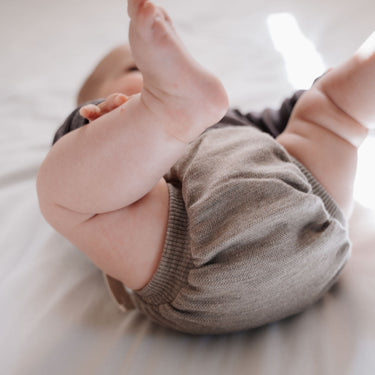
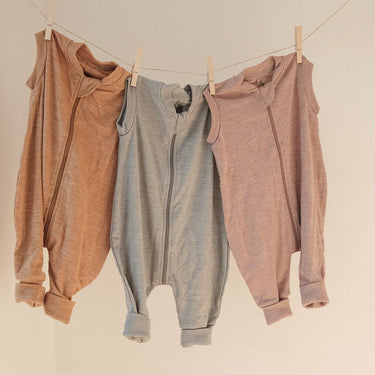
Hardly any item of clothing is as self-evident in a baby's layette as the bodysuit. It lies directly on the skin, keeps the tummy warm, doesn't easily slip, and accompanies your baby day and night.
At the same time, many expectant parents wonder: How many bodysuits does a newborn really need? Are five enough? Do you need ten? Should you buy size 50, or rather go straight for 56 and 62? And does it make a difference whether the baby is born in summer or winter?
The short answer is: For starters, 5 to 7 bodysuits are usually enough. If your baby spits up a lot, you do laundry infrequently, or you want to be extra prepared, 8 to 10 bodysuits can also be useful. You generally don't need more than that before the birth.
In this article, you'll find practical, natural, and undogmatic guidance: how many bodysuits are truly useful, which sizes you need, which materials are comfortable, and what to consider if you're diapering, using cloth diapers, or want to try elimination communication (EC).
The short answer: 5 to 7 bodysuits are usually enough
For the first few weeks with a newborn, a small, well-chosen selection is often more sensible than a full drawer.
As a basic layette, you can plan for:
- 5 to 7 bodysuits if you do laundry regularly
- 8 to 10 bodysuits if you prefer to do laundry less often or want more buffer
- fewer in size 50, as many babies quickly outgrow this size
- more in sizes 56 and 62, as these sizes are usually usable for longer
This recommendation is a starting point, not a rule. Some babies spit up frequently or have dirty diapers more often. Others stay clean for a long time and hardly need any change of clothes. You'll quickly notice what works for you after the birth.
If you're planning your baby's entire initial wardrobe, you'll find a good overview here: What clothing does a newborn really need?.
Why you shouldn't buy too many bodysuits before birth
Especially with the first baby, there's a strong desire to be well-prepared. Many parents prefer to buy a bit more so they don't have to constantly reorder or do laundry after the birth.
That's understandable. Nevertheless, restraint is worthwhile.
Newborns grow quickly. Some babies only fit into size 50 for a few days. Others almost completely skip this size. Some bodysuits seem practical in theory but don't fit your own baby well. And often, the true favorites only emerge in everyday life.
Therefore, a reduced selection is sensible:
- You avoid impulse buys.
- You'll quickly recognize which styles work well.
- You can make more targeted purchases later.
- You'll have less laundry and less clutter in the drawer.
- You can choose higher-quality materials instead of buying many items.
A good layette doesn't mean owning everything in advance. It means being prepared yet remaining open.
For a broader overview, see here: Baby Layette: What you really need.
If a minimalist, conscious start is important to you, read on here: Sustainable Layette: Buy less, choose better.
What bodysuit sizes does a newborn need?
Most newborns start with size 50 or 56. Some babies need size 62 directly, especially if they are born larger. Others require smaller sizes, for example, in case of premature birth or a very delicate build.
Before birth, this can never be fully planned. Weight estimates can also vary. Therefore, a mix of a few small and several slightly larger bodysuits is usually the most sensible approach.
Practical size distribution for the start
- 2 to 3 bodysuits in size 50, if your baby is estimated to be rather small
- 4 to 6 bodysuits in size 56
- 2 to 4 bodysuits in size 62 as the next size up
If your baby is estimated to be rather large, you can significantly reduce size 50 or omit it entirely. If you're unsure, size 56 is usually the better starting point.
You'll find more detailed guidance here: Which baby size at birth: 50, 56 or 62?.
Size 50: Do you really need it?
Size 50 is cute, but not always usable for long. Many babies wear it only for a very short time. Some barely fit into it at birth.
Size 50 is particularly useful if:
- your baby is estimated to be rather small
- premature birth is possible
- you or your partner were rather small at birth
- you want a few well-fitting items for the first few days
Even then, a few bodysuits are enough. You don't need ten items in the smallest size. If your baby needs more small clothes after birth, you can buy them specifically.
Size 56: The most important starting range
Size 56 is the central starting size for many newborns. It often fits well immediately or after a few days and is usually worn a little longer than size 50.
If you only want to stock up on one size a bit more before birth, then size 56 is usually the most sensible.
Make sure bodysuits don't fit too snugly. They should keep the tummy warm but not be constricting. There should be enough room in the diaper area, especially if you plan to use cloth diapers, inserts, or elimination communication covers.
Size 62: It's best to plan ahead a bit
Many babies grow into size 62 faster than parents expect. Therefore, it's practical to have some bodysuits in size 62 ready before or shortly after birth.
Size 62 may fit a bit generously at first, but this is usually not a problem as long as nothing slips, pinches, or bothers. Sleeves can be rolled up if needed.
Especially with high-quality bodysuits made from natural materials, it's worth not buying too many very small sizes, but rather planning ahead a bit.
Long-sleeved bodysuit or short-sleeved bodysuit?
Whether you need long-sleeved or short-sleeved bodysuits depends primarily on the season, room temperature, and material.
Long-sleeved bodysuits are useful:
- for winter babies
- for autumn and spring
- in cool living spaces
- as a first layer under other clothing
- if you like to dress your baby in natural, light layers
Short-sleeved bodysuits are useful:
- for summer babies
- in warm indoor spaces
- under light tops
- for hot days
- as minimal clothing at home
Many families do well with a mix. For a winter baby, more long-sleeved bodysuits are better. For a summer baby, some short-sleeved bodysuits and still a few light long-sleeved bodysuits for sun protection or cooler days.
More on seasonal clothing can be found here: Dressing your baby in winter: warm without overheating and Dressing your baby in summer: light and breathable.
Wrap bodysuit or regular bodysuit?
For newborns, wrap bodysuits are often particularly practical. They don't have to be pulled over the head, but are wrapped around the body and fastened at the side. This can be very comfortable in the first few days and weeks when your baby still seems very small and delicate.
Regular bodysuits are also useful, but some parents prefer to use them a little later, once dressing becomes more routine.
Advantages of wrap bodysuits
- don't need to be pulled over the head
- practical for very small babies
- comfortable during the postpartum period
- often easier to put on when you're still unsure
Advantages of regular bodysuits
For starters, a mix is possible. If you want to plan minimally, choose a few wrap bodysuits for the first few weeks and add more later as needed.
You can find a more detailed decision-making aid here: Wrap bodysuit or regular bodysuit: Which is better?.
Which materials are suitable for bodysuits?
A bodysuit lies directly on a baby's skin. Therefore, it's worth paying particular attention to the material.
For Mata Origin, natural, high-quality, and everyday-suitable materials are particularly important. Depending on the season and personal preference, wool, wool/Tencel, or high-quality cotton can be suitable.
Wool
Fine wool can be comfortable directly on the skin if it's softly processed. It warms, regulates temperature, and absorbs moisture without immediately feeling wet. This is particularly valuable in cooler months.
Wool/Tencel
Wool/Tencel feels soft, light, and supple. It combines the balancing character of wool with a particularly comfortable feel. For babies who need very soft clothing, this can be a beautiful solution.
Cotton
Cotton is easy to care for, familiar, and uncomplicated. It's well-suited for frequent washing and robust everyday basics. In heat or heavy soiling, cotton can be very practical.
You can find more detailed guidance here: Natural baby clothing: Wool, wool/Tencel, and cotton compared.
How many bodysuits does a winter baby need?
A winter baby usually needs more long-sleeved bodysuits than short-sleeved ones. Bodysuits are the first warming layer in winter and are often worn under pants, jackets, pajamas, or overalls.
For a winter baby, it may be useful to have:
- 5 to 7 long-sleeved bodysuits
- 1 to 2 short-sleeved bodysuits if you have very warm rooms
- more bodysuits made of wool, wool/Tencel, or other warming natural materials
- a few bodysuits in size 56
- a few bodysuits in size 62
It's important that your baby isn't dressed too warmly. Even in winter, they can quickly sweat in heated rooms or in a carrier. Layers help you stay flexible.
If you're expecting a winter baby, you'll find a complete overview here: Winter Baby Layette: What you really need.
How many bodysuits does a summer baby need?
A summer baby needs lighter bodysuits and, depending on the temperature, more short-sleeved options. However, long-sleeved bodysuits can also be useful, for example, for cool evenings or as light sun protection outdoors.
For a summer baby, it may be useful to have:
- 3 to 5 short-sleeved bodysuits
- 2 to 3 light long-sleeved bodysuits
- breathable materials
- loose cuts
- not too many thick fabrics
In extreme heat, your baby can sometimes lie at home just in a diaper, an elimination communication diaper, or very light clothing, as long as they are protected from direct sun and drafts.
If you're expecting a summer baby, you'll find a suitable overview here: Summer Baby Layette: What you really need.
How many bodysuits do you need if your baby spits up a lot?
Some babies spit up frequently. In that case, bodysuits get wet faster or smell of milk. In this scenario, it can be useful to plan for a few more changes of clothes.
If you know you don't want to do laundry constantly, 8 to 10 bodysuits can be more relaxing. Still, you don't need to buy huge quantities before birth. You can start with 6 to 8 bodysuits and add more later if you find you need them.
Burp cloths also help keep bodysuits clean longer. They are often a more sensible addition than many extra clothing items.
How many bodysuits do you need if you do laundry daily?
If you do laundry almost daily or can quickly run a small washing machine, 5 to 6 bodysuits are often sufficient. It's important to always have a few dry bodysuits available.
With natural materials like wool, frequent washing can sometimes be reduced if the bodysuit isn't soiled. Airing it out may be enough. Of course, clothes with milk, stool, or urine should be cleaned.
If you want to do laundry less often, plan for a bit more reserve.
Bodysuits and diapers: What to look out for
A bodysuit should fit well in the diaper area. If it's too tight, it can compress the diaper, strain the tummy, or restrict movement.
This is especially important if you use cloth diapers. Cloth diapers often create a bulkier diaper package than disposable diapers. Elimination communication diapers or inserts also need some space, depending on the system.
When choosing bodysuits, pay attention to:
- enough length in the torso
- soft cuffs/edging
- sufficient space in the diaper area
- snaps that don't pull
- material that doesn't cut in
If a bodysuit pulls tightly at the bottom, it's probably too small or not ideal for your diapering system.
If you're still considering whether disposable diapers, cloth diapers, or elimination communication are right for you, you'll find good guidance here: Disposable diapers, cloth diapers, or elimination communication: What are the options?.
Bodysuits and elimination communication: What's practical?
If you want to try elimination communication or assisted toileting, classic bodysuits can sometimes be a bit cumbersome. They have to be opened at the crotch and then, depending on the situation, might get in the way. Nevertheless, bodysuits can remain part of your clothing choices.
It's important that you combine clothing in a way that doesn't make elimination communication unnecessarily complicated. A bodysuit as a warm base layer can be useful. Over it, elimination communication pants, elimination communication covers, or easily openable clothing can be worn.
Helpful for elimination communication:
- bodysuits that open quickly
- not too many layers on top of each other
- elimination communication pants for quick access
- elimination communication covers as backup
- inserts for small accidents
If you want to learn about elimination communication during pregnancy, you'll find a gentle introduction here: What does elimination communication from birth actually mean?.
If you want to know what you really need to get started, read on here: Elimination Communication Layette: What you really need.
Bodysuit or undershirt: Which is better?
Many parents use bodysuits because they are practical and don't slip. However, an undershirt or shirt can also be comfortable in some situations, especially if you plan to do a lot of elimination communication or your baby spends a lot of time without a diaper at home.
Bodysuits keep the tummy warm. Shirts leave the diaper area more open. Both can be useful.
Bodysuits are practical if:
- you use classic diapers
- your baby is carried a lot
- you want to prevent clothing from riding up
- you want a warm base layer
Shirts or undershirts are practical if:
- you practice elimination communication a lot
- your baby has a lot of naked time at home
- you want quick access to the diaper area
- it's very warm
You don't necessarily have to choose one or the other. A small combination can be the most flexible in everyday life.
How many bodysuits belong in the hospital bag?
For the hospital, you usually need less baby clothing than you think. Many hospitals provide clothing for the stay. However, some parents prefer to use their own clothing or at least choose the outfit for the trip home themselves.
For the hospital bag, usually:
- 1 to 2 bodysuits in size 50/56 or 56
- 1 soft pair of pants or a one-piece outfit
- 1 hat
- socks
- a warming layer depending on the season
If you're unsure, ask your clinic what they provide and what you should bring yourself.
Find out more here: Packing your hospital bag: Natural, practical, and without too much fuss.
How many bodysuits for the first two weeks?
For the first two weeks, 5 to 7 bodysuits are usually enough if you wash regularly. If you want to do as little laundry as possible during the postpartum period, 8 to 10 bodysuits can be more relaxing.
Also plan for a few other items of clothing: soft trousers, sleepsuits, cardigans, and blankets. A bodysuit alone does not make a complete outfit.
Especially during the postpartum period, it's helpful if clothes are sorted and easily accessible. Small stacks by size or situation can make everyday life easier.
You can find more information about preparing for this initial period here: Preparing for the postpartum period: What you can organize before birth.
How many bodysuits should you buy secondhand?
Bodysuits are great for buying secondhand because they are often only worn for a short time. Make sure they are clean, soft, and not stretched out. Snaps should close well, and the material should still feel comfortable.
For used bodysuits, it's a good idea to wash them thoroughly and appropriately for the material before the first wear.
If you find high-quality natural materials secondhand, it can be a very good solution. Especially wool or wool/Tencel should look well-maintained and not have significant damage.
You can find more information on how to prepare baby clothes before birth here: Washing baby clothes before birth: What really makes sense.
What is more sustainable: A few high-quality bodysuits or many cheap ones?
Sustainability is created not only by the material but also by its use. A high-quality bodysuit that is worn often, well-cared for, and passed on can be more sensible than many cheap bodysuits that quickly stretch out or are hardly used.
At the same time, not every item has to be expensive. A good mix can be very realistic: some high-quality favorite pieces directly on the skin, complemented by robust basics for days with a lot of laundry.
If you want to plan consciously, you can find more guidance here: Sustainable first equipment: Buy less, choose better.
How do you recognize a good baby bodysuit?
A good baby bodysuit shows its quality in everyday life. It should not only look good but also feel good and function easily.
When buying, pay attention to:
- soft material
- good craftsmanship
- flat or comfortable seams
- no scratchy labels
- reliable snaps
- enough room in the diaper area
- comfortable fit around the belly
- realistic care for your daily life
If you find the fabric uncomfortable on your neck or the inside of your forearm, it's probably not ideal for a baby's skin either.
A simple bodysuit checklist for newborns
If you want concrete guidance, you can start with this list:
For a winter baby
- 5 to 7 long-sleeved bodysuits
- 1 to 2 short-sleeved bodysuits optional
- Focus on wool, wool/Tencel, or other warming natural materials
- few items in size 50
- more in size 56 and 62
For a summer baby
- 3 to 5 short-sleeved bodysuits
- 2 to 3 light long-sleeved bodysuits
- light, breathable materials
- loose fit
- not too many thick fabrics
For a minimalist start
- 5 to 6 bodysuits in total
- Size 56 as the main focus
- 1 to 2 items in size 50 only if needed
- 2 to 3 items in size 62 as a reserve
- supplement specifically later
Frequent questions: How many bodysuits does a newborn need?
How many bodysuits does a newborn need?
For the beginning, 5 to 7 bodysuits are usually enough. If your baby spits up a lot or you wash less frequently, 8 to 10 bodysuits can be useful.
What size should I buy bodysuits in before birth?
Size 56 is the most important starting size for many newborns. You only need a small amount of size 50 if your baby is estimated to be rather small. You can already plan for size 62 as the next size.
Are wrap bodysuits better for newborns?
Wrap bodysuits are often very practical in the first few weeks because they don't have to be pulled over the head. Envelope neck bodysuits can be simpler later on. A small mix is sensible.
How many long-sleeved bodysuits does a baby need?
For a winter baby, 5 to 7 long-sleeved bodysuits are a good start. For a summer baby, 2 to 3 light long-sleeved bodysuits, supplemented by short-sleeved bodysuits, are often enough.
How many short-sleeved bodysuits does a baby need?
For a summer baby, 3 to 5 short-sleeved bodysuits can be useful. In winter, you usually only need short-sleeved bodysuits as a supplement or in very warm indoor spaces.
Which bodysuits are practical for elimination communication?
Bodysuits that open quickly and don't create too many layers are practical. If you want to do a lot of elimination communication, shirts or undershirts can also be useful. Elimination communication pants and diapers facilitate access.
Can I buy bodysuits secondhand?
Yes, bodysuits can be bought secondhand if they are clean, soft, and well-preserved. Pay attention to functioning snaps, comfortable material, and a good fit.
A calm thought to conclude
You don't need twenty bodysuits to be well-prepared. Your baby doesn't need a perfect wardrobe. It needs clothes that are soft, warm, don't pinch, and make your daily life easier.
Five to seven well-chosen bodysuits are a very good start for many families. After that, you can see: What fits? What do you like to use? What do you really need more often?
That's where a relaxed, sustainable first outfit lies: not setting everything in advance, but starting consciously and then continuing to learn with your baby.
If you want to accompany your baby with natural materials, practical cuts, and an undogmatic view of diapering, elimination communication, and closeness, Mata Origin offers well-thought-out companions for precisely this initial period.
Discover suitable products for your baby's daily life: Elimination communication pants, elimination communication diapers, diaper inserts, and the changing pad for on the go.