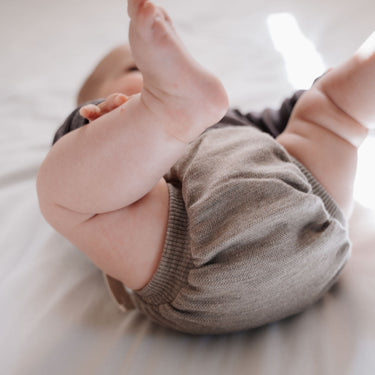
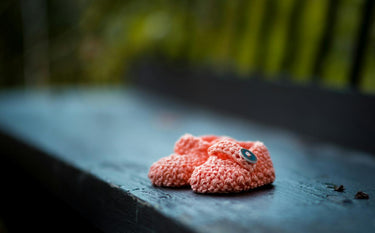
The first walk with a baby is a special moment for many parents. The first time out. The first time breathing fresh air with this little person. Maybe with a stroller, maybe in a carrier, maybe just around the block.
At the same time, this very first walk can cause uncertainty: When can you go out with a newborn? How long should the walk be? What should I dress the baby in? What needs to go in the diaper bag? Is a stroller or carrier better? And what if my baby gets hungry, cries, or needs a fresh diaper while we’re out?
The most important guideline is: The first walk doesn't have to be a big deal. It can be small, slow, and very simple. It's not about getting back to "normal" as quickly as possible. It's about settling in at your own pace.
In this article, you'll find natural, practical, and non-dogmatic guidance: when a first walk can be beneficial, how long you can stay out, what you should take with you, how to dress your baby appropriately, and how even elimination communication or "holding off" can calmly become part of your everyday life while out and about.
When is the first walk with baby possible?
There's no perfect day that suits all families. Some parents go out briefly just a few days after birth. Others stay at home longer because birth, postpartum, breastfeeding initiation, C-section, exhaustion, or the need for retreat require more rest.
What others do is not decisive. What matters is how you and your baby are doing.
A first walk can be beneficial if:
- you feel physically stable enough
- your baby seems well and there are no medical reasons against it
- you're not under any pressure
- the weather is suitable
- you can start briefly and simply
- you can go home at any time
If you had a difficult birth, your baby was very small or born prematurely, you are in pain, or you are unsure, speak with your midwife or pediatrician. The first walk can wait.
The first walk can be very short
Many parents imagine the first walk as a proper outing: getting the stroller ready, packing the bag, going out, walking for 30 or 60 minutes. That doesn't have to be the case.
The first walk can also only be ten minutes long. Once down the street. Once around the block. A few minutes in the garden, on the balcony, or in front of the front door. Everything is new for your baby: light, air, sounds, movement, temperature, smells.
For starters, often enough:
- 5 to 15 minutes outdoors
- a short walk near home
- no goal, no appointment, no pressure to visit
- the ability to turn back immediately
- a calm companion if you feel safer with one
If it goes well, you can go longer next time. If it doesn't go well, it wasn't a failure. It was just a first attempt.
Postpartum doesn't mean: immediately functional again
The first walk often takes place in the middle of the postpartum period. And the postpartum period is not a time when you have to prove how quickly you can be resilient again.
Your body is recovering. Your baby is settling in. You're learning to breastfeed or bottle-feed, sleep, change diapers, hold, soothe, and find your rhythm together. A walk can be good. But it can also be too much.
Therefore, the question shouldn't just be: "Can my baby go out?" But also: "Is this good for me right now?"
You can wait if:
- you are in pain
- you are very exhausted
- you feel insecure
- your circulation is unstable
- you are still very emotionally sensitive
- you just want to stay home
You can find more on preparing for this first period here: Preparing for the postpartum period: What you can organize before birth.
If you want to know what's really important in the first days at home, you'll find a suitable in-depth discussion here: The first days at home with baby.
What does your baby need for the first walk?
For the first walk, you need less than you might think. If you're only out for a short time and staying nearby, a small basic set of essentials is enough.
Useful for a short first walk:
- appropriate clothing for your baby
- carrier or stroller
- small blanket depending on the weather
- 1 backup, diaper or elimination communication diaper
- 1 to 2 inserts, if you use them
- small changing mat
- washcloth or cloth
- change of bodysuit if needed
- muslin cloth
- water for yourself
If you're truly only going around the block for ten minutes, you don't always need to bring the complete diaper bag. But a small bag or a prepared set can give you peace of mind.
You can find detailed guidance here: Packing a diaper bag: What you really need on the go.
Stroller or carrier for the first walk?
Both can be right. There is no general answer that suits all families.
The stroller provides storage space, distance, and a clear lying surface. The carrier gives your baby closeness, warmth, and direct body contact. Some babies fall asleep quickly in the stroller. Others prefer to be very close to the body, especially at the beginning.
A stroller is practical if:
- you want to reduce your physical exertion
- you don't want to carry after birth or C-section
- you want to easily take a diaper bag, blanket, or groceries
- your baby calms down well lying down
- you want a stable, protected environment for your baby
A carrier is practical if:
- your baby needs a lot of closeness
- you want to have both hands free
- you have stairs or uneven paths
- you want to soothe your baby quickly
- you are only going out for a short time
If you are unsure, start with what feels easiest for you. You don't have to make a fundamental decision.
You can find more on clothing in both situations here: Dressing baby in a carrier: What does your baby really need? and Dressing baby in a stroller: What does your baby need outdoors?.
What do you dress your baby in for the first walk?
The right clothing depends on the season, temperature, wind, sun, and whether your baby is being carried or is in a stroller.
In a stroller, your baby usually needs more external protection because it is not directly warmed by your body. In a carrier, it gets your body heat and is additionally surrounded by the sling or baby carrier.
A simple guide:
- In the carrier: less thick clothing on the body, protect exposed feet and head well.
- In the stroller: more external protection, but consider a blanket or footmuff.
- In summer: light, airy, shade, no direct sun.
- In winter: layers, warm feet, hat, and appropriate outer layer.
- In transitional seasons: flexible layers instead of a single thick outfit.
Check your baby's neck while out. If it is warm and dry, your baby is usually dressed appropriately. If it is damp or hot, your baby is probably too warm. If it is cool and your baby seems restless, an additional layer may be helpful.
The first walk in summer
A summer walk with a baby can be wonderful but requires extra attention to sun and heat. Babies should avoid direct sunlight as much as possible. Shade, light clothing, and good air circulation are more important than long outings.
Useful in summer:
- short walks during cooler parts of the day
- shade instead of direct sun
- light bodysuit
- thin leg covering or sun protection as needed
- sun hat if the head is not securely in the shade
- no thick blanket
- do not fully cover the stroller with a cloth
- regular neck checks
Safety information is based on kindergesundheit-info.de for sun protection for children and kindergesundheit-info.de for heat protection in children.
You can find more about summer clothing here: Dressing baby in summer: light and breathable.
If you have or are expecting a summer baby, you'll also find a suitable overview here: Summer baby essential equipment: What you really need.
The first walk in winter
In winter, the biggest worry is often: Will my baby be cold? Especially in a stroller, your baby needs good layers because they move little and don't get direct body heat from you.
At the same time, you shouldn't bundle your baby up too thickly. If they are in a footmuff, have a blanket, or are well protected in the stroller, too much clothing can quickly make them too warm.
Useful in winter:
- long-sleeved bodysuit
- soft trousers or one-piece suit
- warming wool layer
- hat
- warm wool socks or booties
- wool fleece overall or footmuff depending on temperature
- blanket matching the outer layer
- short first walks
If you are carrying your baby, they often need less thick clothing than in a stroller. Your body provides warmth. Pay particular attention to warm feet, clear airways, and a good hat.
You can find more about winter clothing here: Dressing baby in winter: warm, without overheating.
If you have or are expecting a winter baby, you'll find a complete guide here: Winter baby essential equipment: What you really need.
You can find a suitable outer layer for cool walks here: Wool fleece overall.
The first walk in spring or autumn
Spring and autumn are often the most pleasant, but also the most changeable times for first walks. Cool in the morning, mild at noon, fresh in the shade, and quickly warm in the sun.
Here, flexible layers are particularly helpful. It's better to pack one more light layer than to put your baby in a single very thick outfit.
Useful in transitional seasons:
- bodysuit made of natural material
- soft trousers
- light wool cardigan
- socks or wool socks
- hat when windy
- light blanket in the stroller
- carrier cover or jacket as needed
You can find more information here: Dressing baby in transitional seasons: planning spring and autumn correctly.
Which materials are suitable for the first walk?
The first walk isn't about a perfect outfit, but about a comfortable body feeling. Clothing should be soft, breathable, and comfortable.
Wool
Wool is particularly valuable in cooler months. It warms, can absorb moisture, and helps regulate temperature. Therefore, wool is very practical for walks in winter and during transitional periods.
Wool/Tencel
Wool/Tencel is soft, light, and comfortable on baby's skin. As a close-to-body layer, it can be very nice if you want to combine natural materials with a gentle feel.
Cotton
Cotton is easy to care for and familiar. In summer or mild temperatures, it can work well. However, when it gets damp, it feels cool faster.
You can find more about material selection here: Natural baby clothing: wool, wool/Tencel, and cotton compared.
Breastfeeding or feeding on the go
During the first walk, breastfeeding or feeding on the go doesn't necessarily have to be planned if you're only going out briefly. Nevertheless, it can be reassuring to have a plan.
If you're breastfeeding, a muslin cloth, water for yourself, and comfortable clothing can be helpful. If your baby takes a bottle, preparation depends on your usual and safe feeding routine.
Helpful for on the go:
- muslin cloth
- water for yourself
- small snack for yourself
- quiet place to breastfeed or feed, if necessary
- for bottle-feeding: safely prepared formula according to your routine
For the first walks, it's perfectly fine to plan so that you breastfeed or feed before you leave, and then only stay out for a short time.
Diapering during the first walk
For a very short walk, you might not even need to change a diaper. Nevertheless, a small changing kit is reassuring.
A small changing kit consists of:
- changing mat
- 1 diaper, backup, or elimination communication diaper
- 1 to 2 inserts
- washcloth or wipe
- small bag or wet bag
- change of bodysuit if needed
A good changing mat makes things much easier on the go, as you can quickly create a clean spot. You can find a suitable solution here: Changing mat for on the go.
If you're currently preparing your changing station at home, you'll find suitable guidance here: Setting up a changing station: What you really need.
Elimination Communication and the first walk: Is it possible?
Yes, but you don't have to make it difficult for yourself. The first walk is not the moment when elimination communication has to work perfectly.
If you want to try elimination communication or "holding off," you can offer it before leaving. Then, you use a backup while out and offer it again upon returning or at the next diaper change.
Good standard situations around the walk:
- before leaving
- after waking up
- after breastfeeding or feeding
- after the walk
- at the next diaper change
You don't have to recognize every signal while out. You can observe, offer, and let the backup do its job.
Helpful for elimination communication on the go:
- elimination communication diaper as a backup
- absorbent inserts
- elimination communication trousers or easily opened clothing
- changing mat
- wet bag
- change of clothes
You can find suitable items here: Elimination Communication Diapers, Elimination Communication Trousers and Diaper Inserts.
If you want to learn more about elimination communication, you can start here: What does elimination communication from birth actually mean?.
If you want to know what you really need to start "holding off," read more here: Elimination Communication essentials: What you really need.
What to do if your baby cries during the walk?
If your baby cries while out, it doesn't mean you've done anything wrong. Everything is new. Maybe they're hungry. Maybe they're too warm or too cold. Maybe they need closeness. Maybe the walk was just long enough.
You can check:
- Is the neck warm and dry?
- Is your baby hungry?
- Is the diaper or backup wet?
- Does your baby need closeness?
- Is it too bright, noisy, or windy?
- Is it time to go home?
Especially on the first walk, turning back is always a good option. A short walk is not a failure. It's a beginning.
If you'd like to read more about why babies cry in the first few days and what can help, you can find a suitable in-depth article here: Baby Cries in the Postpartum Period: What Really Helps?.
What to do if you feel overwhelmed while out and about?
You are also part of this walk. Perhaps everything outside suddenly feels bigger than expected. Noises, people, questions, physical exhaustion, circulation, or emotions can quickly become intense in the postpartum period.
You are allowed to stop at any time. You are allowed to sit down. You are allowed to go home. You are allowed to ask someone to accompany you.
Helpful tips:
- Don't go alone the first time if you're unsure
- Don't make it an appointment
- Choose a very short route
- Bring water for yourself
- Wear comfortable clothing
- Plan for rest after the walk
The first walk is not only new for your baby. It's also new for you — as a mother, as a father, as a family.
First walk after a C-section
After a C-section, you should pay particular attention to your body. A walk can be beneficial, but it should start very short and slow.
Especially important after a C-section:
- no long distances at the beginning
- do not carry heavy items if it hurts or is not recommended
- only use a stroller if pushing is comfortable
- plan for accompaniment
- avoid stairs and steep paths
- stop if you experience pain
- follow medical advice
If you are unsure, ask your midwife or medical professional when and how you can best start.
More on recovery after a C-section can be found here: Postpartum after C-section: What really helps you.
First walk with a premature baby or very small baby
If your baby was born prematurely, is very small, or has special medical issues, the first walk should be tailored individually. General recommendations are less helpful here.
Talk to your midwife, pediatrician, or doctor. Perhaps a short period in the fresh air is possible. Perhaps it is better to wait. Both are perfectly fine.
Individually important are:
- your baby's temperature regulation
- weight and general condition
- feeding behavior
- infection risks
- weather
- duration of the walk
- medical or midwifery recommendation
Especially with special starting conditions: You don't have to rush anything.
Combine walking with baby in the car
Sometimes the first walk doesn't start directly at your doorstep, but after a short car ride. In that case, you should consider the baby car seat, clothing, and temperature separately.
In the car, your baby should not sit with a thick jacket or bulky overall under the belt. You can provide warmth better with a blanket over the already fastened straps.
When transitioning from the car to outdoors:
- securely buckle up your baby
- place a blanket over the straps in the car
- add an extra layer outdoors if necessary
- remove hat or blanket in a warm car
- do not plan too many temperature changes
You can find more information here: Dressing your baby in the car: safe and warm in the infant car seat.
What should you not plan for the first walk?
The first walk becomes easier if you keep it small. It doesn't have to be a visit, shopping trip, or appointment.
For the first walk, it's better to avoid:
- long distances
- crowded city centers
- many visits along the way
- midday heat
- strong wind or extreme cold
- tight schedules
- too many expectations
A first walk can simply be a walk. Not a test, not a performance, not proof.
A simple checklist for the first walk
For your baby
- appropriate clothing
- hat or sun hat depending on the weather
- blanket or extra layer as needed
- diaper, backup, or elimination communication diaper
- inserts
- muslin cloth
For changing or EC
- small changing mat
- washcloth or towel
- wet bag or pouch
- change of bodysuit
- for longer trips, change of trousers
For you
- water
- comfortable clothing
- keys, phone, possibly debit card
- snack if needed
- accompaniment if it makes you feel more secure
For the process
- short route
- no fixed appointment
- check the weather
- breastfeed, feed, or do EC with baby before leaving, if appropriate
- be allowed to turn back at any time
Frequently Asked Questions: First Walk with Baby
When can you go for a walk with a newborn?
That depends on how you and your baby are doing. If you are both stable and there are no medical contraindications, a short walk may be possible. If in doubt, ask your midwife, pediatrician, or doctor.
How long should the first walk with baby last?
For a start, 5 to 15 minutes is often enough. A short walk near home is perfectly adequate. You can gradually extend it later.
Stroller or carrier for the first walk?
Both can work well. The stroller provides physical relief and storage space. The carrier offers closeness and warmth. Choose what feels easiest for you and your baby.
What should I dress my baby in for the first walk?
That depends on the weather and transportation. In a carrier, your baby usually needs less thick clothing than in a stroller. Important are soft layers, appropriate headwear, warm feet in cold weather, and sun protection in summer.
What do I need in the diaper bag for the first walk?
For short trips, a changing mat, diaper or backup, inserts, cloth, wet bag, change of bodysuit, and muslin cloth are often sufficient. For longer trips, you can add a change of pants, more backups, and extra clothing.
Can my baby be in direct sunlight in summer?
Babies should avoid direct sun as much as possible. For walks, shade, light clothing, a sun hat, and good air circulation are important.
Can I do elimination communication on the first walk?
Yes, but without pressure. You can offer a potty before leaving, after arriving, or at the next diaper change. On the go, an EC diaper or other backup can simply provide security.
What if my baby cries while out and about?
Then check for hunger, temperature, diaper or backup, need for closeness, and stimuli. You are allowed to turn around at any time. A short first walk is perfectly fine.
What do I need for elimination communication on the go?
Practical items include an EC diaper, inserts, easy-to-open clothing, a changing mat, a wet bag, and a change of clothes. For the first walk, a very simple set is usually sufficient.
A peaceful thought to conclude
The first walk with baby doesn't have to be perfect. It doesn't have to be long. It doesn't have to be beautifully photographed. It doesn't have to prove that you've already returned to everyday life.
It can simply be a small step outside.
Perhaps your baby sleeps. Perhaps it cries. Perhaps you turn back after five minutes. Perhaps you breathe fresh air for the first time in days and realize that was exactly what you needed.
With soft clothing, a small changing bag, a careful eye on the weather and temperature, and the permission to return at any time, you are well prepared.
The first walk is not a test. It is a beginning. At your pace.
If you want to accompany your baby with natural materials, practical cuts, and an open-minded approach to diapering, elimination communication, and closeness, Mata Origin offers thoughtful companions for exactly this initial period.
Discover suitable products for first walks, diapering, and elimination communication on the go: Changing mat for on the go, elimination communication diapers, elimination communication pants, diaper inserts and the wool walk overall.
Note: This article does not replace medical advice. It is intended to provide guidance. In cases of premature birth, low birth weight, illness, fever, poor feeding, abnormal temperature, severe postpartum pain, circulatory problems, uncertainty, or specific health questions, please consult your midwife, pediatrician, or doctor. In case of acute severe symptoms, seek immediate medical help.