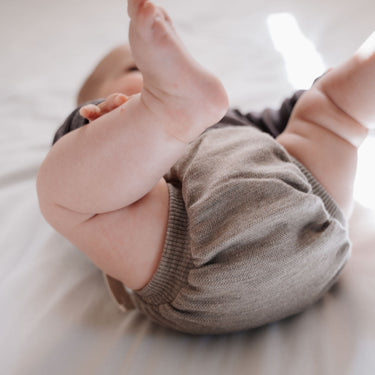
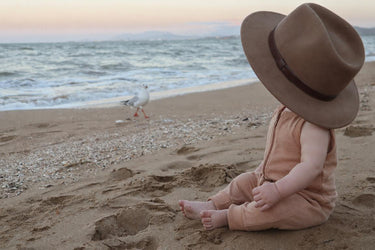
Preparing for a summer baby sounds easy at first. Fewer clothes, fewer layers, no thick overalls, no heavy winter gear. And yet new questions quickly arise: What does a newborn need in the heat? How do you protect your baby from the sun? Does it even need pants? How many bodysuits make sense? And what is important for sleeping, changing, and on the go?
A good summer baby layette is not simply a reduced winter layette. It has its own requirements: light materials, sun protection, air on the skin, little heat buildup, practical clothes for quick changes, and equipment that eases your daily life.
At the same time, even in summer: you don't need everything. Your baby needs closeness, protection, nourishment, sleep, loving care, and clothing that suits the temperature. Many things can remain simple.
In this article, you will find natural, practical, and non-dogmatic guidance for your summer baby: What clothes do you really need? What materials are sensible? What goes into the hospital bag? What helps with heat, sleeping, changing, elimination communication, and on the go?
What's different about a summer baby?
A summer baby is born in a season where warmth and sun play a major role. This sounds pleasant but can be unsettling, especially for newborns. Babies cannot regulate their temperature as well as adults. They can overheat but also get cold if they are sweaty or in a draft.
Summer baby layette therefore means: light, airy, flexible, and protected.
You primarily need:
- light bodysuits and thin clothing
- breathable materials
- sun protection for outdoors
- a light blanket or muslin cloth for appropriate situations
- enough changes of clothes for spitting up, milk, and small mishaps
- a good changing pad for home and on the go
- practical clothing for changing or elimination communication
- not too many items in the smallest size
Detailed guidance on dressing can be found here: Dressing your baby in summer: light and breathable.
The most important rule: light, but not unprotected
In summer, it's tempting to dress a baby in as little as possible. This can be very pleasant at home and in the shade. Nevertheless, your baby needs protection: from direct sun, from overheating, from drafts, and from strongly fluctuating temperatures.
A summer baby should not be overdressed. But it should also not lie unprotected in the sun.
Good summer clothes are:
- light
- soft
- breathable
- not too tight
- easy to change
- practical for changing diapers
- easily combinable with shade and sun protection
Instead of rigid rules, looking at your baby is particularly helpful in summer: Does the neck feel warm and dry? Does your baby seem relaxed? Is it sweating? Is it unusually restless or very sleepy? These observations are more important than any rigid temperature chart.
What materials are suitable for a summer baby?
For summer babies, the material is very important. Clothing should feel soft against the skin, allow air to pass through, and not feel heavy or stuffy.
Cotton
Light cotton is very practical in summer. It is easy to care for, familiar, and washable. For bodysuits, cloths, and everyday clothes, it can be a good base. It is important that the fabric is not too thick and fits loosely.
Wool/Tencel
Wool/Tencel can be particularly comfortable for summer babies if the fabric is lightly processed. The material feels soft, supple, and balancing. It can be a nice close-to-the-body layer, especially if you prefer natural materials.
Fine wool
For many, wool sounds like winter. However, very fine wool qualities can also be useful on cooler summer days, in the evenings, or during transitional periods. The decisive factor is not just the material, but the thickness of the fabric and the specific situation.
Muslin and light cloths
Muslin cloths are part of the summer layette for many families. They are light, versatile, and quickly at hand: as a burp cloth, light pad, privacy screen for breastfeeding, or a small helper on the go. However, they do not replace reliable sun protection and should not be used in a way that causes heat to build up.
You can find more about material selection here: Natural baby clothing: wool, wool/Tencel, and cotton compared.
Summer baby clothing: The sensible basic equipment
For the first few weeks, you don't need a full summer wardrobe. Your baby grows quickly, and you will only realize after birth which cuts, materials, and sizes really suit you well.
A good summer baby basic layette can look like this:
- 5 to 7 light bodysuits
- several short-sleeved bodysuits
- 2 to 3 light long-sleeved bodysuits
- 3 to 5 thin pants or leggings
- 2 to 3 light tops or cardigans
- 2 to 4 sleepsuits or light rompers
- 1 to 2 sun hats
- light socks as needed
- several muslin cloths
- a light blanket for appropriate situations
- practical clothing for changing or elimination communication
If your baby spits up a lot or you wash less frequently, a few more changes of clothes may be useful. If you want to start minimalist, a few good items and targeted repurchases are sufficient.
If you want to plan the entire baby layette more broadly, you can find the overview here: Baby layette: What you really need.
What sizes does a summer baby need?
Even for summer babies, size 56 is the most important starting point for many newborns. You only need a small amount of size 50 if your baby is estimated to be rather delicate. Size 62 should already be considered a little, because babies grow quickly.
A sensible size distribution
- Size 50: a few items, if your baby is estimated to be rather small
- Size 56: focus for bodysuits, pants, and first clothes
- Size 62: reserve for the next few weeks
With summer clothes, it can be tempting to buy many small, cute items. However, a flexible basic layette that dries quickly, can be easily combined, and does not have to be sorted out after a few days is usually more sensible.
Detailed size guidance can be found here: Which baby size for birth: 50, 56 or 62?.
How many bodysuits does a summer baby need?
For a summer baby, 5 to 7 bodysuits are usually a good start. Depending on the temperature, you will need more short-sleeved bodysuits than long-sleeved ones. Nevertheless, some light long-sleeved bodysuits are useful, for example, for cooler evenings, air-conditioned rooms, or as airy cover outdoors in the shade.
Practical for a summer baby:
- 3 to 5 short-sleeved bodysuits
- 2 to 3 light long-sleeved bodysuits
- Focus on size 56
- some bodysuits in size 62 as a reserve
- light, breathable materials
If your baby spits up a lot or you want to wash as little as possible during the postpartum period, 8 to 10 bodysuits can be more relaxing.
You can find more on this in the article How many bodysuits does a newborn need?.
Wrap bodysuit or slip-on bodysuit in summer?
For the first few weeks, wrap bodysuits are very practical even in summer. They don't have to be pulled over the head and can be put on calmly. This is particularly pleasant if your baby is still very small or if you want the simplest possible actions during the postpartum period.
Slip-on bodysuits can be a good addition. Especially in warm weather, they are simple, light, and often quick to change. It is important that they have a soft, well-stretchable neckline.
Sensible for the start:
- a few wrap bodysuits for the first few weeks
- a few slip-on bodysuits as an addition
- light short-sleeved and long-sleeved versions
- soft fasteners
- no thick or stiff fabric
You can find more on this decision here: Wrap bodysuit or slip-on bodysuit: Which is better?.
Does a summer baby need pants?
Yes, but not constantly and not necessarily many. At home, a baby can often lie only in a bodysuit, a diaper, elimination communication diaper, or a light backup in hot weather. Outdoors, however, thin pants can be useful to protect the legs from sun, wind, or friction.
For summer babies, light pants with a soft waistband are ideal. They should not pinch, not be too tight, and leave enough room for a diaper, insert, or backup.
Practical for summer:
- 3 to 5 thin pants or leggings
- soft waistband
- light materials
- no tight jeans or stiff fabrics
- enough room in the diaper area
If you want to try elimination communication, elimination communication pants can also be very practical in summer, as they allow quick access and still provide some protection.
Does a summer baby need a jacket?
Even summer babies sometimes need a light extra layer. In the mornings, evenings, in windy conditions, after bathing, in air-conditioned rooms, or on cooler days, a thin cardigan can be very helpful.
However, you don't need a large selection. One to two light cardigans or tops are usually sufficient for a start.
Sensible are:
- 1 to 2 light cardigans
- soft material
- simple fasteners
- not too tight sleeves
- good combinability with bodysuits
If you carry your baby a lot, it often needs less additional outerwear, because your body provides warmth.
Sun hat: A small item with a big effect
A sun hat is an essential part of a summer baby's basic equipment. Outdoors, your baby should stay in the shade as much as possible, but the head still needs protection when you are out and about.
A good sun hat is light, breathable, and fits securely without pinching. Models that also shade the ears and neck are particularly practical.
When choosing a sun hat, look for:
- light, breathable materials
- a good fit
- protection for the head, ears, and, if possible, the neck
- no hard seams
- no too-tight straps
- a size that doesn't constantly slip
In warm indoor spaces, your baby usually doesn't need a hat. Outdoors, however, a sun hat is often an important basic.
Muslin cloths: Versatile, but not against everything
Muslin cloths are very useful in summer. They are light, quick to wash, and can perform many tasks in everyday life.
Muslin cloths help as:
- burp cloth
- light mat
- protection on your shoulder
- small privacy screen when breastfeeding
- airy cloth for short moments
- companion for on the go
Important: A muslin cloth should not be placed over a stroller or car seat in a way that traps heat underneath. Air circulation is just as important as shade in summer.
Light blanket: Is it needed in summer?
A light blanket can also be useful for a summer baby. Not as a constant layer of warmth, but flexibly: for cooler evenings, air-conditioned rooms, short trips, or as a supervised cuddly blanket.
You don't need a thick blanket. A light, breathable blanket is usually sufficient. Natural materials that do not lie heavily on the baby are particularly comfortable.
A light blanket is practical:
- during the postpartum period
- in the stroller during cooler moments
- while breastfeeding or feeding
- on the sofa
- for short trips
- as a pad or gentle cover in awake situations
When sleeping, you should always ensure a safe sleeping environment and not use loose, heavy blankets.
Summer baby in the stroller: What do you need?
In summer, it can quickly get warm in the stroller. Your baby lies still and hardly moves. Therefore, shade, air circulation, and light clothing are particularly important.
Useful for the stroller in summer:
- light bodysuit
- thin pants or leg covering if sun protection is needed
- sun hat if the head is not securely in the shade
- no heat buildup from covered cloths
- regular neck check
Place the stroller in the shade as much as possible. Make sure your baby is protected from direct sun and still gets enough air.
You can find more on this here: Dressing your baby in the stroller: What does your baby need outdoors?.
Summer baby in the carrier: What do you need?
In the carrier, your baby receives your body heat. In addition, it lies close to your body and is surrounded by fabric. Therefore, a summer baby in the carrier often needs less clothing than in the stroller.
Helpful for the carrier in summer:
- light bodysuit
- possibly thin pants or leg warmers as sun protection
- sun hat if the head is not in the shade
- no unnecessarily thick layers
- breaks in the shade
- clothing for yourself that doesn't cause you to overheat further
If you sweat a lot or your baby seems very warm, shorter walks, cooler times of day, and breaks are often more sensible than even more equipment.
You can find more on this here: Dressing your baby in the carrier: What does your baby really need?.
Summer baby in the car: What equipment is needed?
Cars can heat up very quickly in summer. For your baby, light clothing in the car is usually more comfortable. At the same time, you should avoid direct sun at the window.
Practical for the car:
- light clothing
- sun protection on the window
- no thick blankets
- moderate air conditioning without direct draft on the baby
- change of clothes at hand
- regular breaks for longer journeys
Your baby should never be left alone in the car, not even for a short time. In hot weather, a vehicle can heat up very quickly and dangerously.
You can find more on this here: Dressing your baby in the car: safe and warm in the car seat.
Sleeping in summer: What does your baby need?
Summer nights can vary. Some rooms remain pleasant, others heat up significantly. Therefore, your baby does not need fixed sleeping equipment for every night, but flexible, light options.
Helpful for sleeping in summer:
- light bodysuit
- thin sleepsuit or romper
- light summer sleeping bag, if suitable
- no thick sleeping bags in the heat
- no loose heavy blankets
- keep the room as cool as possible during the day
Also check your baby's neck at night. If it is damp or hot, your baby is probably too warm. If your baby is sick, has a fever, or seems unusual, please seek professional help.
You can find more on this here: Dressing your baby at night: What does a newborn need for sleeping?.
Postpartum period with a summer baby
A summer postpartum period can be wonderful: open windows in the morning, light clothing, lots of skin contact, short walks outside. At the same time, heat, visitors, breastfeeding initiation, circulation, and lack of sleep can be exhausting.
A good summer baby layette therefore also considers you and your protected beginning.
Helpful for the summer postpartum period:
- light clothing for your baby
- soft pads for skin-to-skin contact and naked baby time
- enough drinks for you
- simple snacks and prepared meals
- cool, shady resting places
- clear visitor boundaries
- quiet times without appointments
The postpartum period needs protection even in summer. Not from cold, but from too much of the outside world, too much heat, and too many expectations.
You can find more on this here: Preparing for postpartum: What you can organize before birth.
Changing diapers in summer
In summer, the diaper area can become warm and damp more quickly. Regular changing, air on the skin, and gentle cleaning are therefore particularly pleasant.
You don't need complicated care equipment. Soft cloths, warm water, a good pad, and enough changing options are often sufficient.
Practical for changing diapers in summer:
- soft changing pad
- washcloths or soft cloths
- spare bodysuits
- light pants
- inserts or backup
- wet bag for on the go
- short naked baby time without direct sun or drafts
Especially in the heat, it can be pleasant to let your baby kick briefly without a diaper during changing. A pad takes a lot of stress out of this.
You can find more on preparing your changing area here: Setting up your changing station: What you really need.
Elimination communication and ECing with a summer baby
Summer can be a very nice time to get to know elimination communication (EC). Your baby wears fewer layers, the diaper area is more accessible, and small mishaps are often easier to manage.
This does not mean that you have to live consistently EC from birth. You can start with small standard situations: during diaper changes, after waking up, or after breastfeeding.
Practical for EC in summer:
- EC diaper as a light backup
- absorbent inserts
- light EC pants or quickly opening clothing
- changing pad
- soft washcloths
- wet bag for damp clothing or inserts
- naked baby time in a safe environment
You can find suitable items here: EC diapers, EC pants, diaper inserts, and the changing pad for on the go.
If you want to get a basic understanding of EC, you can find the appropriate introduction here: What does elimination communication from birth actually mean?.
If you want to know what you really need to get started with elimination communication, read on here: Elimination Communication Starter Kit: What You Really Need.
What goes in the hospital bag for a summer baby?
For the hospital, you usually need less baby clothing than you think. Many hospitals provide clothing for the stay. What's most important is the outfit for the journey home and perhaps a few of your own favorite items.
Useful for a summer baby in the hospital bag:
- 1 to 2 light bodysuits in size 50/56 or 56
- 1 thin pair of trousers or a light all-in-one
- light socks
- 1 thin hat as needed
- 1 light blanket or muslin cloth
- 1 sun hat for the journey home if you are outside
- A change of clothes just in case
If you are driving home by car, make sure there is sun protection in the car and that your baby is not too warmly dressed.
You can find more about the hospital bag here: Packing your hospital bag: Natural, practical, and without too much fuss.
What you don't immediately need for a summer baby
Summer baby essentials are often underestimated, but sometimes unnecessarily expanded. Many things seem practical but are not strictly necessary for a newborn.
You can plan conservatively for these items:
- too many outfits in size 50
- thick blankets
- several jackets
- firm shoes
- complicated summer dresses or outfits
- too many hats for indoors
- very tight clothing
- products that only look nice but hinder diaper changes
A summer baby primarily needs light, soft, practical clothing. Not many complete outfits.
Sustainable Summer Baby Essentials
A sustainable summer baby layette isn't created by buying everything perfectly. It often arises from reduction: fewer items, better materials, good combinability, and conscious re-purchasing.
You can plan sustainably by:
- not buying too much in size 50
- focusing on size 56
- considering size 62 early on
- combining light basics well
- consciously incorporating used clothing
- deliberately choosing high-quality natural materials
- not accepting every gift as a small outfit
- passing on clothes later
If you want to plan more consciously overall, you can find more information here: Sustainable Layette: Buy less, choose better.
How to prepare baby clothes meaningfully before birth can be found here: Washing baby clothes before birth: What's really sensible.
Summer Baby Essentials: Compact Checklist
Clothing
- 5 to 7 light bodysuits
- 3 to 5 thin trousers or leggings
- 2 to 3 light tops or cardigans
- 2 to 4 sleepsuits or light all-in-ones
- 1 to 2 sun hats
- light socks as needed
At Home and Sleeping
- light sleeping bag, if suitable
- light blanket for awake, supervised situations
- muslin cloths
- cool, shady sleeping spots
- no heavy loose blankets in the sleeping area
On the Go
- sun hat
- changing mat
- change of clothes
- muslin cloths
- wet bag
- sun protection on the stroller or in the car
- no covered strollers with heat build-up
Diapering and Elimination Communication
- soft changing mat
- washcloths
- light backups
- liners
- elimination communication diaper, if you want to try diaper-free
- elimination communication trousers or easily opening clothing
Frequently Asked Questions about Summer Baby Essentials
What does a summer baby really need?
A summer baby needs light bodysuits, thin trousers, some light long-sleeved items, a sun hat, muslin cloths, a changing mat, a change of clothes, and flexible clothing for sleeping, changing, and on the go. Light materials and good sun protection are important.
How many bodysuits does a summer baby need?
For starters, 5 to 7 bodysuits are usually enough. Several short-sleeved bodysuits and some light long-sleeved bodysuits are useful for cooler moments or sun protection in the shade.
Does a summer baby need long-sleeved bodysuits?
Yes, a few light long-sleeved bodysuits are useful. They can be helpful in cooler temperatures, evenings, air-conditioned rooms, or outdoors in the shade.
Does a summer baby need a blanket?
A light blanket can be practical, but you don't need a thick one. It's suitable for awake, supervised situations, cooler evenings, or short trips. When sleeping, you should ensure safe conditions.
What size should I buy for a summer baby?
Size 56 is the best start for many newborns. Size 50 only in small quantities if your baby is estimated to be rather small. You should already prepare some size 62 as the next size.
Can a summer baby just wear a bodysuit?
Yes, in warm indoor spaces or safe shade, a light bodysuit can often be sufficient. In extreme heat, just a diaper or backup can also be comfortable. You should avoid direct sun and drafts.
Is summer good for elimination communication?
Summer can be a good time to get to know elimination communication because there's less clothing in the way. An elimination communication diaper, liners, a mat, and light elimination communication clothing make the start more relaxed.
A Calm Thought at the End
A summer baby doesn't need a full wardrobe. It needs light, soft clothing, sun protection, enough air on the skin, and parents who can observe and adapt.
If you choose a few good basics, prefer natural materials, and consider practical cuts, you'll be very well prepared. You don't have to plan every temperature perfectly. You can see what your baby really needs after birth.
Good summer baby essentials are light. Not just in terms of fabric, but also in feeling: less pressure, less abundance, more trust in your shared beginning.
If you want to accompany your baby with natural materials, practical cuts, and an undogmatic view of diapering, elimination communication, and closeness, you'll find thoughtful companions for precisely this initial period at Mata Origin.
Discover suitable products for warm days and your baby's daily life: Elimination Communication Pants, Elimination Communication Diapers, Diaper Liners, and the Portable Changing Mat.
Note: This article does not replace medical advice. It is intended to provide guidance. In case of extreme heat, fever, unusual sleepiness, poor drinking, overheating, sunburn, uncertainty, or specific health questions, please contact your midwife, pediatrician, or doctor. In case of acute severe symptoms, seek immediate medical help.